Extreme heat warnings issued for parts of southern California

The National Weather Service in the US has issued extreme heat warnings for parts of southern California, including Los Angeles, until Thursday, as temperatures are expected to hit the high 30s celsius. Burbank, a suburb north of Los Angeles, recorded 39C on Saturday, a few degrees shy of the October record for the region set in 1987. A persistent area of high pressure will remain in place this week, leading to further hazardous hot weather and increased fire risk.
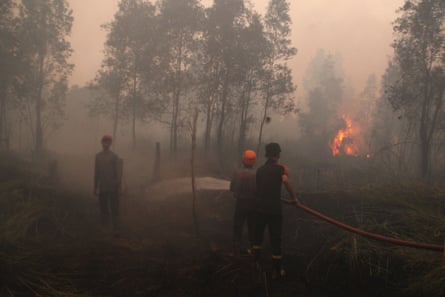
Parts of Indonesia are in the midst of an extreme wildfire season, which has peaked over the past month. Western Kalimantan (Borneo) and southern Sumatra have been particularly badly affected. The lack of rainfall has dried the usually water-logged tropical soils, meaning that fires have been able to spread quickly, above and below the surface. Indonesia’s soils are also extremely rich in peat, meaning that the smoke produced from the fires contain higher levels of toxic gases such as sulphur dioxide and carbon monoxide. Cities in surrounding areas and as far as Malaysia and Singapore have experienced reduced air quality in recent weeks as a result. Drought and wildfires are more common in this part of the world during El Niño events owing to suppressed thunderstorm activity.
On the flip side, El Niño is contributing to an extremely active period for tropical cyclones in the Pacific Ocean. After recent hurricanes in the eastern half of the basin, Super Typhoon Choi-Wan is now active and a category 4 typhoon to the south-east of Japan, while on a strengthening trend. After developing on 30 September, Choi-Wan moved through the Northern Mariana Islands as a tropical storm, causing power outages on the island of Tinian, forcing the closure of schools and government offices. Choi-Wan underwent rapid intensification after clearing the islands on Sunday, and as of Sunday night has sustained winds of 150mph, and gusts of up to 180mph. The system is expected to curve away from mainland Japan and areas affected by Typhoon Dujuan last month, while steadily weakening over the coming week.
KioskNews shows a cleaned-up reading view extracted from the publisher’s page — the original always lives on their site, not ours.