China ‘Goddess of Mercy’ drone send-off reveals modern shift in funeral services
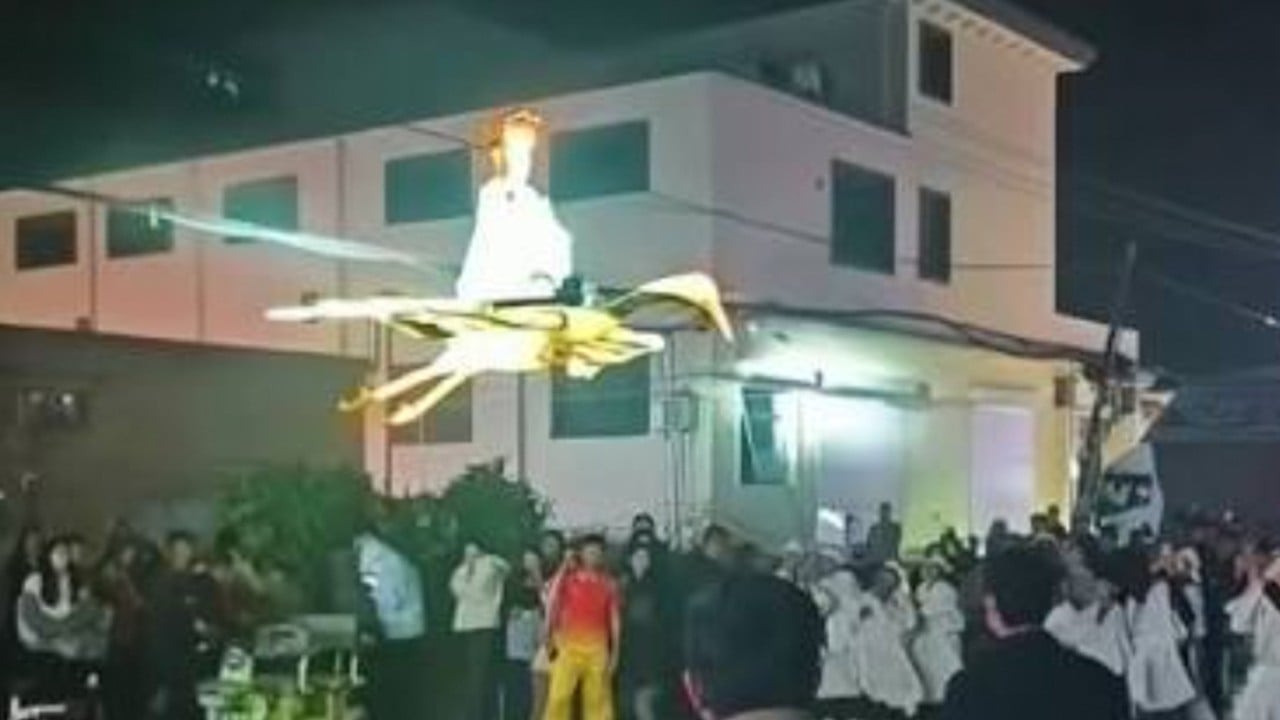
Videos showing a glowing Guanyin, or Goddess of Mercy, carried by a drone and another similar device disguised as a crane have attracted significant attention on Chinese social media.
Together, the two devices recreate the traditional funeral send-off in which the deceased is said to “ascend to heaven.”
In China, a common euphemism for someone who has died is that they have “ridden a crane to the Western Paradise,” or simply “gone west.”
In the viral clips, released in early November, dozens of relatives gather one evening in a large rural courtyard to attend the funeral of an elderly man. Two illuminated drones take off, broadcasting voice messages before gradually flying away from the site.
The sound played by the crane drone was synthesised by artificial intelligence (AI) using recordings of the deceased man’s voice made before his death.
“I worked hard for decades with one wish: that you would live peaceful, healthy lives, free from tragedy,” the crane drone, carrying a figure of a man on its back, says on behalf of the deceased.
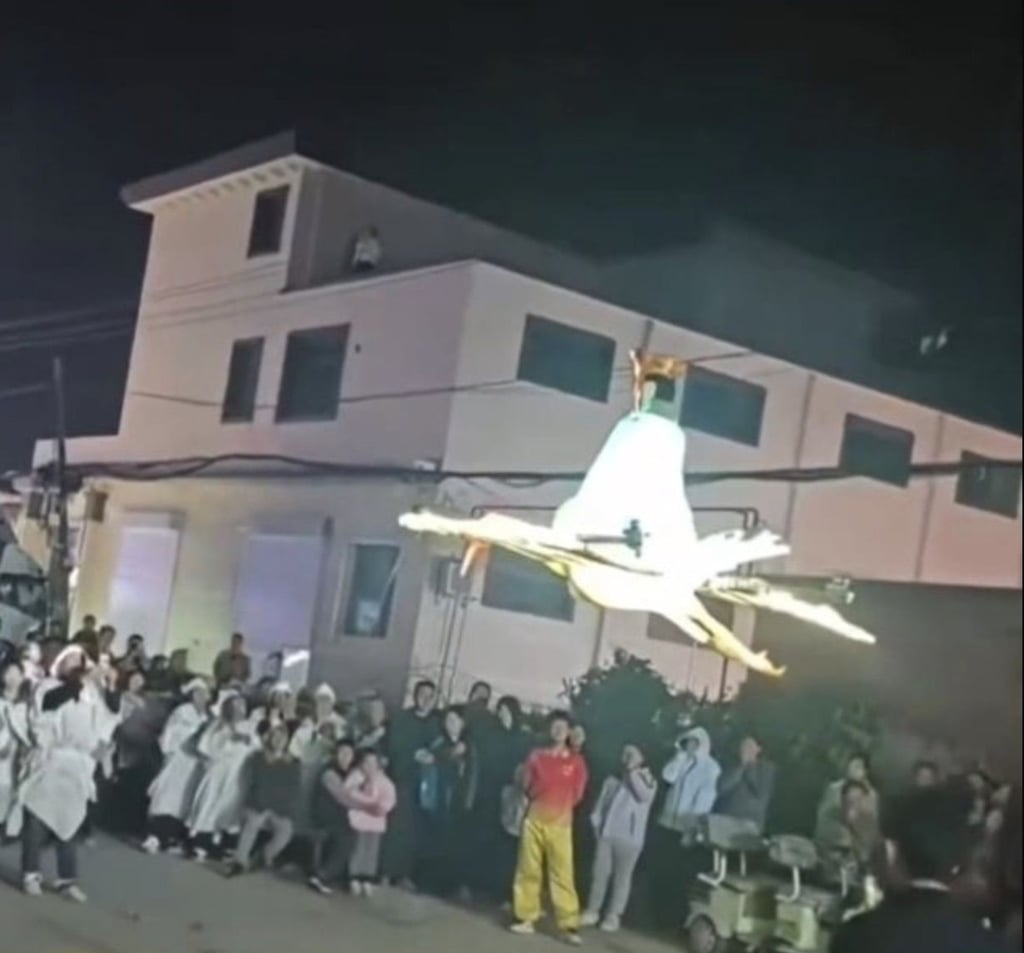
“Birth, ageing, illness and death are the natural order of life. No one can accompany us throughout our whole lives. I am content to have lived with you for so many years,” the AI-generated voice continues.
Then a female voice comes from the Guanyin drone: “I have come to escort the old gentleman. We will head west, and I will fulfil his wish. May you have peace and good health. It is time to say goodbye.”
As the two drones fly away from the crowd, they play the famous Buddhist song Great Compassion Mantra as background music.
It is unclear where the funeral took place. Drone industry insiders said that renting one drone usually costs 5,000 yuan (US$750), while renting a pair costs 10,000 yuan.
This unusual use of drones at a funeral soon became a topic of online discussion.
“They’re business geniuses, combining three booming sectors: the low-altitude economy, the silver-hair economy and the funeral industry,” one online observer commented.
Another person noted: “It’s a creative idea that gives family members more options for bidding a final farewell to their loved ones.”
However, many people mocked the idea.
“A funeral should be solemn, but the drones made the scene seem absurd,” one user said.
“I think the relatives at the site couldn’t help laughing at the drones’ performance,” another added.
In China, inviting monks to perform religious rites at funerals generally costs between 2,000 yuan and 10,000 yuan.
Other quirky AI-inspired services in the country include AI fortune-telling and AI simulations designed to help people practise handling arguments and improve their communication skills.
KioskNews shows a cleaned-up reading view extracted from the publisher’s page — the original always lives on their site, not ours.