China bets on chips and AI in new 5-year road map to challenge US tech dominance
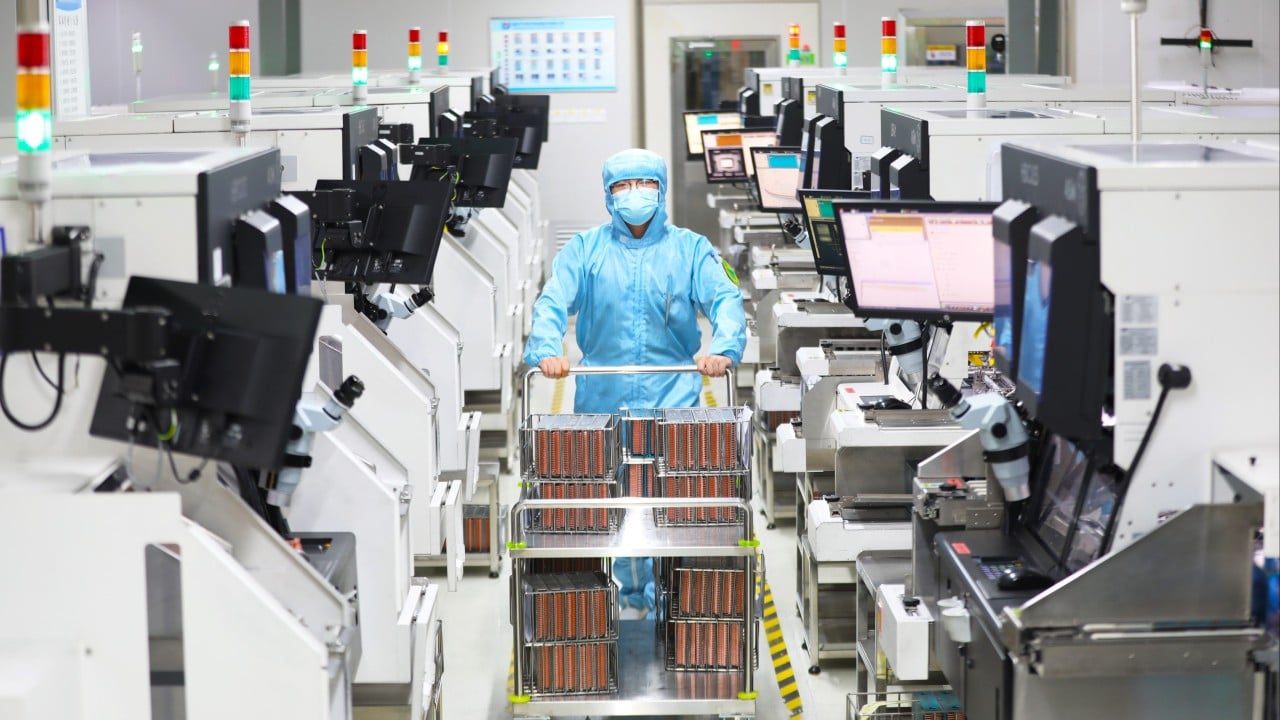
An intensifying tech race with the United States, along with Beijing’s drive for technological self-reliance, has led China’s leaders to place greater significance and urgency on breakthroughs in sectors ranging from artificial intelligence to integrated circuits and chips in its latest five-year plan for electronics and information technology.
The Ministry of Industry and Information Technology and the National Development and Reform Commission, China’s top economic planning agency, on Tuesday outlined priorities for the electronics and IT industry over the next half-decade.
Key objectives include comprehensive progress across the entire integrated-circuit industry, including the development of open-standard RISC-V integrated circuits, to help reduce China’s dependence on Western technology.
The plan also calls for a greater role for the indigenous BeiDou satellite navigation system as it competes with the US-led Global Positioning System. And China is prioritising next-generation battery and solar technologies, including perovskite tandem solar cells, which pair a perovskite layer with a conventional silicon cell to capture more sunlight and improve power-conversion efficiency.
KioskNews shows a cleaned-up reading view extracted from the publisher’s page — the original always lives on their site, not ours.