Business Reflection: Loaded for Bear: MTBPS shines light on lost revenue from missed mining opportunities

The mining industry has once again risen from the depths to throw a life line to South Africa’s Treasury just when it needed it most.
Provisional corporate tax collections grew more than 17% in the first six months of this year compared to the same period in 2025/26, according to the Medium-Term Budget Policy Statement (MTBPS) presented by Finance Minister Enoch Godongwana on Wednesday, 21 October.
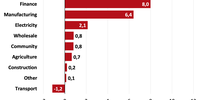
“The mining sector was the largest contributor, with June 2026 collections R10.9-billion higher than in the same period of the prior year due to high platinum group metals and gold prices,” the minister said.
It’s interesting to note that the contingency reserve in 2026/27 for drought and El Niño response announced in the statement amounts to R10-billion – money that one could say is available because of the mining industry’s increased revenue payments.
The fuel levy relief that was announced was also made more palatable by the increased revenue flows from the mining industry.
The sector has also given a lift to revenue from dividend taxes, which are seen rising to R51.1-billion in 2026/27 from just shy of R46-billion last year.
MTBPS underscores lost opportunity
And this revenue stream could have been much richer if South Africa’s mining sector were much bigger. But bungled policy and implementation have thwarted investment and the building of new mines, stunting the size of the windfall that Treasury could have potentially reaped.
South African mining production tanked 12.7% on an annual basis in August, a trend of woe that has long been set in stone.
Production remains below 2005 levels, and exploration expenditure has plunged 80% over the past two decades. South Africa now attracts less than 1% of global exploration expenditure despite a rich geological endowment.
And without exploration, new mines will not get built.
“These realities carry implications far beyond the mining sector because they represent deferred investment, unrealised production, forgone economic activity and employment opportunities that never materialised,” Paul Dunne, president of Minerals Council South Africa and CEO of Northam Platinum said in a keynote address at the Joburg Indaba earlier this month.

To that list one can add lost revenue to the Treasury –revenue that never materialised because of thwarted investment.
This speaks to muddled policy making. The Mineral Resources Development (MRD) Amendment Bill remains in the sausage-making machine 17 months after the first draft was unveiled, provoking unease in the mining industry over onerous triple Black Economic Empowerment clauses and other issues.
Unclear objective of mining policy
This lack of policy clarity alone is a major deterrent to investment in a sector in which projects are long term, stretching over decades.
“Many of the barriers limiting investment and growth in our mining sector are systemic,” Dunne noted in his address.
“Infrastructure constraints relating to logistics, electricity and water feature prominently. Concerns regarding crime and illegal mining continue to undermine competitiveness and increase operating costs,” he said.
Then there has been the much-delayed, start-stop roll-out of a transparent mining cadastre.
The lack of a proper cadastre – an online portal that displays a country’s mineral wealth while allowing companies to seamlessly apply for mining and prospecting rights – has long been a deterrent to mining investment, leading to massive applications backlogs and suspicions of corruption at regional offices of the Department of Mineral and Petroleum Resources (DMPR).
There is finally light at the end of this long tunnel with the cadastre scheduled to go live by March 2027. And Mineral and Petroleum Resources Minister Gwede Mantashe’s sometimes rocky relationship with the industry now seems to be on a good footing, with the DMPR – finally – accepting the Minerals Council’s offer of assistance on this front.
The urgency of sorting out this stuff has been thrown into sharp relief by the MTBPS. South Africa cannot afford to lose tens of billions of rand annually in revenue from the mining sector because of unrealised projects and minerals and metals that remain in the ground.
“Additional mining tax revenue collected in 2026/27 is expected to be a temporary development,” the MTBPS pointedly noted.
This was a reference to the commodity cycle. But additional revenue from mining need not be a “temporary development”. A growing sector would provide a growing revenue base for the Treasury, enabling it to reduce its borrowing and direct more funds to things like health, education and roads.
The bottom line is that issues such as the cadastre are not just about mining. DM
KioskNews shows a cleaned-up reading view extracted from the publisher’s page — the original always lives on their site, not ours.