Are Chinese military aircraft already using a new joint air facility in Laos?
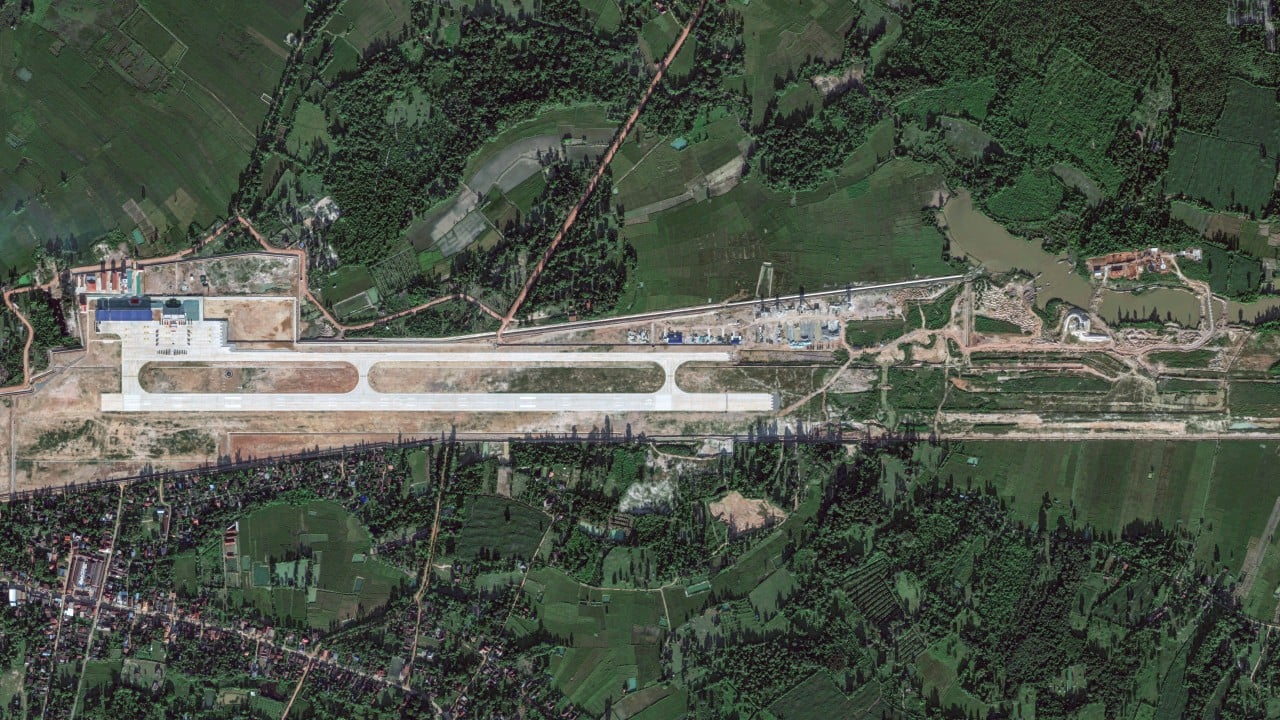
Chinese military aircraft may already be using a new joint aviation facility in Laos, with satellite imagery showing twice as many K-8/JL-8-family trainer aircraft there as the Laotian air force is assessed to possess.
Eight of the two-seat trainer and light-attack aircraft were visible at Ban Keun Airport in commercial satellite imagery taken on September 30, according to Reuters, which first reported the images. More than two dozen military and support vehicles were also visible.
The image was taken a day after the China-Laos Joint Support and Training Centre and the China-Laos Friendship Aviation Academy formally began operations at the airport, with a People’s Liberation Army delegation attending the inauguration.
Beijing says the jointly maintained and operated centre is intended to strengthen training for Laotian air force pilots.
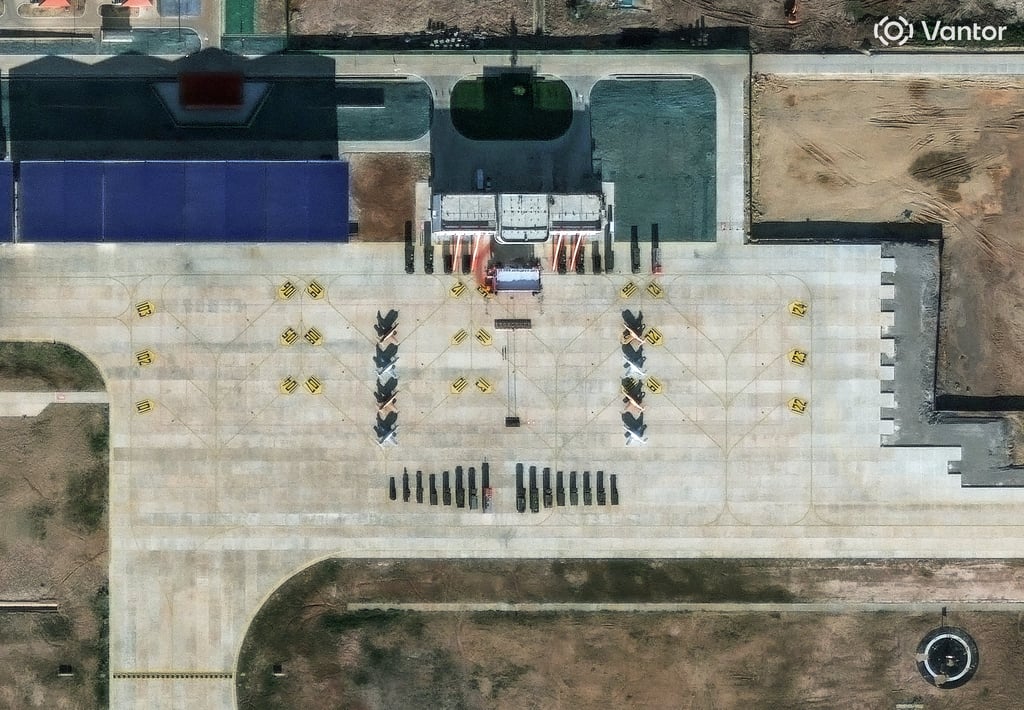
The Lao People’s Liberation Army Air Force is assessed by the IISS Military Balance 2026 to operate about four K-8Ws.
The South China Morning Post could find no public record of Laos acquiring a new batch of K-8-family aircraft.
Possible explanations for the discrepancy include additional Laotian aircraft not reflected in published inventories, aircraft assigned to the new academy or the presence of Chinese military aircraft.
Chinese military aviation analyst Andreas Rupprecht said he believed PLA Air Force aircraft were among the eight visible at Ban Keun.
“In my opinion, not only possibly but certainly, since there are eight aircraft to be seen there and Laos itself only owns four,” he said, adding that the imagery could show four Laotian K-8Ws alongside four JL-8s from the PLA Air Force.
Rupprecht also pointed to apparent differences in their colour schemes, noting that Laotian K-8Ws had been seen in camouflage while PLA aircraft of the type commonly use a much lighter-coloured livery.
A satellite imagery expert, speaking on condition of anonymity, was more cautious in his assessment.
The expert said four aircraft were covered by tarpaulins, while the remaining four appeared lighter in colour – possibly consistent with Chinese aircraft – but sunlight reflection prevented a definitive identification.
Timothy Heath, China expert and founder of security research firm Perceptum, called the four-and-four interpretation “very plausible”.
But according to Brian Hart, deputy director of the CSIS China Power Project, even if some of the aircraft were operated by the PLA, their presence would not necessarily signal a significant expansion of Chinese air power in the region.
“These aircraft do not provide China any significant new ability to project air power in the region,” Hart said. “They are primarily trainer aircraft.”
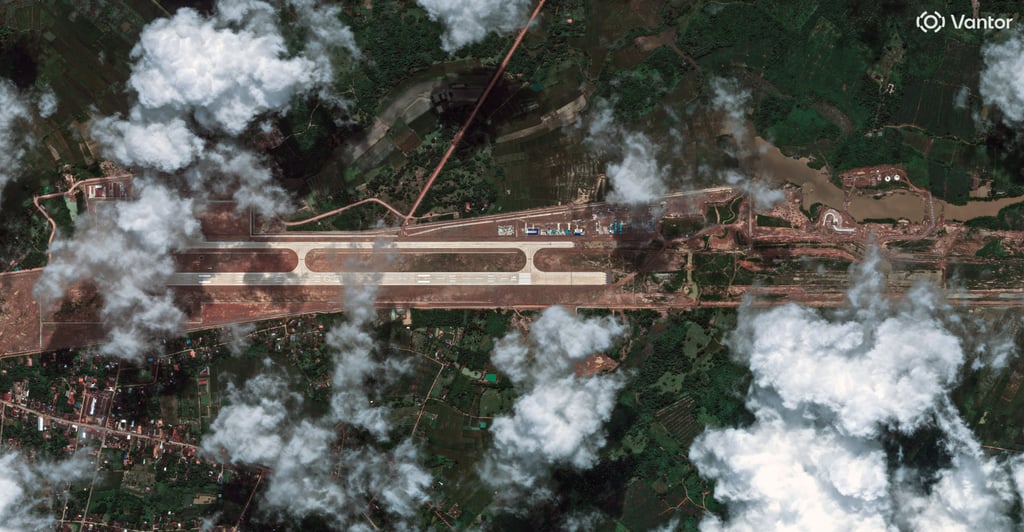
The imagery also shows Ban Keun has the capacity to accommodate considerably more aircraft than Laos’ existing jet-trainer fleet, which Military Balance lists as comprising about four K-8Ws and three Yak-130s.
The satellite imagery expert said the apron appeared to contain about 24 marked parking positions suitable for small aircraft such as the K-8/JL-8. Few other facilities were yet visible, although construction was continuing, and the number of positions could indicate that aircraft would travel to Ban Keun for training, with enough space to accommodate joint training.
More broadly, Ban Keun occupies a distinct place in China’s small overseas military footprint.
Hart said in an interview when the centre opened last month that Ban Keun was China’s first acknowledged overseas military facility centred on air power.
According to official Laotian reporting, cooperation at the centre will include joint training and exercises, personnel development, humanitarian assistance and other areas.
If PLA aircraft were among those visible, their presence would demonstrate actual Chinese military aviation access to Ban Keun, said Isaac Kardon, an adjunct professor at Johns Hopkins University’s school of advanced international studies.
“Training and a strategically useful military presence can coexist,” Kardon added, saying that the main questions were who operated the aircraft, under whose command and with what permissions.
In January 2024, nine JL-8s from the PLA Air Force’s Red Falcon aerobatic team flew to Laos for celebrations marking the Lao People’s Army’s 75th anniversary, showing that Chinese military aircraft could operate from Laotian territory temporarily.
PLA aircraft have also temporarily used partner airfields in countries including Russia, Pakistan and Thailand for exercises and training.
What would distinguish Ban Keun from those temporary deployments, Kardon said, is whether the PLA had “reliable access” – an arrangement allowing it “to return and use the facility predictably, rather than negotiating each deployment as a separate event”.
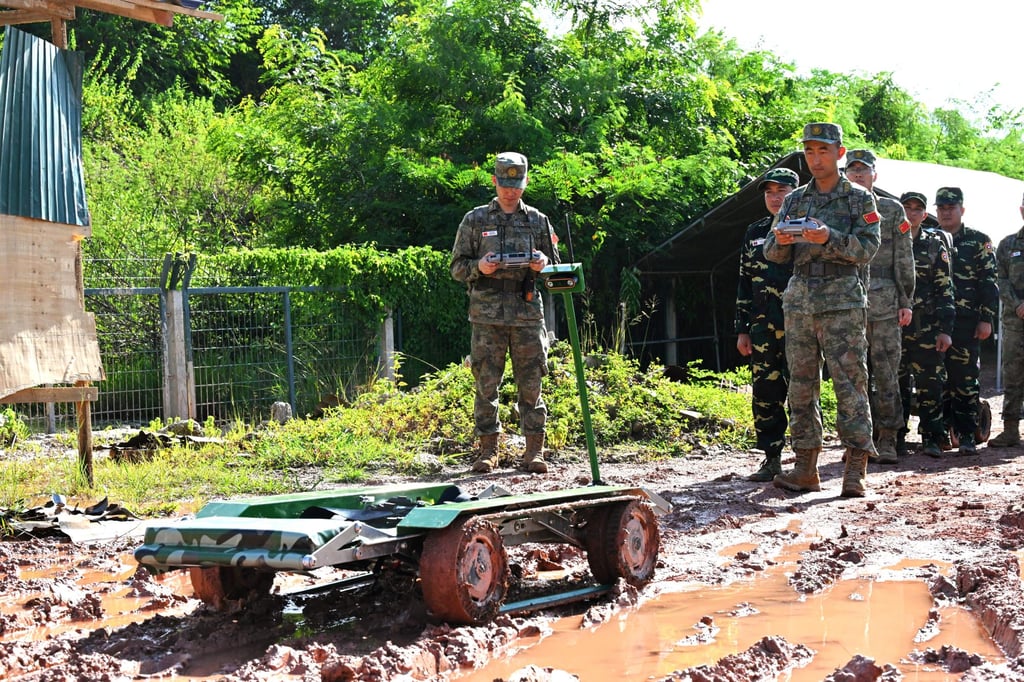
He said an enduring PLA operating location would require three elements together: “reliable access, sustained support and a recurring operational role”, including personnel and facilities capable of maintaining, fuelling and supporting Chinese aircraft over time.
Kardon said fuel storage, maintenance facilities and communications would be relevant indicators, although they could also support an ordinary training establishment.
Calling Ban Keun a PLA aviation base would require clearer evidence about its standing mission, command arrangements and China’s control of the facilities, he added.
Hart said the joint facility’s location meant that even if China stationed more capable aircraft there in future, it would not fundamentally change the PLA’s ability to project air power in the region because Chinese aircraft could already reach the area from bases in China.
“Still, operating from there could help China to build experience with overseas basing – a valuable stepping stone if the PLA seeks to open bases farther afield in the future,” he added.
Whatever Ban Keun’s eventual status, the facility’s significance was primarily political and institutional, Heath said.
“This base not only shows China’s growing influence in Southeast Asia,” he said. “It clearly demonstrates China’s expectations of its Belt and Road Initiative partners.”
At the same time, Kardon cautioned that permission to train Laotian pilots did not automatically imply permission for Chinese aircraft to conduct regional intelligence or combat operations.
Ban Keun could represent “an aviation application of the Ream model”, he said, referring to the China-Cambodia Joint Training and Support Centre at Cambodia’s Ream Naval Base.
“A standing, jointly supported aviation facility that enables repeated or extended Chinese deployments would be a meaningful development,” Kardon added. “Whether Ban Keun meets that description remains to be established.”
KioskNews shows a cleaned-up reading view extracted from the publisher’s page — the original always lives on their site, not ours.