Post-martial law safeguards still failing, analyst says
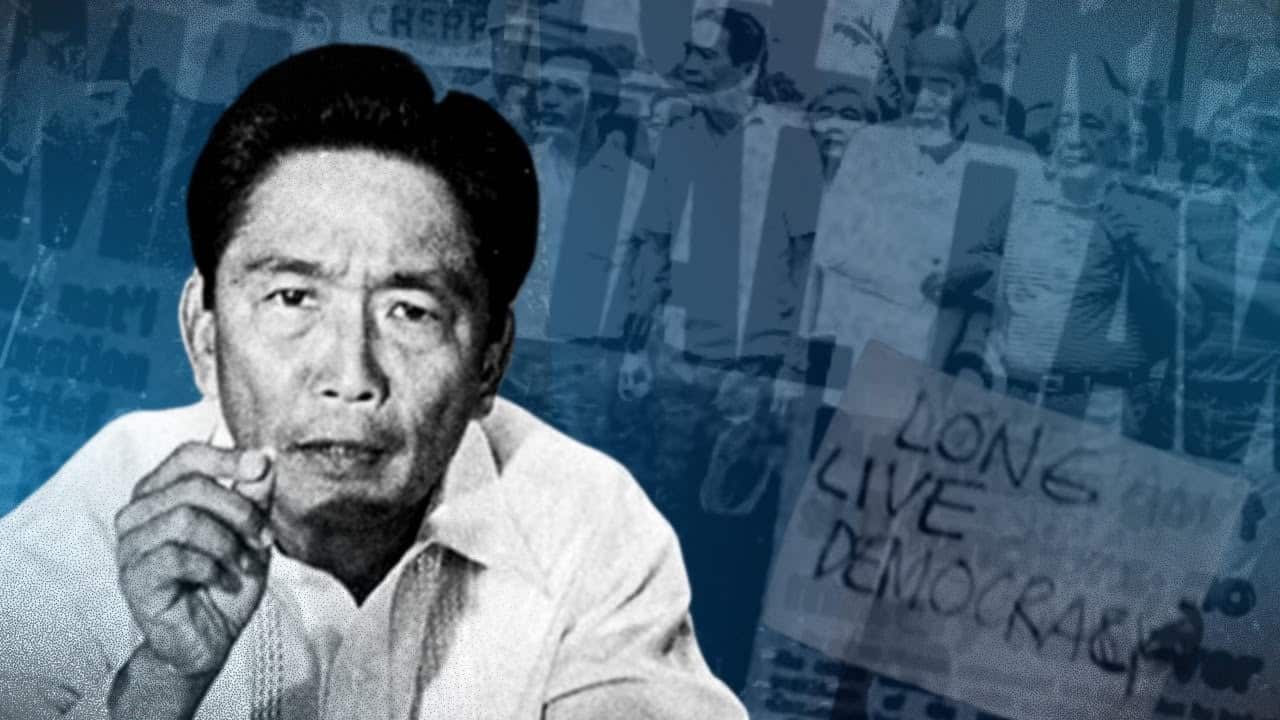
MANILA, Philippines — The Philippines commemorated the 54th anniversary of the declaration of martial law on Monday, Sept. 21, but a data scientist pointed out, based on a recent international assessment, that more than five decades since Proclamation No. 1081, “post-martial law safeguards continue to fail.”
“More than four decades after the restoration of democracy, have democratic institutions in the Philippines become stronger?” asked Dr. Alicor Panao, an associate professor at the University of the Philippines, as he discussed in an analysis an assessment by the Varieties of Democracy Institute.
V-Dem is a research project based at the University of Gothenburg that measures democracy across several dimensions rather than simply asking whether elections are held. Its Liberal Democracy Index combines electoral democracy with civil liberties, the rule of law and constraints on executive power.
Article continues after this advertisement
READ: CHR on martial law anniversary: Defend democracy from present threats
FEATURED STORIES
NEWSINFO
NEWSINFO
NEWSINFO
Panao said this year’s report, which draws on more than 32 million data points covering 202 countries, classifies the Philippines as an “electoral autocracy,” meaning that while it holds multiparty elections for the executive, it lacks basic liberties such as free speech and association, as well as free and fair elections.

The Philippines received a score of 0.291 in 2025, down from 0.301 in 2024, placing it 100th among 179 territories. The score also compared less favorably with those of some of its Southeast Asian neighbors: Singapore scored 0.360; Malaysia, 0.355; Thailand, 0.314; and Indonesia, 0.296.
READ: CMSP on martial law anniv: Translate remembrance to sustained action
Article continues after this advertisement
“Even Timor-Leste, which became independent in 2002, scored higher than the Philippines with 0.549,” said Panao, a data scientist for the Inquirer.
The Philippines remained above Vietnam, Laos, Cambodia and Myanmar, whose scores were 0.102, 0.110, 0.051 and 0.015, respectively.
Article continues after this advertisement
However, the gap was much wider compared with established liberal democracies. Denmark scored 0.884; Sweden, 0.853; Norway, 0.847; Switzerland, 0.843; and Finland, 0.808. In Asia, South Korea scored 0.739; Japan, 0.734; and Taiwan, 0.704.
Panao said V-Dem pointed out that freedom of expression was the most frequently declining aspect of democracy in countries experiencing autocratization. The data likewise showed a worsening trend in the harassment of journalists in the Philippines.
Your subscription could not be saved. Please try again.
Your subscription has been successful.
Overall, the report suggests that 54 years after the 1972 declaration by Ferdinand Marcos Sr. “that dismantled democratic institutions,” post-martial law safeguards continue to fail, “resulting in the profound vulnerability of long-rebuilt checks on executive power to systemic erosion.” /dm
KioskNews shows a cleaned-up reading view extracted from the publisher’s page — the original always lives on their site, not ours.