Chinese nickel investors brace for headwinds as Indonesia weighs smelter freeze
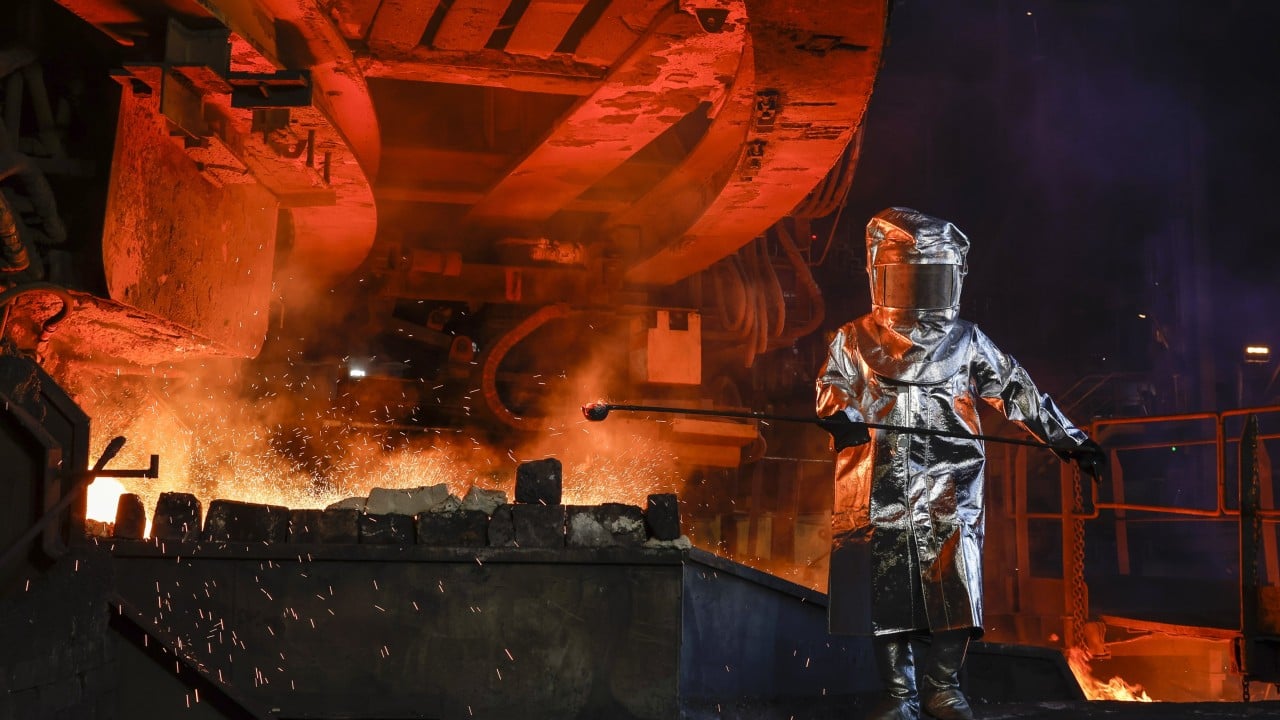
Chinese investors could face significant disruption if Indonesia imposes a moratorium on new nickel smelters to curb global overproduction and protect local industries across its vast minerals sector, analysts said.
Indonesia was weighing a halt to the construction of smelters that produce semi-finished nickel products amid a global supply glut that had driven down commodity prices, state news agency Antara reported, citing energy and mineral resources minister Bahlil Lahadalia.
Semi-finished products, including nickel pig iron and nickel matte, make up about 50 to 60 per cent of Indonesia’s total output, Antara reported. The proposed restrictions were part of the energy minister’s efforts to strengthen the country’s industrial structure, it added.
Nickel pig iron is primarily used to make stainless steel, while nickel matte is used in electric vehicle batteries.
Chinese investment accounts for about 75 per cent of Indonesia’s nickel refining industry, according to an estimate by the US-based Centre for Advanced Defense Studies. .
“Chinese investors are likely to be significantly affected because Chinese companies and capital play a major role in Indonesia’s nickel mining and smelting industries,” said Nukila Evanty, an Indonesia-based member of the Asia Centre research institute’s advisory board.
“Chinese investors should reconsider and selectively scale back new smelting capacity, particularly projects producing intermediate nickel products in an already oversupplied market.”
Indonesia held more than half of the global nickel market in 2023, according to a study by Rafi Adis Subarna, an analyst with Jakarta-based political risk consultancy KRA Group.
Jakarta’s six-year-old ban on raw nickel ore exports had spurred the expansion of domestic mining and production, he argued in the study, citing strong global demand for products such as electric vehicle batteries and an influx of investment in smelting facilities.
Chinese investment had “supported” Indonesia’s expansion of nickel processing capacity over the years, Goldman Sachs said in a February commentary. But that growth had contributed to an oversupply, weighing on prices since 2023, it added.
If a moratorium takes effect, Chinese-invested companies planning conventional smelting capacity expansions could face delays or be forced to cancel projects, particularly where profit margins were already narrow, said Siwage Dharma Negara, a principal fellow at the ISEAS – Yusof Ishak Institute in Singapore.
Jakarta’s “regulatory uncertainty” posed a bigger concern, he added. “If the government frequently changes investment conditions, investors may postpone their expansion or eventually pull back from the country.”
Indonesia should evaluate whether it had the domestic capabilities, technology and equipment to operate its own nickel smelters under a moratorium, said Zhao Xijun, a finance professor at Renmin University in China.
Chinese enterprises had the necessary expertise and would invest in other countries, from Africa to Latin America, if Indonesia made it difficult, he said.
“Then the loss is Indonesia’s,” he added. “The mines would still be there with no one to develop them.”
Evanty from the Asia Centre advisory board said Chinese investors should prioritise improving existing facilities and diversifying into higher-value products, all with “stronger” environmental standards.
The Indonesian energy and mineral resources minister’s team was preparing a recommendation for President Prabowo Subianto to decide which segments of the semi-finished nickel smelting sector would be restricted, Antara said.
KioskNews shows a cleaned-up reading view extracted from the publisher’s page — the original always lives on their site, not ours.