BOJ set to raise interest rates to 31-year high as inflation risks loom
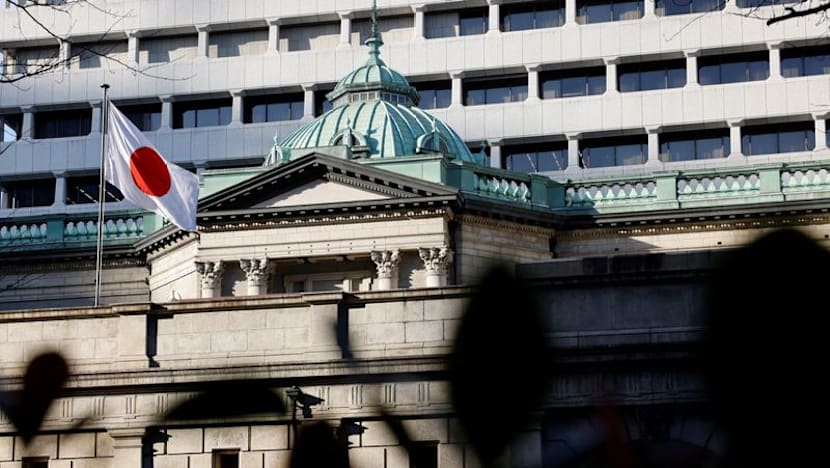
TOKYO, Sept 16 : The Bank of Japan is set to raise interest rates to a 31-year high on Friday and signal readiness to keep pushing up borrowing costs, joining other major central banks in fighting persistent inflation pressures driven by soaring oil costs.
The move would be the first hike in three months and take interest rates closer to levels the BOJ deems neutral to the economy, marking another step away from decades of ultra-low rates that cemented the yen's status as a cheap global funding currency.
A hike by the BOJ would follow one by its European counterpart and an expected tightening by the U.S. Federal Reserve later this week, highlighting their focus on inflation risks.
Having nearly fully baked in a rate hike, markets are focusing on any hints BOJ Governor Kazuo Ueda could provide on the timing and pace of further increases.
"Markets are divided between those who see hawkish BOJ communication as helping lower bond yields by alleviating concern it is behind the curve on inflation, and others who see it as lifting yields by moving up terminal-rate bets," said Katsutoshi Inadome, senior strategist at Sumitomo Mitsui Trust Asset Management.
"With so much uncertainty on how markets could react, the best approach for the BOJ is to stay as vague as possible."
At the two-day meeting ending on Friday, the BOJ is set to raise its policy rate to 1.25 per cent from 1 per cent. Board member Toichiro Asada, who dissented to the rate hike in June, may do so again, analysts say.
Given the need to gauge the impact of past rate hikes on financial conditions, many in the BOJ likely favour a 25-basis-point hike over a bigger move, sources have told Reuters.
COMMUNICATION CHALLENGE
The BOJ exited a decade-long stimulus in 2024 and raised rates several times including in June. It kept rates steady in July but warned of an inflation overshoot from soaring fuel costs, rising import costs from a weak yen and strong AI demand.
Ueda also said earlier this month with underlying inflation "quite close" to its 2 per cent target, the BOJ must pay particular attention to inflationary risks.
Analysts polled by Reuters expect the BOJ to hike rates to 1.25 per cent this month, 1.5 per cent by end-March next year and then to 1.75 per cent in the second quarter of 2027. Most saw the terminal rate as being at least 1.75 per cent.
Ueda faces a huge communication challenge when he holds a news briefing after Friday's policy meeting. While the BOJ hopes to avoid pre-committing to another early rate hike, repeating its dovish, "data-dependent" approach risks triggering renewed yen selling that would push up import prices.
Sounding too hawkish, on the other hand, could upend the bond market, which is already seeing a sell-off that pushed up yields to three-decade highs on concern over Japan's finances.
A hike to 1.25 per cent would also bring the BOJ's policy rate within its estimated 1.1 per cent to 2.5 per cent range of Japan's nominal neutral rate, or the level that neither cools nor overheats growth, thus raising questions around how far it could eventually hike rates.
Ueda has said the BOJ had no pre-set idea on how far it could hike. But many in the central bank likely sees scope for several more increases before reaching neutral, say sources familiar with its thinking. Hawkish board member Naoki Tamura, for one, sees the neutral rate sitting around 2 per cent.
"Delaying necessary rate hikes would cause side-effects, though the pace would depend on economic, price and financial conditions at the time," said one of the sources.
Prime Minister Sanae Takaichi's expansionary fiscal policy also complicates the BOJ's decisions.
IMF Managing Director Kristalina Georgieva warned of the challenges the unprecedented large fiscal support deployed by governments is inflicting on central banks.
"With high debt and fears of fiscal dominance conspiring to increase the risk of inflation expectations moving upward, central banks will need to respond forcefully to future shocks to protect independence, preserve credibility, and deliver on their price stability mandate," she said in a speech last week.
KioskNews shows a cleaned-up reading view extracted from the publisher’s page — the original always lives on their site, not ours.