Thousands of 'weight-loss' injector pens in passenger's bags
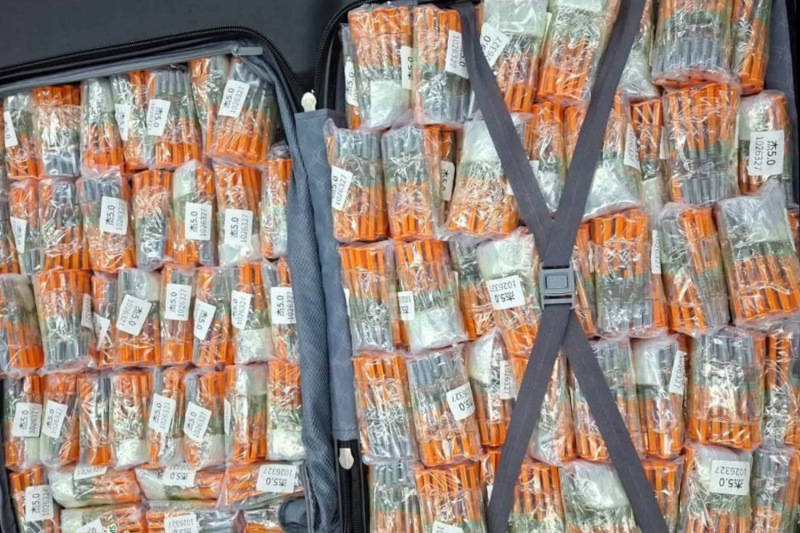
A Chinese passenger was caught with nearly 9,000 "weight-loss" injection pens, worth about 5.3 million baht, in his luggage on arrival at Suvarnabhumi airport from Bangladesh.
The man flew into Bangkok on Saturday. When customs officers searched his two bags they found 8,900 injection pens in plastic packets.
He was not named. The Customs Department announced only that a courier had been detained for prosecution. He had travelled from Dhaka, the capital of Bangladesh.
The seized items were valued at 5,340,000 baht, according to the announcement.
In Thailand, these pens are rated a specially controlled medication requiring a doctor's prescription and available only from pharmacies, since Sept 15, 2026.
The pens were used to inject a class of drugs known as GLP-1 receptor agonists, such as Liraglutide or Semaglutide, FDA secretary-general Supattra Boonserm said. They mimic a naturally occurring hormone called glucagon-like peptide-1.
They were originally developed to treat type 2 diabetes, helping regulate blood sugar levels, slow stomach emptying and increase feelings of fullness. Similar medications have been developed specifically for weight management in people who are obese or overweight and have related health conditions.
However, it had been observed in Thailand that these medications were being used for weight loss without proper medical evaluation and supervision, leading to the re-regulation.
KioskNews shows a cleaned-up reading view extracted from the publisher’s page — the original always lives on their site, not ours.