China’s Tiangong space station camera captures its first images of Hong Kong
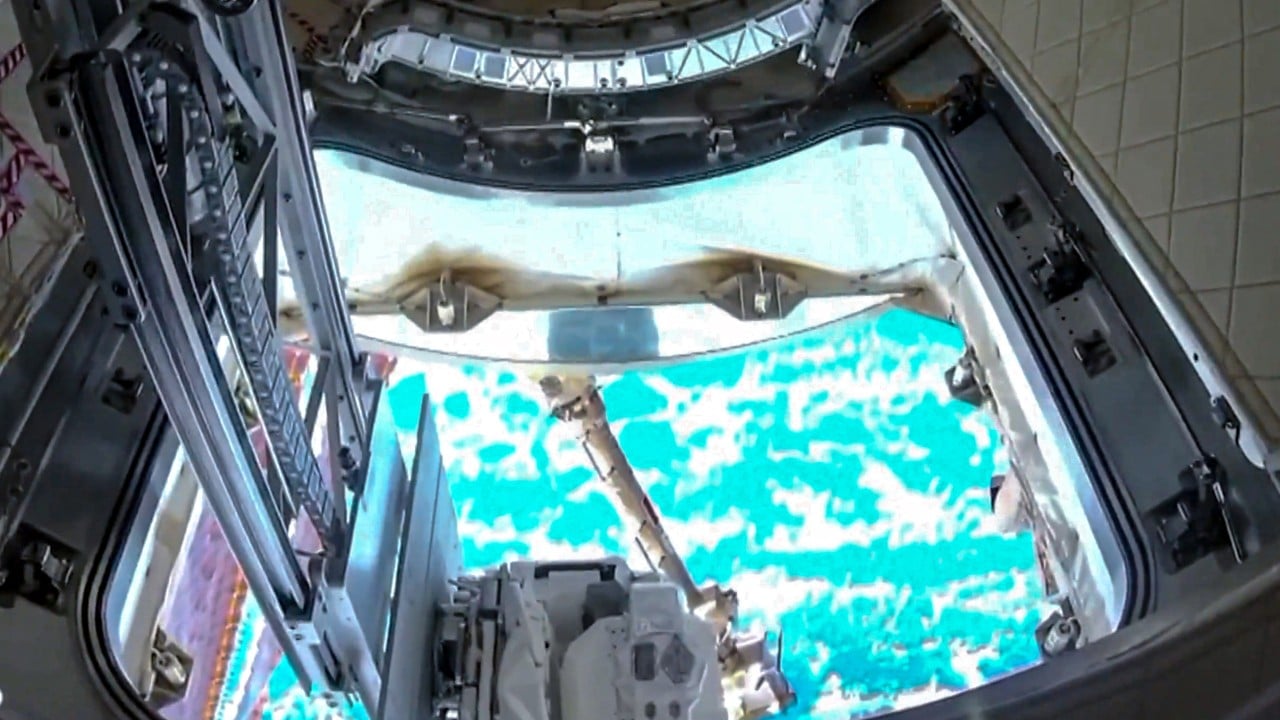
A remote-sensing camera aboard the Tiangong space station, developed by the Hong Kong University of Science and Technology, has released its first images of the city ahead of the 77th anniversary of the founding of the People’s Republic of China.
HKUST on Thursday published a series of videos and photos captured by the MUSICO camera, saying they showcased the major achievements of the Hong Kong research team’s participation in China’s space programme.
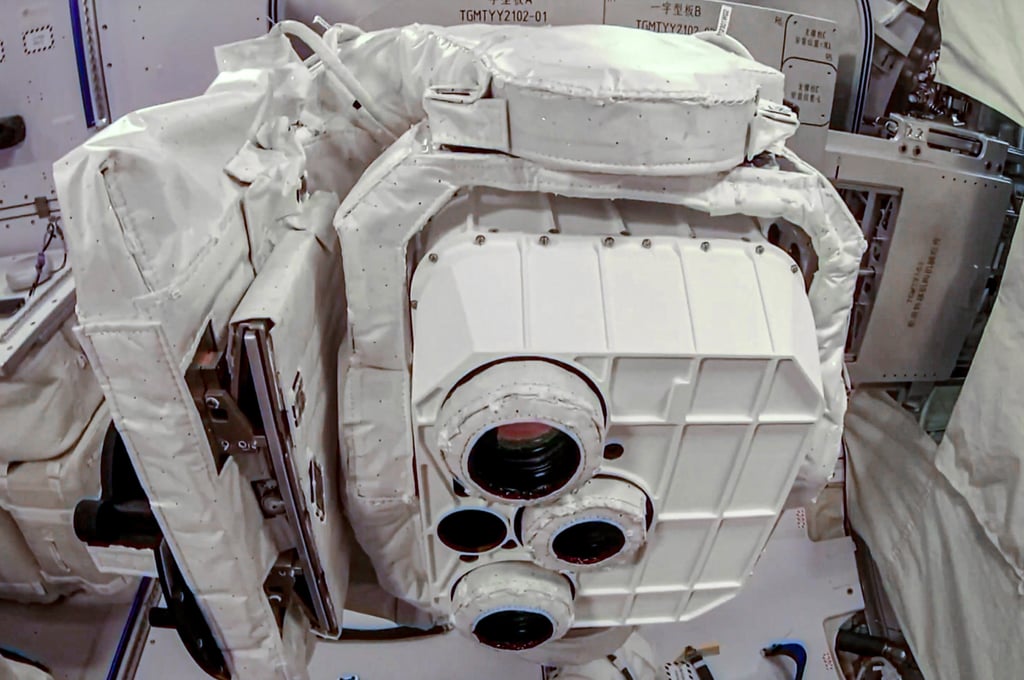
The images were captured by MUSICO’s four optical sensors – for carbon dioxide, methane, oxygen and aerosols – and show Hong Kong’s landforms and topographic features, as well as those of surrounding areas.
MUSICO, which stands for Multi‑Spectral Imaging Carbon Observatory, is considered the world’s first lightweight, high-resolution, high-precision instrument for jointly detecting point sources of carbon dioxide and methane. It was developed under HKUST’s leadership.
The camera has carried out on-orbit scientific missions aboard the Tiangong Space Station for more than three months and has officially entered routine scientific operations, the university said.
Hong Kong’s first astronaut, Lai Ka-ying, a payload specialist, is currently carrying out a manned space mission aboard the space station. She and two others on the Shenzhou-23 space flight mission headed into space in May.
Professor Zhang Limin, who jointly led the MUSICO project, said the photos were a “special gift” to China and Hong Kong ahead of National Day on Thursday.
“It not only marks the successful deployment of a Hong Kong-developed scientific payload aboard the Tiangong Space Station but also demonstrates Hong Kong’s growing contribution to the nation’s space endeavours,” said Zhang, who is also head of the university’s Department of Civil and Environmental Engineering.
Professor Su Hui, who also led the project, said that since Lai and her colleagues installed and activated the instrument aboard the Tiangong Space Station, MUSICO had acquired images of more than 450 target regions worldwide, generating 4.3TB of data.
She described MUSICO as an “eye for space” that contributed to Hong Kong’s role in national and global climate governance.
Su added that the team was “thrilled” when the camera transmitted its first clear images of Hong Kong back to Earth from the Tiangong Space Station.
“Due to persistent cloud cover and rainy weather across Hong Kong and South China during the summer months, obtaining high-quality imagery of Hong Kong has not been easy,” she said.
“Fortunately, favourable weather conditions ahead of National Day allowed us to observe Hong Kong through MUSICO.”
KioskNews shows a cleaned-up reading view extracted from the publisher’s page — the original always lives on their site, not ours.