DFA to China embassy: Escalatory, undiplomatic posts not helping bilateral ties
Already have Rappler+?
to listen to groundbreaking journalism.
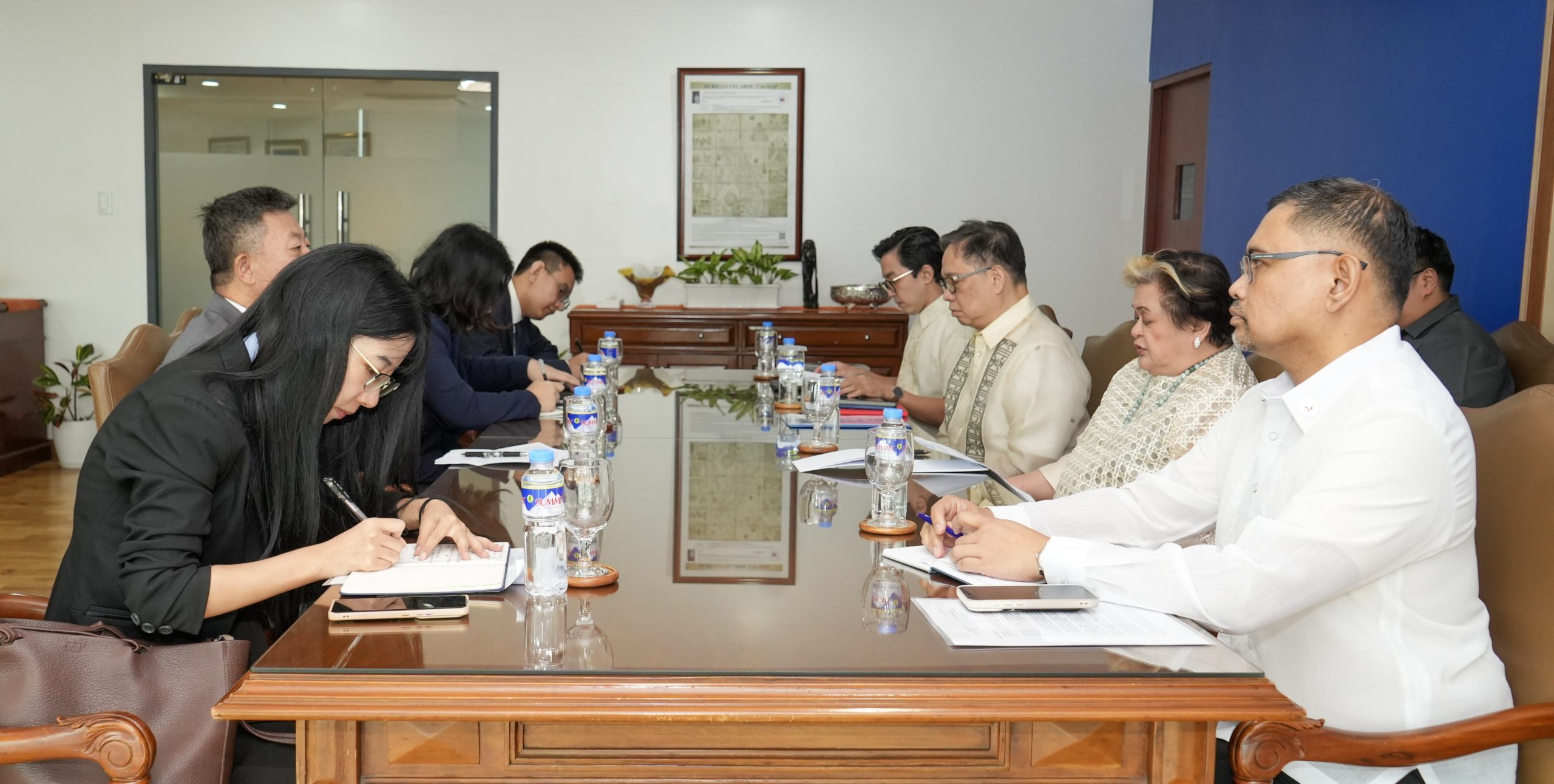
SUMMON. DFA Secretary Maria Theresa Lazaro summons Chinese ambassador Jing Quan on October 19, days after he made a barely-veiled threat against the Philippines in a media interview.
DFA
‘The recent public statements of the Embassy do not reflect the longstanding spirit of constructive engagement between the two countries and the two foreign ministries,’ the DFA says
AT A GLANCE
- The Philippines criticized the Chinese embassy in Manila for its undiplomatic social media posts that undermine bilateral relations.
- The Department of Foreign Affairs (DFA) emphasized the need for diplomats to exercise restraint and reaffirmed the Philippines' adherence to the One China Policy.
- The Chinese ambassador's provocative statements have led to calls from Philippine legislators for his removal, highlighting tensions over China's actions in the West Philippine Sea.
This is AI-generated. Read the article for full context. Report any errors.
MANILA, Philippines – The Philippines on Thursday, October 22, called out the Chinese embassy in Manila for the “escalatory and undiplomatic tone and language” in their social media posts that “erode mutual trust and confidence” as the online word war between the embassy and various Philippine agencies and officials continues to intensity.
“[The DFA] firmly reminds all diplomats accredited to the Philippines to exercise restraint and responsibility in their public statements. The escalatory and undiplomatic tone and language used in the latest social media statements of the Chinese Embassy erode mutual trust and confidence, and severely undermines the efforts to stabilize and improve bilateral relations,” said the Department of Foreign Affairs (DFA) in a statement, their second since Chinese ambassador to Manila Jing Quan said on October 15 that Filipino should be grateful that Beijing doesn’t use force in its disputes with Manila.
“All diplomats are expected to conduct and express themselves in a manner befitting diplomatic envoys, especially on social media,” added the DFA.
Jing’s statement and the social media posts of the embassy he heads were the subject of an October 19 summon by Foreign Secretary Ma. Theresa Lazaro.
The Chinese ambassador’s October 15 statement has triggered a maelstrom in the Philippines, with several legislators filing resolutions urging President Ferdinand Marcos Jr or the DFA to either kick Jing out or ask China to recall him as envoy. In response, the embassy has taunted legislators in posts on social media.
Since Jing arrived in Manila in December 2025, the Chinese embassy had taken on a decidedly more provocative tone in its social media posts, sparring with Philippine government spokspersons and elected officials who criticized China’s actions in the West Philippine Sea.
One China Policy
The DFA, in its statement, said the Philippines adheres to the One China Policy, in response to a post by the embassy asking the department to clarify the Philippine position after a verified Facebook account linked to Defense Secretary Gilberto Teodoro Jr. reposted a list of areas where China has disputes with, to include self-governed Taiwan.
In that post, the embassy said Teodoro was “openly challenging” the “One China principle” — which Manila does not adhere to, in the first place. Adherence to the One China Principle means that a country, in starting diplomatic ties with Beijing, recognizes the legitimacy of the People’s Republic of China (PRC) as the sole governing body of the country and agrees with its position that Taiwan is a part of China.
In contrast, under One China Policy which Manila follows, there is just acknowledgment of the PRC’s position that Taiwan is a part of China. Manila, of course, recognizes the PRC as the sole government of China.
In response to recent postings on social media, the DFA reaffirmed the Philippines’ continued adherence to its One China Policy, anchored on the 1975 Philippines-China Joint Communique.
The 1975 Philippines-China Joint Communique, which established diplomatic ties between the two Asian nations, “underscores [the Philippines’] consistent position that the People’s Republic of China is the sole legal government of China, and that we fully understand and respect the position of the Chinese Government that there is but one China and that Taiwan is an integral part of Chinese territory,” said the DFA.
It added: “Throughout the years, the Philippines’ relevant regulations reflect the country’s unwavering implementation of its One China Policy.”
The One China policy means that while Manila has no diplomatic relations with Taiwan, formally known as the Republic of China, it maintains cultural and trade ties with Taipei. – Rappler.com
KioskNews shows a cleaned-up reading view extracted from the publisher’s page — the original always lives on their site, not ours.