Markets Hit 3-Month Low, 5 Reasons Behind Sensex Crashing 1,250 Points Today

Stock Market Crash Today: The Indian stock market came under heavy selling pressure on Thursday. Sensex plunged more than 1,100 points and the Nifty slipped below the 23,100 mark. At the close, the Sensex was down 1,247 points (1.67 per cent) at 73,580, while the Nifty was lower by 384 points (1.64 per cent) at 23,063. As a result, investors lost Rs 3.54 lakh crore during the day.
The sell-off was broad-based. Financial stocks took a particularly sharp hit, while rising crude oil prices, higher US bond yields and renewed Iran-US tensions added to the pressure. FOLLOW MARKETS HIGHLIGHTS
Why Is The Share Market Falling Today? Here Are The Key Factors:-
1. US Bond Yields Surge
One of the biggest concerns for investors is the sharp rise in US Treasury yields. The 10-year US Treasury yield climbed to around 5.11 per cent, its highest level since 2007, after fresh data pointed to stronger US business activity. The rise in yields has also increased expectations that the US Federal Reserve may keep interest rates higher for longer. Higher US yields can make dollar assets more attractive. This can put pressure on emerging markets such as India and influence foreign investment flows.
Also Read | Layoffs Are Rising In Tech, But These Skills Are Helping People Unlock Better Pay
2. Fed Rate Hike Bets Rise
The stronger US economic data has also changed expectations around the Fed's next moves. According to market data cited by reports, traders increased their bets on an October rate hike, with the probability moving above 66 per cent. For equity markets, the concern is straightforward. If interest rates stay higher for longer, borrowing costs can remain elevated and valuations of riskier assets can come under pressure.
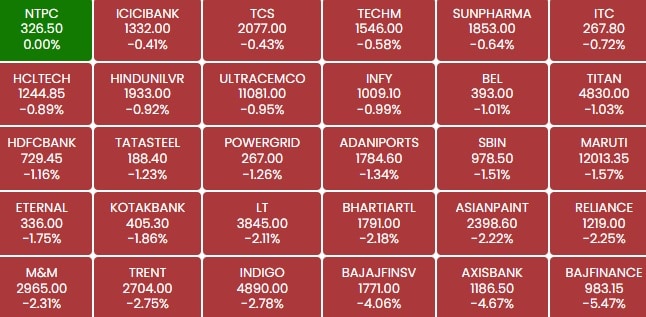
Stock Market Today: BSE Sensex Heatmap At Close On Thursday
3. Crude Oil Moves Above $100
Crude oil has emerged as another major worry for Indian investors. Brent crude moved above $100 a barrel, with prices touching around $102 in morning trading. Another market report later put Brent at $106.14 a barrel. For India, expensive crude is particularly important because the country imports a large share of its oil requirements. A prolonged rise in crude can increase the import bill and put pressure on inflation, the rupee and corporate costs.
Pranay Aggarwal, Director & CEO, Stoxkart, told NDTV that the weakness in Indian equities reflects a combination of global and domestic pressures, particularly elevated crude oil prices, rising global bond yields and expectations that interest rates could remain higher for longer. "For an oil-importing economy like India, crude above $100 a barrel raises concerns around inflation, the import bill and corporate input costs, while higher global yields can influence foreign institutional flows and keep the rupee under pressure," Aggarwal said.
4. Iran-US Tensions Add To Uncertainty
The geopolitical situation is adding another layer of risk. Renewed tensions between Iran and the US have raised concerns about oil supplies from the region. Any disruption could push crude prices higher, creating another challenge for oil-importing economies. Markets are therefore watching developments around the conflict closely. A sustained rise in crude could affect inflation expectations and the outlook for interest rates. Aggarwal said investors should closely track crude oil prices, global bond yields, geopolitical developments, FII flows, the rupee and signals from major central banks.
5. Financial Stocks Take A Hit
The pressure was not limited to global factors. Financial stocks were among the biggest losers on Thursday after the insurance regulator proposed changes to commissions and distribution payouts. The proposals triggered selling in insurance distributors, banks and non-bank lenders with significant insurance distribution income. PB Fintech fell sharply, while Axis Bank, Bajaj Finance, Bajaj Finserv and HDFC Bank were also under pressure during the session. The financial sector has a large weight in the benchmark indices. So, a broad decline in banks and financial companies can quickly drag both the Sensex and Nifty lower.
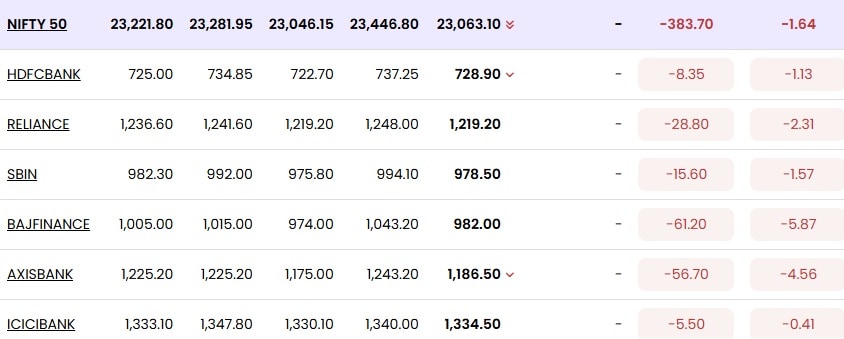
Sensex, Nifty News: Financial Stocks Lead Decline
Stock Market News: What Investors Should Watch Now
The market is now facing several pressure points at the same time. Crude is above the psychologically important $100 level. US bond yields are elevated. Expectations of another Fed rate increase have risen. At the same time, geopolitical uncertainty remains high and financial stocks are facing domestic regulatory concerns.
Aggarwal said rate-sensitive and energy-intensive sectors may continue to see volatility, while relatively defensive sectors could show greater resilience. "Near-term volatility may remain elevated, making disciplined risk management and a focus on underlying fundamentals particularly important," he added.
For the broader market, the direction of crude oil, US bond yields, the rupee and foreign investor flows could therefore remain important triggers in the near term.
KioskNews shows a cleaned-up reading view extracted from the publisher’s page — the original always lives on their site, not ours.