AI will soon master biology, unleashing new safety risks, Tencent AI chief warns
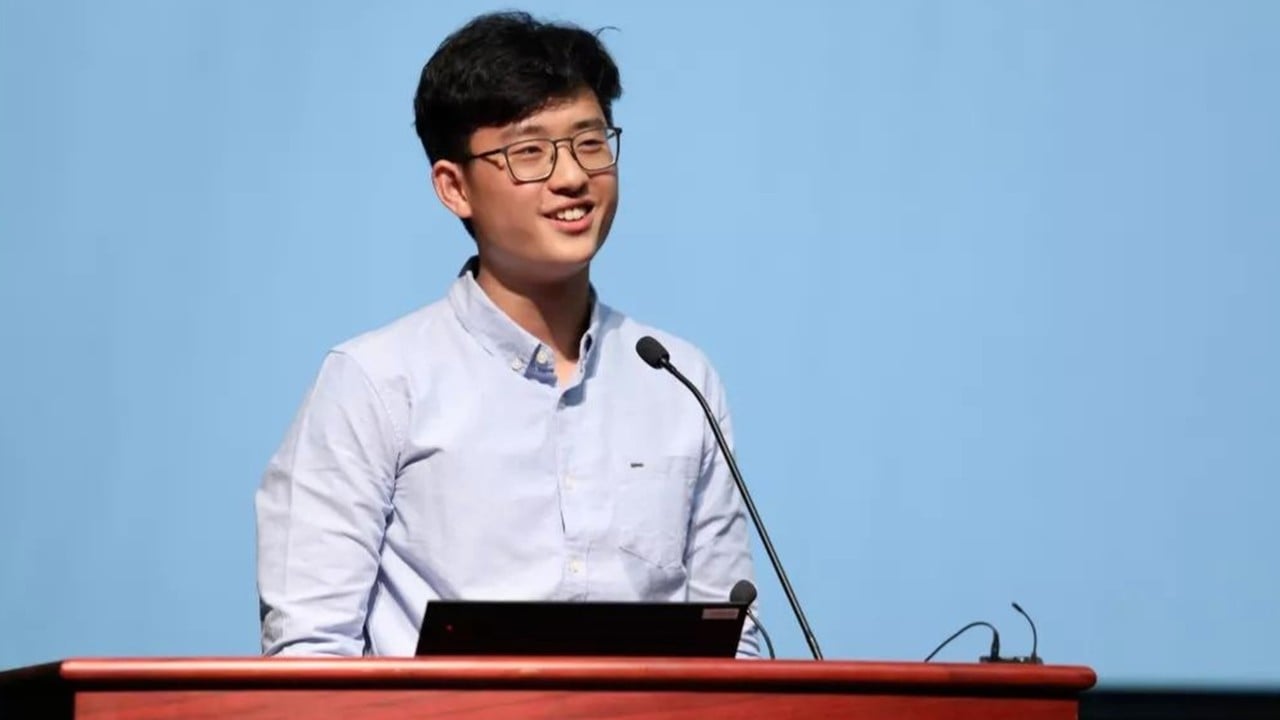
Artificial intelligence models will soon be powerful enough to master biology, presenting both benefits and serious risks, Tencent Holdings’ chief AI scientist and former OpenAI star researcher Vinces Yao Shunyu said during a rare public appearance on Saturday.
The assessment comes as frontier AI systems are increasingly being applied to medicine and biology, which could accelerate discovery of new drugs and other treatments. However, experts also warn that malicious actors could use AI to produce bioweapons or potentially start the next pandemic, especially if they are released as open-weight software.
“The cyber abilities of [AI] models and soon [the] bio ability of models will reach a threshold where it’s actually possible to do harm,” Yao said at a science symposium co-hosted by the Hong Kong Academy of Sciences and the Future Science Prize.
“All the Chinese or any open model company needs to be very responsible and very serious about those security and safety concerns.”
The warning comes as Tencent is increasingly exploring AI’s potential to automate scientific research. The Shenzhen-based tech giant released on Wednesday its latest flagship model, Hy4, which ranked as the second-best performing model produced in China, according to benchmarking firm Artificial Analysis.
Addressing a room packed with computer science students, Yao outlined Tencent’s plans to operate “autonomous science labs” that use AI systems to run complex experiments end-to-end, such as for inverse protein folding.
“I think all the technical changes can be solved, where it’s just a matter of time,” he said. “I think the bigger challenge is societal and organisational.”
Biology is widely seen among AI experts as the next major frontier for AI systems following rapid progress in the field of coding, which has triggered upheaval in global cybersecurity.
Like cyber capabilities, biological capabilities are also “dual-use”, meaning that they can be used by both attackers and defenders, though there is debate about which side benefits more.
In its release announcement, Tencent said it removed Hy4’s cyber hacking capabilities while retaining its cyber defence capabilities by filtering out relevant data during the model training stage. It also said that Hy4’s biological capabilities remained “well below” its high-risk threshold due to its continued inability to turn foundational biological knowledge into actionable protocols.
Yao nonetheless urged caution for the wider industry, noting that the gap between Chinese models and their US counterparts was not large. He warned that AI’s biological capabilities may be more “complicated” to manage than their cyber capabilities, echoing some experts’ assessment that the attack and defence capabilities for biology may be harder to “disentangle”.
“When you release [a model], you have to be very careful about evaluation … so we collaborate with some of the best security labs in Tencent,” he said. “I think there’s still a lot of things we need to do to to make it more complete, but we’re trying.”
A major point of debate is whether China’s open-weight approach, which means that the model weights can be freely downloaded and modified by anyone with sufficient hardware, is better for AI security than the closed-source approach favoured by leading US firms including OpenAI and Anthropic.
According to Yao, US companies such as Claude developer Anthropic have made a “strong argument” that frontier AI models should be closed to prevent significant societal harms.
However, he noted that open-weight models can help bolster defences as well, citing the recent incident in which AI platform Hugging Face used a Chinese open model to help defend itself against a cyberattack, after closed US models refused to help due to their inbuilt security guardrails.
“Maybe the best way forward is still a mix of closed and open-source [models] because you still want to empower everyone to … leverage the technology [for defence],” he said.
While open versus closed-source remains a wedge issue between the Chinese and US AI industries, the two sides are increasingly converging over shared concerns about frontier AI risks.
Last week, Chinese tech giants including Tencent, Huawei Technologies and Alibaba Group Holding contributed to a report on frontier AI safety released at the World Internet Conference in Wuzhen, which said that AI systems’ increasing capabilities in tasks such as pathogen design were “potentially creating major public health risks”.
Tencent has pledged to release the weights of Hy4 “in the coming days” along with a “comprehensive system card” detailing its cyber and biological safety evaluations.
Alibaba owns the South China Morning Post.
Beijing is also ramping up scrutiny of frontier AI risks, with its new proposed export controls imposing greater restrictions on AI systems that cross critical thresholds for cyberattack capabilities.
Last month, China’s ambassador for disarmament affairs, Li Chijiang, said at the United Nations that AI’s growing integration with biological and chemical technologies was “lowering the barriers for terrorist attacks”.
AI is expected to be high on the agenda during Chinese President Xi Jinping and US President Donald Trump’s meeting later this month at the Asia-Pacific Economic Cooperation (Apec) summit in Shenzhen, after the two sides agreed to launch an AI dialogue and incident notification mechanism in September.
Yao, 29, joined Tencent last year after a one-year stint at ChatGPT maker OpenAI, where he was a contributor to breakthroughs including its Operator and Deep Research products.
KioskNews shows a cleaned-up reading view extracted from the publisher’s page — the original always lives on their site, not ours.