What is Liberman's 2018 haredi draft plan, and could it break the coalition deadlock? - explainer
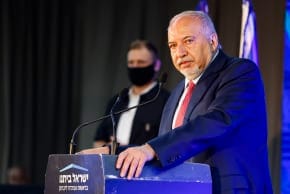
Avigdor Liberman's 2018 haredi (ultra-Orthodox) conscription proposal has reemerged as a potential basis for coalition negotiations after the Yisrael Beytenu chairman signaled on Sunday that he was willing to compromise with ultra-Orthodox parties. But how does the proposal compare with the draft legislation promoted by Boaz Bismuth in 2025, and would either framework meet the IDF's growing manpower needs?
The 2018 proposal, developed by the Defense Ministry and the IDF during Liberman's tenure as defense minister, sought to gradually increase haredi enlistment while preserving military service deferrals for yeshiva students. It established annual recruitment targets, financial penalties for institutions that failed to meet them, and a mechanism that could ultimately terminate the special exemption arrangement if recruitment targets were repeatedly missed.
Unlike Bismuth's proposal, which introduced additional personal sanctions against individual yeshiva students, Liberman's framework primarily targeted yeshiva funding and the continued validity of the exemption system itself. It also set a lower exemption age of 24, compared with 26 under Bismuth's proposal.
The differences have taken on renewed political significance as Gadi Eisenkot prepares to receive the mandate to form a government. Liberman's decision to lift his veto on cooperation with haredi parties has opened the door to coalition negotiations, although he maintains that his willingness to compromise does not amount to abandoning his support for universal conscription.
"Willingness to compromise does not mean abandoning values and principles," Liberman wrote in a statement on Sunday, defending his change in political position amid criticism from commentators and journalists.

He emphasized that his 2018 proposal would require adjustments in light of the October 7 attacks and the subsequent increase in the military's manpower requirements.
"It is clear to me that following the events of October 7, the law I proposed in 2018 also requires changes and adjustments, but it still constitutes a suitable basis for reaching agreements," he wrote.
How do Liberman's and Bismuth's haredi draft proposals compare?
Liberman's 2018 legislation was developed by a committee comprising representatives of the Defense Ministry and the IDF. It passed its first reading in the Knesset in July of that year.
The proposal aimed to increase military enlistment among ultra-Orthodox men without dismantling the existing yeshiva system. It allowed many students to continue deferring their service while establishing gradually increasing recruitment targets.
Bismuth's 2025 proposal similarly preserved the possibility of service deferrals and exemptions but added personal restrictions intended to encourage enlistment.
Neither proposal established an immediate and equal military conscription requirement for all young haredi men.
One of the most significant differences between the proposals concerned the age at which yeshiva students could receive exemptions from military service. Liberman's framework set the exemption age at 24, while Bismuth's proposed legislation raised it to 26.
The enforcement mechanisms also differed substantially.
Under Liberman's framework, annual recruitment targets were accompanied by financial sanctions against yeshivas if those targets were not met.
The proposal's most consequential provision addressed prolonged failures to meet recruitment quotas. If actual enlistment remained below 85% of the annual target for three consecutive years, the amendment to the law would expire after an additional 12 months.
This meant that the special arrangement allowing military service deferrals and exemptions could not continue indefinitely if recruitment targets were repeatedly missed.
However, Liberman's proposal did not establish a new system of personal sanctions against individual yeshiva students who failed to enlist.
Instead, its enforcement mechanisms focused primarily on financial penalties for religious institutions and the continued validity of the exemption system.
The committee that developed the framework also recommended expanding administrative sanctions against deserters and draft evaders.
Bismuth's proposal, by contrast, introduced personal sanctions alongside financial penalties for yeshivas that failed to comply with the law.
Those proposed restrictions included limitations on overseas travel, obtaining a new driver's license before age 23, and eligibility for certain government benefits and economic incentives.
However, the personal sanctions were not all designed to take effect automatically or immediately.
Some depended on the issuance of an enlistment order and the individual's subsequent failure to report for duty. Others were linked to failures to meet broader recruitment targets, while certain restrictions were subject to age limits or delayed implementation dates.
The proposal also included provisions allowing sanctions to be eased or exemptions to be granted under specified circumstances.
For individual yeshiva students, Bismuth's framework was therefore more stringent because it introduced additional personal restrictions.
On the exemption system as a whole, however, Liberman's proposal established a potentially more far-reaching consequence for persistent failures to meet recruitment targets.
Under his framework, the special legislative arrangement could expire following three consecutive years of missed targets, subject to the stipulated 12-month transition period.
Bismuth's proposal included review mechanisms, financial sanctions, and possible adjustments, but did not establish an equivalent automatic mechanism terminating the entire exemption arrangement.
The differences are also evident in the recruitment targets themselves.
Liberman's framework established a target of 3,996 recruits in 2018, gradually increasing to 4,967 in 2021 and 6,208 in 2025.
One version of Bismuth's framework set a target of 8,160 recruits over 18 months, averaging about 5,440 per year.
Under that version, up to 10% of the recruitment target could be met by individuals performing civilian service in security-related fields.
At first glance, Bismuth's initial target appears higher than the target Liberman established for 2018. However, Bismuth's annual average was lower than the target Liberman's proposal established for 2025.
The figures do not represent identical periods or legislative arrangements operating under equivalent timetables.
Several versions of the recruitment targets were presented during the advancement of Bismuth's framework. Each figure must therefore be examined in light of the specific legislative version and period it refers to.
Another significant difference concerns how recruits are counted.
Liberman's framework established targets for national and civilian service separately from military enlistment targets.
Under one version of Bismuth's proposal, civilian service in security-related fields could count toward the overall recruitment quota, up to 10% of the target.
Consequently, meeting the overall quota would not necessarily indicate that an equivalent number of new soldiers had joined the IDF.
The identity of those included in the recruitment figures has also sparked controversy.
One criticism of Bismuth's framework concerned the possibility of counting young men who had already left the haredi community.
If a young man raised in the ultra-Orthodox community but no longer studying at a yeshiva is counted as a haredi recruit, meeting the recruitment target does not necessarily demonstrate increased enlistment among students attending active yeshivas.
Beyond these legal and numerical differences lies a fundamental change in Israel's security requirements.
Liberman's proposal was developed in 2018, five years before the October 7 attacks and the war that followed.
Since then, the haredi population has grown, while the IDF's manpower requirements have increased significantly.
The Bank of Israel and other professional bodies have warned that the recruitment targets under discussion do not guarantee an increase in the number of soldiers sufficient to meet the military's needs.
A framework that might have been considered a reasonable basis for regulating haredi conscription before the war does not necessarily provide an adequate response to current requirements.
This also explains why Liberman himself acknowledged that his original proposal would need to be updated.
The central questions are which changes he will demand and whether the haredi parties will be prepared to accept them.
At this stage, Liberman has not presented an updated version of the bill or specified which provisions of his original framework he considers nonnegotiable.
The distinction between the two proposals also illustrates the political complexity of reaching an agreement.
In 2018, the haredi parties opposed Liberman's legislation because they regarded its recruitment targets, budgetary sanctions, and mechanism allowing the exemption arrangement to expire as threats to the yeshiva world.
With proposals that include personal sanctions now under consideration, Liberman's earlier framework could appear to those parties to offer a more comfortable starting point for negotiations.
Nevertheless, his original proposal was not without costs for the haredi parties, and some ultra-Orthodox factions continue to oppose recruitment targets and sanctions.
There is therefore no basis for a sweeping conclusion that Bismuth's framework is more stringent than Liberman's, or vice versa.
Bismuth's proposal is stricter on personal sanctions, while Liberman's includes a tougher mechanism for addressing systematic failures to meet recruitment targets.
Differences in the exemption age, the number of recruits, and how they are counted further complicate the comparison.
From the perspective of the IDF's current manpower needs, neither proposal, as originally formulated, independently guarantees a sufficient increase in the number of soldiers.
Could Liberman's 2018 proposal help Eisenkot form a government?
The renewed attention surrounding Liberman's proposal comes as Eisenkot faces the challenge of forming a coalition involving parties with sharply conflicting positions on military conscription.
If he receives the presidential mandate, Eisenkot is expected to lead coalition negotiations and will be responsible for reaching agreements with the haredi parties and other potential coalition partners.
Liberman has indicated that he is prepared to consider compromises based on previously proposed frameworks, including the legislation he advanced as defense minister in 2018.
He also referred to the Shkedi Report and the military conscription legislation promoted by the most recent coalition.
"In 2018, I submitted a draft law formulated by the IDF and the defense establishment," Liberman wrote.
However, he did not demand that the original framework be adopted in its entirety, nor did he claim that Eisenkot intended to use it as the basis for coalition negotiations.
Haredi sources say discussions are already taking place between figures in the ultra-Orthodox parties and people close to Liberman, and that the removal of the veto on political cooperation is mutual.
According to the sources, the haredi parties have a long history of working with the Yisrael Beytenu chairman, and they believe their trust in him could even exceed their trust in Eisenkot.
Nevertheless, the sources expressed doubts about Eisenkot's ability to bring Shas into a coalition, even if he reaches agreements with United Torah Judaism (UTJ).
UTJ has faced its own dilemma over coalition negotiations and the draft law, with the party declining to clarify whether its demand for conscription legislation would also apply to a potential Eisenkot-led government.
"It is no coincidence that Deri recommended Netanyahu," the haredi sources said.
Without Shas, the Zionist change bloc and UTJ would hold only 55 Knesset seats.
The difficulty helps explain why Liberman is presenting compromise with the haredi parties as a political necessity rather than an ideological shift.
For the Yisrael Beytenu chairman, the alternative, a minority government dependent on Arab parties, remains unacceptable.
He reiterated that he would not support a government dependent on Ra'am or the Joint List, even if that position complicated efforts to replace Prime Minister Benjamin Netanyahu.
"Those who attack me for my attempts to reach understandings with the haredi parties are among the same people who prefer to establish a government dependent on Ra'am and the Joint List," he argued.
Liberman accused some Arab party lawmakers of identifying with Hamas and made his opposition to such a coalition clear.
"That will not happen. I will not lend a hand to the establishment of such a government, which, in my view, would harm security and return Netanyahu to power," he said.
He argued that the election results required a reassessment of the available political options.
"In the reality that has emerged, in order to prevent another election and put an end to the Netanyahu era, there is no choice but to make difficult decisions and reach conclusions on issues where flexibility can be shown, and understandings can be reached," he wrote.
Despite his willingness to negotiate, Liberman insisted that his fundamental position on military conscription had not changed.
"I still believe that the correct model is a draft law for everyone," he wrote.
"Reaching an understanding does not mean abandoning principles, and dialogue does not mean erasing red lines."
Sources in haredi political circles believe that the ultra-Orthodox parties and Yisrael Beytenu would vote against a government dependent on Arab parties, although that remains an assessment rather than an official voting decision.
The challenge facing Eisenkot is therefore not simply persuading Liberman and the haredi parties to negotiate, but reconciling the competing demands of potential coalition partners whose positions on conscription and Arab party participation remain far apart.
Liberman also rejected allegations that his change of position was motivated by personal aspirations to become prime minister.
"I am not acting out of personal ambition to become prime minister at any cost," he wrote.
"I have always emphasized that, as far as I am concerned, it is an option, not an obsession."
He recalled that since 2019, he had received numerous offers from the opposing political camp, according to his account, and denied engaging in political maneuvers or attempting to undermine another candidate.
Liberman also emphasized his commitment to those serving in the military.
He noted that during his tenure as finance minister, the salaries of conscripted soldiers were raised by 50%, and the Mimadim LeLimudim ("From Uniforms to Studies") program was included in the state budget.
He said that even under a future compromise, he would not abandon efforts to expand benefits and improve conditions for reservists and career military personnel.
The focus will now shift to Eisenkot, who must determine whether coalition agreements can be reached between the haredi parties and potential Zionist partners demanding substantial military enlistment and a more equal sharing of the defense burden.
The wording of any proposed legislation remains unknown, as does whether agreements can be reached with the haredi parties and whether other potential coalition partners would accept them.
For Liberman, the 2018 framework represents a possible reference point for negotiations, not a completed coalition agreement.
Lifting the veto makes dialogue possible, but it does not guarantee that the dispute over military conscription will be resolved.
KioskNews shows a cleaned-up reading view extracted from the publisher’s page — the original always lives on their site, not ours.