TRC Roulette : Apartheid chain of command: ‘I know everything,’ Eugene de Kock tells TRC inquiry
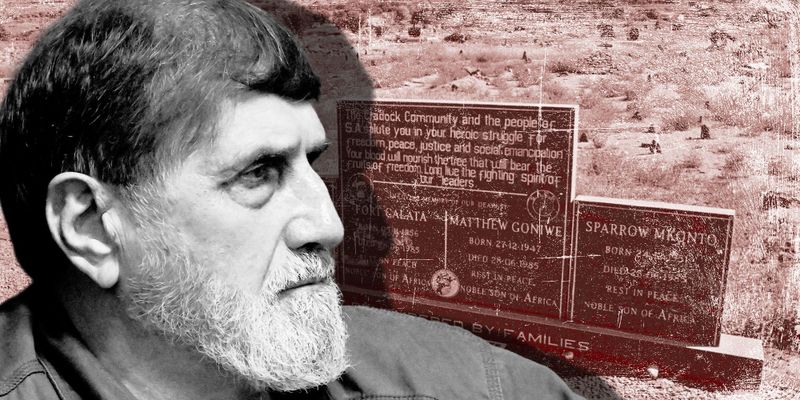
The man who bore the weight of moral burden of apartheid-era atrocities and who was sentenced in 1996 by Justice Willem van der Merwe to two life terms, plus 212 years’ imprisonment (to run concurrently), has finally found a platform to tell his truth.
De Kock’s appearance on Monday, 26 October, at the Khampepe Commission is a significant moment as the inquiry approaches its scheduled date for wrapping up on 18 December this year. His appearance follows that of former president Thabo Mbeki last week.
Meanwhile, it has emerged that the memo of a secret meeting of then president FW de Klerk and his last Cabinet 28 hours before South Africans were set to vote in the country’s first democratic election on 27 April 1994 was only prepared on 4 May that year and signed on the 5th.
Eugene de Kock was arrested the day the memo was officially signed off.
‘No one served time but me’
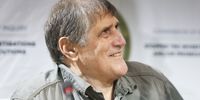
Now 77-years-old, the former torturer, assassin, bomber and supplier of arms to the Inkatha Freedom Party testified that prosecuting the generals who were his superiors would have “exposed the chain of command and those who gave instructions”.
“I can explain command structures, operational relationships, requests for assistance, the movement of instructions and covert liaison arrangements.
“I can identify where the intelligence or target selection originated outside Vlakpaas. I can explain which senior people approached me and which structures possessed direct knowledge. Decisions and instructions moved through the chain of command and liaison. I am able to identify where the instructions came from and who executed them.”
He told the panel that out of all those involved in the violent application of apartheid ideology, “none served a day in a South African prison – except me”.
De Kock has waited for this moment for a long time.
‘They simply never approached me’
In an 18-page affidavit, De Kock, led by veteran advocate Geoff Budlender, recipient of the 2024 George Bizos Human Rights Award, set out that he was the central “operations figure” at Vlakplaas, a farm outside Pretoria along the Hennops River and which served as the secret headquarters for Section C1 (also referred to as C10) of the security police.
He said that while the public face of C-Section had been counter-insurgency “rehabilitation” of turned liberation Struggle members, in reality it operated “as a death squad” responsible for extra-judicial killings, kidnappings, interrogations and bombings.
He singled out advocate Anton Ackermann, appointed by presidential proclamation by Thabo Mbeki in 2003 to head the Priority Crimes Litigation Unit to prosecute post-TRC matters, for the failure to prosecute the bigger fish in deeper, darker waters.
“In order to understand what was stopped and why this happened, it is necessary to understand what was available before 2003, who possessed this evidence, and the prosecutorial strategies.
“I was arrested in 1994 and charged with 89 charges including six counts of murder, conspiracy to murder, attempted murder, assault and kidnapping.”
He said that immediately after his sentencing, Ackermann approached him, vowing to use De Kock “to move upward through the chain of command”. However, this had never happened. Once he was safely behind bars and removed from society he was kept at arms’ length.
Was always ready to spill the beans
The highly-trained soldier said he had a great deal of information that would have been of relevance to the prosecution of other individuals, including the generals in command as well as the politicians who in turn had instructed them.
“However very little attempt was made by advocate Anton Ackermann or Attorney-General advocate Jan d’Oliveira to interview me regarding my knowledge of apartheid-era crimes.”
He was already in custody, he said, and was in a position to provide “operational details of the involvement of those personas as part of a cooperation agreement. I have never been reluctant to provide information to prosecuting authorities, however, they simply never approached me.”
He rejected suggestions that he might not have been available or was reluctant to provide evidence. Not only did he openly disclose his crimes and submit a 1,000+ page TRC amnesty application, he said, he also testified for the prosecution in the Motherwell bombing trial that resulted in the convictions of Security Branch officials Gideon Nieuwoudt, Wahl du Toit, and Martiens Ras.
On 14 December 1989 these senior Security Branch members blew up one of their own colleagues in Motherwell near Gqeberha to conceal their past crimes.
‘Sickened’
Sentencing De Kock in 1996, Judge Willem van der Merwe noted that a “rotten system” enabled the security policemen to perpetrate these human rights violations. He added it was this same system that had approved of De Kock’s actions and helped him to conceal and continue his diabolical work for the state.
De Kock told the panel that even though Van der Merwe had explicitly noted at the end of his trial that “there was more than enough evidence to charge General [Krappies] Engelbrecht”, head of the security police, who was a “sweeper” deployed to cover up state-sponsored crimes, he was never held to account.
Engelbrecht was fingered with tampering with evidence in the plane crash that killed then Mozambican president Samora Machel and 24 others on 19 October 1986.
Key figures
Key figures De Kock named in his statement to the commission were Colonel Johan Victor who established the Vlakplaas operation in 1979, as well as early commanders Van Heerden, Dirk Coetzee, Jan Coetzee and Colonel “Jac” Cronje.
De Kock served as a captain under Cronje before being appointed commanding officer on 1 July 1985. Captain Adrian David Baker was second in command under De Kock and Peter Caselton, an operative based in London funded via laundered secret funds.
In the police and security police chain of command he listed Brigadier Willem Schoon, head of C-Section responsible for C1/Vlakplaas activities and who received daily morning operational reports from De Kock at South African Police (SAP) headquarters in Pretoria; General Johann Coetzee, National Head of the Security Police; Major Martin Naudé, head of Section C2, responsible for selecting turned Askaris for regional deployments; Colonel/Brigadier Johannes Petrus Koekemoer, head of the Security Branch national secret fund who instructed financial falsifications and handled bounty payments, Major-General “Krappies” Engelbrecht, senior to De Kock in the chain of command; Major-General Nick van Rensburg, head of the SAP Security Branch who controlled SADF access to Askaris and admitted to extra-judicial killings; Military Intelligence Liaison, Colonel At Nel, second-in-command of the Directorate of Covert Collection (DCC) and Tony Oosthuizen, head of the PAC desk at the DCC.
Political leadership
In his statement, De Kock explained that while operational officers did not typically interact directly with political leadership as this was a function reserved for police generals, his experience proved that political office-bearers were fully aware of, and directly involved in, state-sanctioned operations
“My own experience demonstrates that political office bearers were aware of what was happening and were involved in it.”
Minister of law and order (1982-86) Louis le Grange had signed off on the bombing of ANC offices in London, De Kock said, adding “he decorated the people who were involved in this, including me”.
Adriaan Vlok, deputy minister of law and order (1985-86) and minister of law and order (1986-91) visited Vlakplaas “on many occasions”.
“One occasion he came there to congratulate me on the bombing of Khotso House (the offices of the South African Council of Churches) and Cosatu House.”
De Kock said Brigadier Shoon had told him that the order to bomb Cosatu House had come “from very high”, meaning then state president PW Botha.
De Kock told the commission that prosecuting senior generals would have inevitably implicated the political leaders who issued the orders. He concluded that the failure to prosecute high-ranking officials had been driven by political decisions “to shield those at the top of the chain of command who ultimately benefitted from this protection”.

The innards of Vlakplaas
De Kock told the inquiry that turned former liberation fighters (Askaris) were central to Vlakplaas “death squad” operations as they could easily infiltrate townships and gain trust without raising suspicion.
Vlakplaas did not recruit Askaris directly, he noted, saying they were “assigned” after being held under Section 29 of the Internal Security Act (tortured, sometimes for up to two-and-a-half years).
These turned individuals were placed in a moral no-man’s land, as author Jacob Dlamini has so eloquently written in his book Askari. De Kock said Askaris were initially recorded as “Registered Sources”. Later, most were trained and registered as SAPS officers in about 1988/89.
Section C2 (headed by Major Martin Naudé) maintained a database of turned individuals and selected Askaris “based on regional language and customs”.
Vlakplaas also maintained photo albums containing thousands of photographs, including copies of every refugee applicant entering Swaziland from South Africa, to identify “operational targets”.
When regional Security Branch offices requested C1 operatives, it was Brigadier Schoon who approved deployments, and teams reported to the local commanding officers in those regions.
Head money
Vlakplaas operated with a monthly standing advance of up to R17,000 (about R650,000 today) managed by De Kock for operational expenses and Askaris’ food and contacts.
On instructions from Colonel Johannes Petrus Koekemoer (head of the national secret fund), De Kock created false receipts, claims, and reports to launder money to fund covert operations (such as paying London-based operative Peter Caselton) and parties attended by generals.
Cash incentives or “head money, ranging from R1,000 (R40,000) to R7,000 (R280,000) was paid out for the arrest/killing of MK/Apla members or the recovery of weapons (landmines, SAM-7 missiles).
Vlakplaas, he said, maintained “liaison relationships” with other intelligence structures, including the National Intelligence Agency (facilitated by Brigadier Loots) and the SA Defence Force’s Directorate of Covert Intelligence and Directorate of Covert Collection under formal written agreements.
De Kock ended his testimony noting that he had mentioned the names of a number of people who were involved in the South African police death squad bombings “and related activities and who gave instructions in this regard.
“I am also able to provide information and evidence about a large number of other members of the South African police who were involved in these activities.” DM
KioskNews shows a cleaned-up reading view extracted from the publisher’s page — the original always lives on their site, not ours.