SC: Congress can’t bloat president’s budget
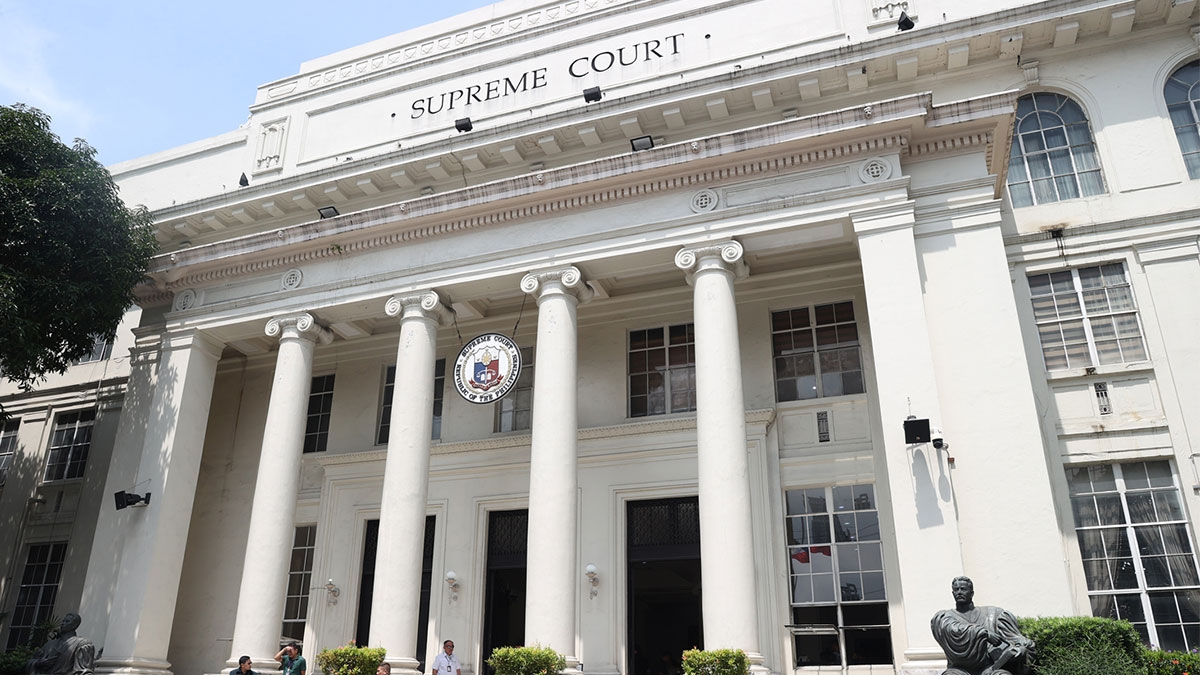
MANILA, Philippines — The Supreme Court has struck down key provisions of the 2024, 2025 and 2026 national budgets for violating constitutional limits on government spending, ruling that Congress cannot increase the President’s total recommended appropriations while emphasizing that unprogrammed funds are not unconstitutional per se but must be subject to strict safeguards.
In a 121-page decision penned by Senior Associate Justice Marvic Leonen, the SC en banc declared unconstitutional the entire 2024 General Appropriations Act (GAA) because Congress increased unprogrammed appropriations by P449.5 billion, raising the President’s recommended total appropriations beyond the amount submitted in the National Expenditure Program (Nep) from P281.9 billion in the NEP to P731.4 billion in the GAA.
The Nep refers to the proposed national budget prepared by the executive branch, consolidated by the Department of Budget and Management (DBM) and approved by the President and the Cabinet before it is submitted to Congress for scrutiny and eventual approval. The GAA is the enacted spending program.
Article continues after this advertisement
READ: Making sense of the 2027 national budget
FEATURED STORIES
NEWSINFO
NEWSINFO
NEWSINFO
The high court also nullified the 2025 GAA over a P17.99-billion increase in the Department of Public Works and Highways’ Special Road Fund, which likewise exceeded the President’s recommended appropriations.
For the 2026 GAA, the court permanently prohibited the implementation of Special Provisions 1(a) and (b) under Chapter XLIII, which govern the release of unprogrammed appropriations.
It also invalidated P12.75 billion in increases to certain agencies’ Special Accounts in the General Fund for violating the Administrative Code.
“Every peso collected in taxes and fees represents labor rendered, needs deferred, perseverance and sacrifice endured by our people. The General Appropriations Act must honor that sacrifice,” the court said.
Article continues after this advertisement
“Congress is constitutionally prohibited from increasing the President’s total recommended appropriations in the Budget of Expenditures and Sources of Financing (BESF), which covers both programmed and unprogrammed appropriations.”
BESF details the national government’s fiscal program, revenue projections and expenditure plans. It is submitted to Congress along with the NEP and another document identifying the sources of financing the proposed budget.
Article continues after this advertisement
The rulings stemmed from petitions challenging the 2024 budget’s expanded standby spending authority and related provisions in subsequent national budgets.
Strict limits on standby funds
The court clarified that unprogrammed appropriations are not inherently unconstitutional. These funds serve as contingent spending authority that may be tapped when specified conditions are met, including the availability of additional government revenues.
But the majority warned that such appropriations become constitutionally infirm when they lack adequate standards, allow unchecked executive spending or threaten funding for programmed projects when projected revenues fail to materialize.
To remain constitutional, unprogrammed appropriations must stay within the national fiscal program and retain their character as a narrow, contingent source of funding. They must not contain lump-sum allocations, and the conditions governing the availability and use of additional revenues must be clearly defined, the court said.
Congress must also establish sufficient spending priorities when multiple purposes compete for the funds.
As a general rule, newly available revenues should support programmed expenditures unless clear and convincing reasons, such as foreign-assisted projects, justify placing them under unprogrammed appropriations.
Past spending and liability
The court stressed that the constitutional ceiling under Article VI, Section 25(1) applies to the combined total of programmed and unprogrammed appropriations.
The court applied the operative fact doctrine to the 2024 and 2025 budgets, preserving irreversible programs whose beneficiaries acted in good faith despite the constitutional defects.
The ruling, however, does not automatically absolve those who authored, proposed or implemented the challenged appropriations from criminal, civil or administrative liability.
Exemption may apply only if the proper tribunals expressly find that they acted in good faith.
Associate Justice Samuel Gaerlan, meanwhile, called for tighter safeguards on the bicameral conference committee, proposing written records of major changes, public proceedings, sufficient review time for both chambers and a ban on unrelated amendments.
The committee should be “a bridge between two chambers,” he said, not “an alternative legislative procedure.”
The court granted the petition of the late former Albay Rep. Edcel Lagman and others challenging the 2024 budget, partly granted a separate petition led by former Senate Minority Leader Aquilino “Koko” Pimentel III, and granted a petition by the Filipinos for Peace, Justice and Progress Movement against the 2025 GAA.
It partly granted petitions by Caloocan City Rep. Edgar Erice and Mamamayang Liberal Rep. Leila de Lima questioning the 2026 provisions.
The decision draws a clear distinction between allowing the government limited flexibility to meet unforeseen needs and granting broad authority to spend money without sufficient safeguards.
Unprogrammed appropriations remain permissible, the court said, but they cannot be used to circumvent constitutional limits on the national budget or weaken accountability over public funds.
Separate opinions
Chief Justice Alexander Gesmundo agreed that unprogrammed appropriations are constitutionally permissible, describing them as a means for the President to respond to changing circumstances, particularly during crises.
He said these funds must remain a limited standby authority that does not undermine the national fiscal program.
Congress cannot increase the unprogrammed appropriations proposed by the executive, he added, and any increase must be matched by a corresponding reduction in programmed appropriations.
Associate Justice Rodil Zalameda likewise defended the use of unprogrammed funds for extraordinary and unforeseen national needs, provided safeguards are observed.
He disagreed, however, with the majority’s conclusion that Congress had unconstitutionally increased unprogrammed appropriations in the 2024 budget.
Zalameda maintained that the constitutional prohibition on increasing the President’s proposed appropriations applies to funds for government operations, not contingent or standby appropriations.
Associate Justice Jhosep Lopez also agreed that unprogrammed appropriations are not unconstitutional per se but disputed the majority’s interpretation of the constitutional spending ceiling.
He said the restriction under Article VI, Section 25(1) applies to programmed appropriations backed by identified funding sources, not contingent appropriations.
Associate Justice Japar Dimaampao argued that the Constitution contains no express prohibition against unprogrammed appropriations and that their inclusion in the GAA does not violate separation of powers because Congress itself authorizes the funds. He said there was no “tug-of-war between the two co-equal branches of government.”
Associate Justice Raul Villanueva similarly said unprogrammed appropriations should be allowed as long as they do not exceed the amounts proposed by the President in the NEP. Once the budget proposal is submitted, Congress cannot freely increase the allocation or depart from the specific purposes identified by the executive.
Justices differ on congressional power
Associate Justice Alfredo Caguioa agreed that unprogrammed appropriations are not unconstitutional per se but stressed that their release must comply with constitutional safeguards. He said lump-sum appropriations may be permissible if they do not effectively become pork barrel funds.
Caguioa also called for abandoning the doctrine in Tolentino v. Secretary of Finance, which allows the bicameral conference committee to introduce amendments to provisions on which both chambers of Congress had already agreed.
Associate Justice Maria Filomena Singh agreed that unprogrammed appropriations are valid in principle, viewing them as advance enactments of supplemental or special appropriations subject to their own spending ceiling.
She disagreed, however, that the bicameral conference committee was barred from recommending an increase merely because both chambers had previously approved the same amount. She said the constitutional violation arose when the increase exceeded the President’s proposal.
Associate Justice Henri Jean Paul Inting said the 2026 provisions improperly allowed funds to be released based on excess collections from a single non-tax revenue source or new revenues excluded from the BESF, even when total government revenues had not exceeded targets.
Inting also said Congress cannot reclassify appropriations between programmed and unprogrammed spending because budget preparation and the prioritization of government projects belong to the executive.
Associate Justice Ramon Hernando took a stricter position, maintaining that unprogrammed appropriations in the GAA are unconstitutional because they lack identified funding sources required by the Constitution.
He said additional revenues should instead be allocated through a special appropriations law.
Associate Justice Antonio Kho Jr. also opposed the system, arguing that it allows the executive to determine projects, funding amounts and priorities after the national budget has been enacted. Congress holds the primary power of the purse and must make essential spending decisions through legislation, he said.
Associate Justice Amy Lazaro-Javier agreed that the challenged unprogrammed appropriations and special-account provisions were unconstitutional because they exceeded the President’s proposed spending limits and relaxed restrictions on the release of contingent funds.
Your subscription could not be saved. Please try again.
Your subscription has been successful.
But she said the court should defer applying the operative fact doctrine until a complete accounting establishes how the funds were released and spent. /cb
KioskNews shows a cleaned-up reading view extracted from the publisher’s page — the original always lives on their site, not ours.