Into the Wild with Locavore NXT: A 3-day deep dive into foraging, sustainability and cooking with local ingredients at one of Indonesia’s most progressive restaurants
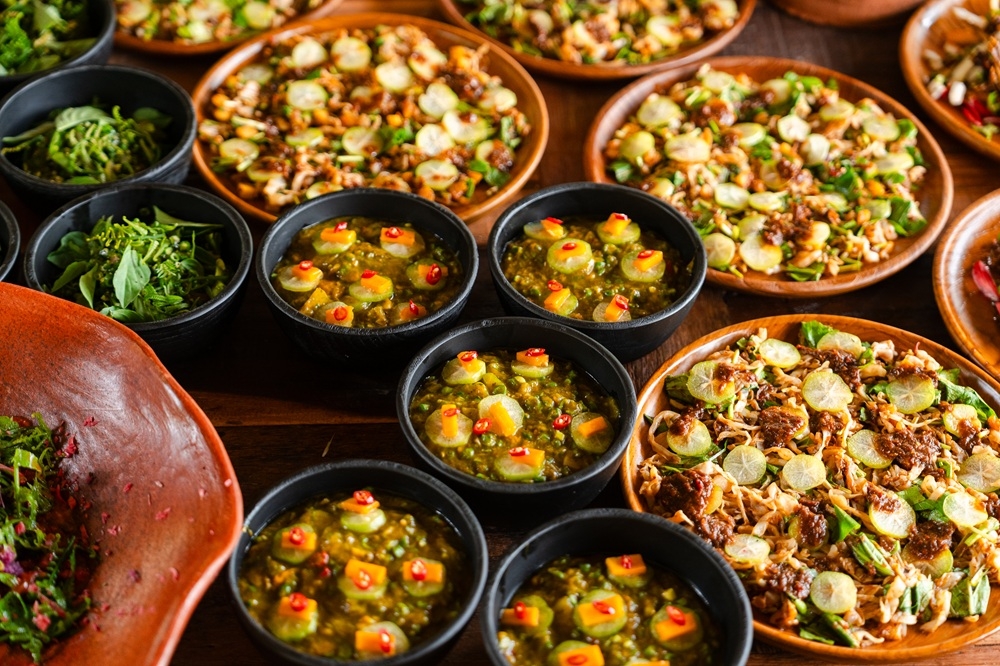
BALI, Nov 8 — The word “locavore”, a portmanteau of the Latin words locus (place), and vorare (to swallow), refers to someone who tries to eat food grown and produced locally.
Though it may sound intuitively similar to “carnivore” and “herbivore”, it is much, much younger; those two were adopted into English around the mid-nineteenth century, whereas “locavore” was coined by Jessica Prentice in 2005.
A chef and a writer, Prentice and a group of like-minded women challenged people in the Bay Area to eat only local food for a month. Olivia Wu, a food writer for The San Francisco Chronicle, asked her for a name to describe the people who took it on, and thus, the word was born.
Twenty-one years on, the locavore movement is, ironically, no longer local.
What began in Northern California as a month-long challenge has since reached the farthest corners of the globe, and the highest echelons of restaurants.
Dewakan, arguably our country’s most forward-thinking restaurant on this subject, was the first to meaningfully showcase indigenous and local ingredients in a fine dining context. It is no longer alone.
Throw a stone among fine dining restaurants in Malaysia and the chances of hitting one championing local ingredients have risen exponentially in the last five years.
But over in Bali, one restaurant takes it to the next level — and has done so for the last 13 years.
At Locavore NXT in Ubud, “local” is a philosophy rather than a preference: no imports, no dairy, no wheat.
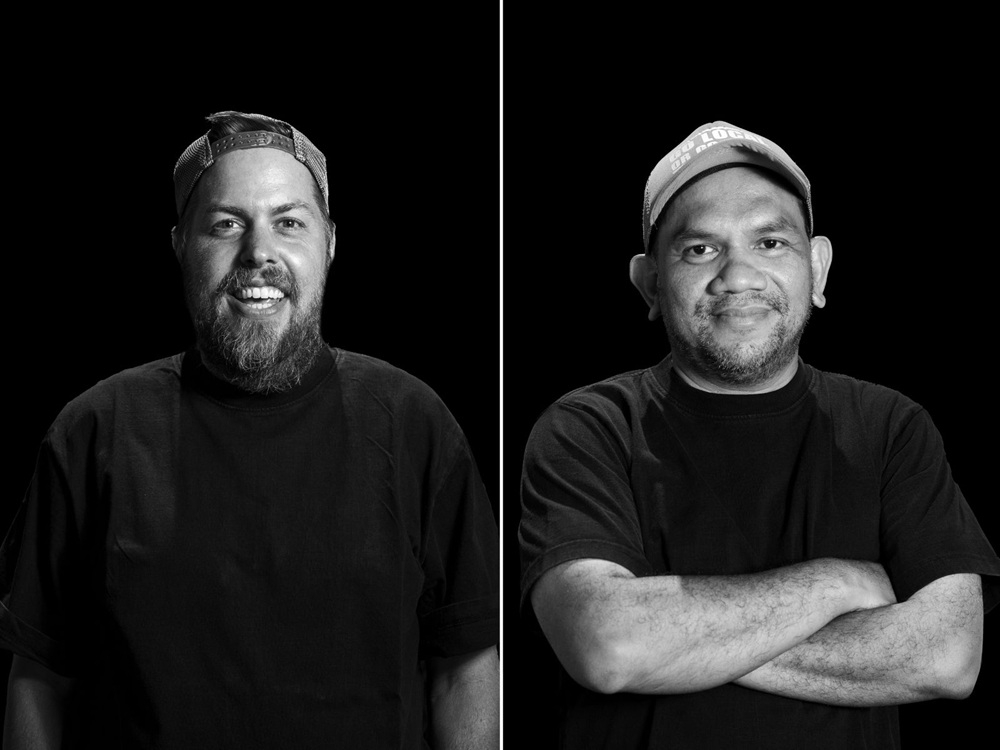
Locavore was founded by Dutch chef Eelke Plasmeijer (left) and Indonesian chef Ray Adriansyah (right). — Pictures courtesy of Locavore NXT
The menu draws on 473 ingredients from across Indonesia. It is the brainchild of two chefs: Dutchman Eelke Plasmeijer and Jakarta-raised Ray Adriansyah, who crossed paths in the capital and later moved to Bali to helm the kitchen at Alila Ubud.
Their own restaurant, Locavore, opened in 2013. In a 2019 interview with PostMag, Plasmeijer recalled the early challenges of defining the idea.
“We had to figure out what ‘local’ meant to us,” he said.
They were still using beetroot, radish and fennel, grown in Bali from imported seeds, and it felt unnatural. “Why travel to Bali to have celeriac?”
They spent the next decade refining their answer to that question. Locavore became Bali’s most progressive restaurant, and its reputation travelled: it made Asia’s 50 Best list, and was named the best restaurant in Indonesia in 2019.
But the chefs wanted to go further and deeper. Locavore NXT, which opened in December 2023, is a sweeping, ambitious campus whose size eclipses the first Locavore many times over.
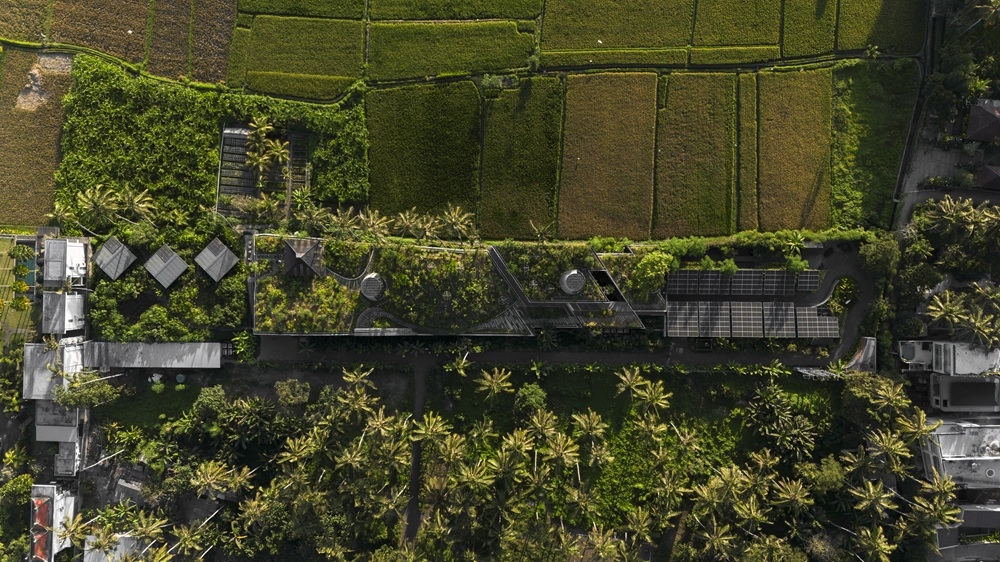
The Locavore NXT campus was opened in December 2023, complete with solar panels, a roof forest, fermentation and distillation labs and even a mushroom chamber in the basement. — Picture courtesy of Locavore NXT
A food forest grows on the roof, and the basement is a chamber holding 13 varieties of mushrooms.
Sustainability became an even bigger part of the equation: 172 solar panels, a closed-loop water system and about 250 kilogrammes of organic waste composted every week add up to 98.13 per cent of the property’s waste staying out of a landfill.
The best way to see the full picture?
Head Into the Wild.
First held in 2019, then again in 2024 and 2025, Locavore NXT’s creative culinary basecamp returned for a fourth time this year.
It goes “beyond the typical four-hands dinner” — the format in which two chefs share a kitchen for a night and cook a single menu together.
Instead, 12 chefs were invited to Ubud for three days, from Tokyo, Copenhagen, Singapore and beyond.
The aim, as the organisers put it, is to put Bali’s ingredients in the spotlight while building real community in the industry.
Attendees who book a place, take part alongside them and what they get is far more than a meal.
There are talks and workshops that go through the mushroom chamber, the fermentation lab, the distillation lab and the circular waste centre.
A foraging expedition into the jungle in Payangan, a district 45 minutes drive from the restaurant, ends with lunch alongside the chefs.
And on the last day, the chefs are split into teams of three and given a challenge: build a tasting menu from the ingredients Locavore uses, plus a mystery ingredient each has brought from their home country, while attendees watch it come together before it is served that night.
This year, I was invited to be there.
The first day hosted a symposium of talks at Locavore NXT, and it opened with a chef addressing a subject close to home for many of us writers in the audience.
Malaysian Darren Teoh, chef-owner of two-Michelin-starred Dewakan, spoke about what “freedom” means for restaurants as they negotiate their “unhealthy relationship with the media”.
He focused on the unspoken quid pro quo between restaurants and media in service of increasing attention and recognition for restaurants, and their increasing dependence on this type of coverage for commercial success.
“The work should give the media something to say. Media should not give the restaurant something to become.” Food for thought.
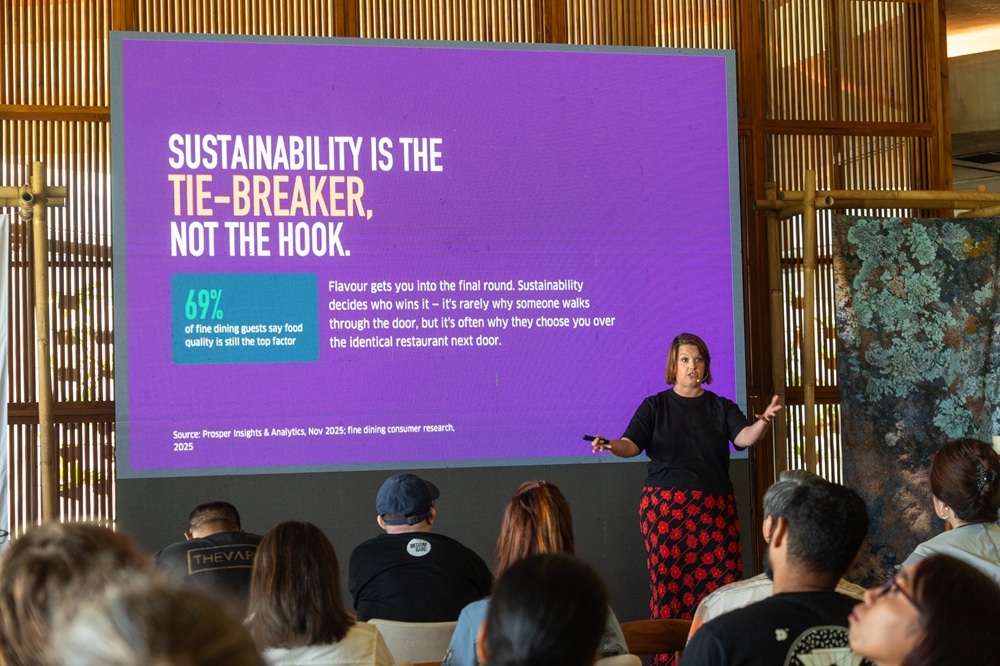
The first day of Into the Wild opens with a symposium of talks, including this one by Juliane Caillouette Noble, the CEO of the Sustainable Restaurant Association, who spoke about whether diners care enough about sustainability to change their behaviour. — Picture courtesy of Locavore NXT
Juliane Caillouette Noble, CEO of the Sustainable Restaurant Association, took on a blunter question: does the world care about sustainability?
People do, she said, but “caring is something very different to changing your behaviour”.
According to her, the data suggests that almost nobody books a table at a restaurant because of sustainability.
Claims like carbon neutral mean nothing to a guest; what lands is whatever touches the diner directly, such as “simple, non-toxic ingredients” that are “better” for you.
Workshops followed the talks, and I had an almost cynical brand of curiosity about their sustainability efforts.
So they took us to see some maggots.
I had expected the smell to be the hard part.
Walking into the circular waste centre, I braced for moist, warm rot, the enzymatic funk of fruit and vegetable scraps on their way out.
Instead, the air was dry, with an almost toasty note; it smelled like walking into a pizzeria.
Used cooking oil is mixed with a binding agent to become candles, set in cut glass bottles.
Coffee grounds are turned into body scrubs.
The sorting for non-organic waste impressed even more.
Every kilogramme is logged, and nothing is missed.
There is a cult-like zeal to how the team approaches all this; they believe in it to an obsessive extent, and it shows in the details.
Then they whipped out a tray of black soldier fly larvae, and the real show began.
Given a heap of kitchen scraps, they ate with ferocity.
Over time, that appetite is what turns fine dining scrap into compost.
It is hardly something you want to think about over dinner.
It was also the most fascinating part of the entire day.
On the second day, we followed “Boss” Kasida, Locavore’s head forager, into the jungle in Payangan.
The trek lasted an hour and a half, and the forest came to us one bite at a time.
The air was hot but smelled fresh, green and clean.
The cacao fruit reminded me of mangosteen, down to its slightly slimy texture.
A clove leaf was something else entirely: super pungent, and the spice overwhelmed my palate for a good while afterwards.
Deeper in, a live sago worm was placed in my hand.
It was plump and very much alive, curling and pushing against my palm as if it were trying to wriggle its way to freedom.
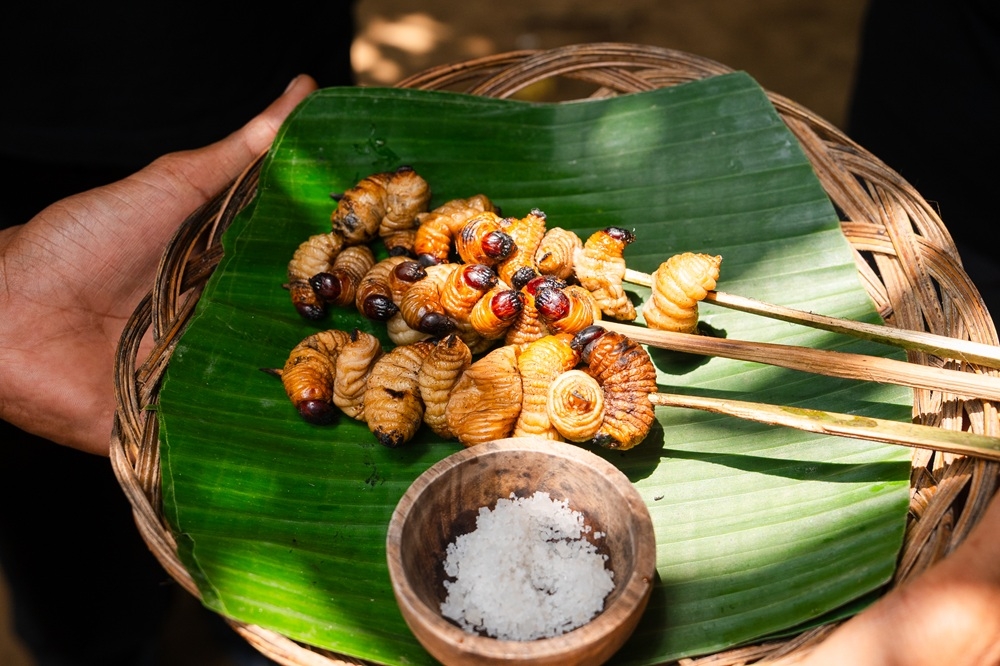
The foraging expedition into the jungle leads to tasting ingredients like the sago worm, which is grilled alive and eaten with a touch of salt. — Picture courtesy of Locavore NXT
Over the fire it hissed and twitched, and the smoke carried a sweet smell with it.
In Malaysia, they are known as butod, a delicacy in Sabah and Sarawak.
The head turned crisp and crackled between my teeth; the fat body burst with a hot, sweet liquid that tasted like a mild corn soup.
Even the ones among us who had been screaming came around to the worms after a bite.
Afterwards, we joined the chefs for lunch, a kaleidoscopic spread of ferns, bulbs, shoots and sprouts that they had cooked earlier from what they had foraged.
I couldn’t tell you about every plate, but I remember how it all tasted: green and crunchy, tart and tangy, sharp and fresh, fruity, then sour and sweet.
The final day brought all the chefs together for what they had presumably been waiting for most: the black box challenge, in which teams are handed ingredients they didn’t choose and have to build a menu around them.
Every team was dealing with the unfamiliar, be it sweet, custardy sapodilla; sour, slightly salty cemcem leaves, a key ingredient in the Balinese drink loloh cemcem; or the intensely acidic Surinam cherry. But there was no doubt that Team River was thrown the biggest curveball.
Its members were Teoh, Talib Hudda of one-Michelin-starred Old Tower in Beijing, and Arnaud Hauchon of Herbivore, the plant-based restaurant in Ubud that now occupies the original Locavore space.
While the other teams worked with fish, duck and Balinese heritage pork, they were handed a cow snout.
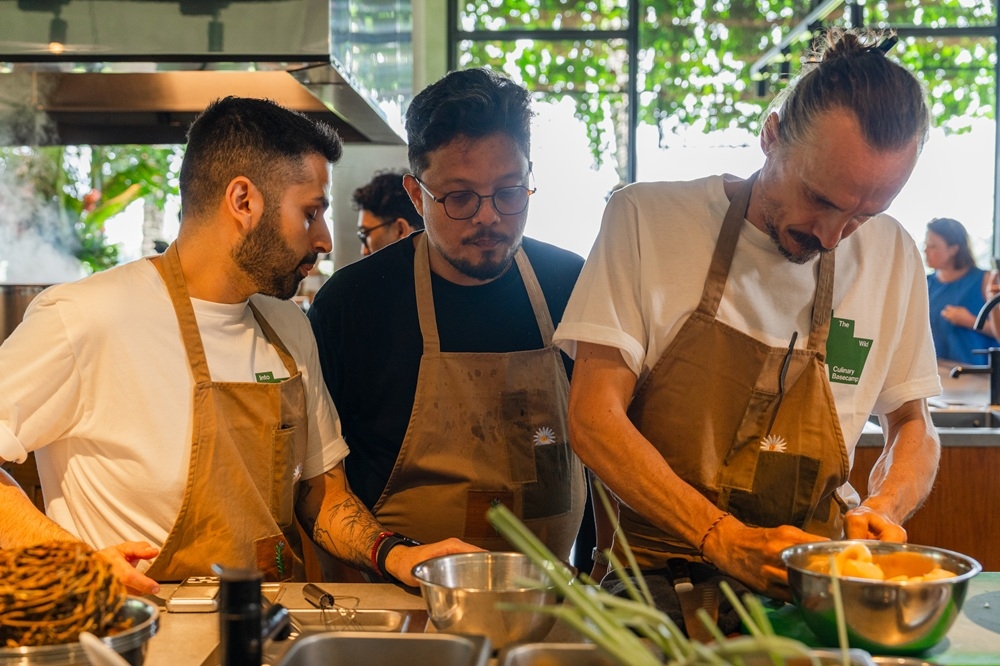
Team River (chefs Talib Hudda of Old Tower in Beijing, Darren Teoh of Dewakan and Arnaud Hauchon of Herbivore in Ubud) brainstorm their approach to cooking cow snout, a native ingredient in Indonesia called ‘cingur’. — Picture courtesy of Locavore NXT
All three cracked a wry smile at the sight of it.
They settled on braising it, and the mystery ingredient, a vinegar made from smoked bunya pine brought by Matt Stone of the Mosey On Inn group in Australia, proved the saving grace according to Teoh.
I ducked and dived my way around the chefs as they rushed to break down and prep ingredients for that night’s dinner.
Adriansyah was deep in thought with Ivan Brehm of Michelin-starred Nouri in Singapore. Ricardo Chaneton of Mono in Hong Kong and Chele Gonzalez of Gallery by Chele in Manila, whose restaurants each hold a star of their own, slipped into Spanish as they brainstormed a mole.
At one end of the room, Stone was hacking away at a duck, while Prin Polsuk of Samrub Samrub Thai in Bangkok, another one-star restaurant, began scaling fish.
It was loud, raucous and every bit as chaotic as you would expect from a kitchen of chefs who don’t work together every day.
And yet the same chefs who had shown glimmers of discomfort at our constant prodding with phones, cameras and mics changed the moment they started cooking.
It was as if a switch had been flipped.
They were home at last, in a futuristic kitchen in the middle of Balinese paddy fields.
By evening, the chaos in the kitchen had become a tasting menu, served at Locavore NXT. Team River’s cow snout arrived braised in a rough approximation of the Chinese red-braised style, at Hudda’s suggestion, beside a black koji rice porridge.
Stone’s vinegar had been turned into a gastrique, a sweet-sour reduction, and it gave the richness a sharp, smoky lift at the very end.
Gelatinous and pleasantly chewy, the snout’s flavour sat somewhere between vinegar pork trotters and Hong Kong-style braised beef.
Polsuk’s fish came off the grill with a noni curry that was properly funky, and a fruity salad of kedondong, mashua, cemcem and coconut flowers: sour, crunchy and bright against the warmth of the curry.
Team Jungle (Adriansyah, Brehm and Hiroyasu Kawate of two-Michelin-starred Florilège in Japan) had taken the heritage pork and shaved it into a paper-thin, ham-like slice.
It was meant to be eaten with heritage rice imbued with intensely acidic Surinam cherry, a spiced liquorice jelly and a soy miso foam. A plate astounding in both technique and invention.
But the course that blew me away was dessert.
Team Reef (Chaneton, Gonzalez and Mano Thevar of two-Michelin-starred Thevar in Singapore) made a mole out of papaya and served it with a fresh cacao sorbet.
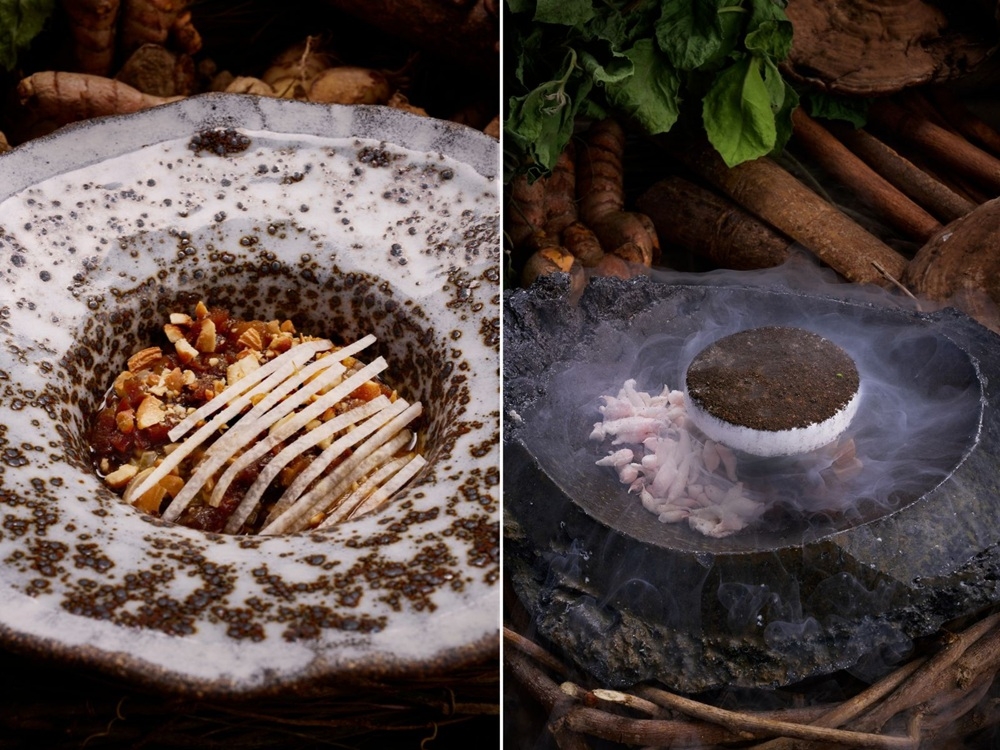
Black koji rice porridge with braised cow snout, topped with toasted cashews and jicama strips (left). Papaya ‘mole’, fresh cacao sorbet and ‘andaliman’ (right) — Picture courtesy of Locavore NXT
They seasoned it with andaliman, a Sumatran cousin of the Sichuan peppercorn, whose lemony, pandan-like notes arrive first, then a numbness that creeps across the tongue.
A dinner at Locavore NXT would probably have been enough to impress me.
But it would not have shown me the foragers who find the ingredients, the team that logs every kilogramme of waste, or the chefs who had to turn it all into a menu.
Into the Wild did.
For three days, the restaurant stopped being a restaurant and became what it has been all along behind the dining room: a centre of culinary exploration devoted to Indonesian ingredients and to the idea that sustainability should be something you can see, smell and taste, rather than something you read about on a website.
It is all a little avant-garde, possibly lofty, especially when one takes it all in under the restaurant’s decidedly futuristic roof.
But behind each meticulously crafted plate, there is a trace of the original — a pungent leaf, a lemony herb, a crunchy root.
Into the Wild gives outsiders like us a glimpse into the ambitious vision of Plasmeijer and Adriansyah from the other side of the pass and suggests that, even after all these years, they haven’t lost sight of Locavore’s roots.
Locavore NXT
Jl. A.A. Gede Rai Gang Pura Panti Bija,
Lodtunduh, Kecamatan Ubud,
Kabupaten Gianyar, Bali, Indonesia
Open Monday to Saturday, 5.30pm — 8.30pm
Open for lunch Thursday to Saturday, 12-1.30pm
Tel: +62 821-4495-6226
For more information about Into the Wild, visit https://www.intothewild.id/
Instagram: @intothewild.club
* Follow us on Instagram @eatdrinkmm for more food gems.
* Follow Ethan Lau on Instagram @eatenlau for more tales of restaurants from all over the world.
KioskNews shows a cleaned-up reading view extracted from the publisher’s page — the original always lives on their site, not ours.