Israel must explain why it failed to prevent attacks on diplomats in West Bank - editorial

Attacks on Palestinians, Washington Post photojournalist Heidi Levine, and European visitors during the West Bank olive harvest expose a failure of protection. Israeli authorities anticipated unrest. They must now explain why preparations failed to prevent these assaults.
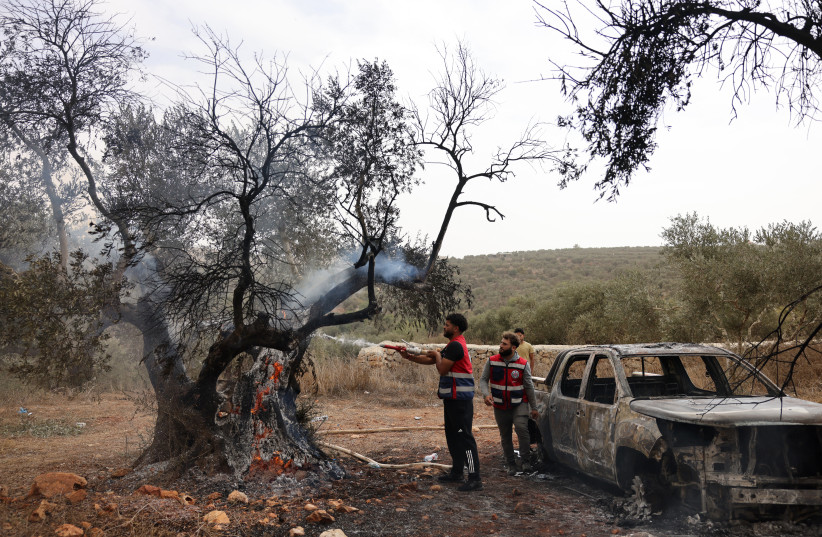
On Friday, masked Israeli extremists attacked Palestinian olive harvesters near Abu Falah, northeast of Ramallah. Levine, wearing clearly marked press gear, was beaten and hospitalized.
She underwent surgery for a severe hand injury. A journalist documenting violence became its victim, while Palestinians gathering their crops were terrorized.
On Saturday, masked Israelis reportedly attacked a delegation visiting olive groves near the Palestinian Christian village of Taiba. Diplomats from Belgium, France, and Poland were present.
A Belgian consular vehicle was damaged, and visiting French Mayor Bernard Baudoux was reportedly assaulted. Police opened an investigation, and the IDF condemned the attack.
Katz orders removal of threats to public order during olive harvest
On October 8, Defense Minister Israel Katz instructed officials to pursue administrative removal orders against activists deemed threats to public order during the harvest.
The Yesha Council, which represents Israeli settlements, had requested action, citing concerns about provocations and confrontations. The directive focused on left-wing and foreign activists accompanying Palestinian farmers.
Katz’s instructions demonstrate that the government expected confrontation. The IDF had also prepared for nationalist violence, clashes, and terrorist attacks. Officials could not have predicted either assault’s exact location. They must establish where protection and the response fell short.
The IDF is reportedly preparing to reinforce its West Bank presence. Reinforcements may be necessary, but authorities should explain what forces were available, when warnings arrived, and how units responded.
Prime Minister Benjamin Netanyahu’s office responded to Saturday’s incident on X/Twitter by declaring: “Any violence against diplomats is unacceptable.” It also stated: “The more serious the accusation, the greater the demand for compelling evidence.” The statement noted an ongoing police investigation and argued that video footage did not establish the complete sequence of events.
Yet the PMO also singled out Baudoux as “a French Communist Party mayor who previously raised the Palestinian flag over his municipal building, prompting French authorities to order its removal.”
His politics provide no justification for an assault. Introducing them without establishing their relevance weakens the office’s appeal for objectivity.
The PMO also suggested the reports reflected a campaign to smear Israel and Jewish residents of the West Bank.
Israel must protect all, regardless of political views
Investigators must establish individual responsibility. Authorities must protect farmers, journalists, and visitors regardless of their political views.
President Isaac Herzog struck a different tone on Saturday, calling Levine to apologize.
“I was morally tormented during Shabbat when I thought about it, and I express deep sorrow and apologize for what you went through,” he told her, according to his office. Herzog urged law enforcement to investigate and prosecute those responsible.
US Ambassador Mike Huckabee, an outspoken supporter of Israel and its settlements, has previously been just as clear. Condemning a separate West Bank incident in August, he called violent intruders “Israeli terrorists” and said there was “no excuse for such thuggish behavior.”
Condemnation by Israel’s allies should reinforce the urgency of action.
Foreign Minister Gideon Sa’ar condemned Saturday’s assault but suggested advance coordination with the IDF could have helped protect the delegation. Coordination can materially improve protection. Its absence leaves authorities responsible for intervening when an assault occurs.

The IDF said an alert during the Taiba incident reached a brigade operations room intended for security personnel rather than civilians. If reporting channels fail to get urgent warnings to those able to intervene, they must be fixed.
This past week’s reported warning of a planned Hamas attack underscores the continuing threat of Palestinian terrorism.
The extremists attacking Palestinians do not represent the vast majority of Jewish residents in Judea and Samaria, whose safety must remain a priority for Israel’s security forces.
Israel faces real West Bank security threats, including Palestinian terrorism. Commanders must protect Israeli communities while ensuring Palestinian farmers can harvest safely.
Violence by Israelis undermines state authority and complicates soldiers’ work. Prevention requires patrols in known hot spots, prompt intervention, arrests, and credible prosecutions.
Officials must account publicly for any failures identified and explain how they will protect the remaining harvest. Farmers should be able to gather their crops, and journalists to document events, in safety.
KioskNews shows a cleaned-up reading view extracted from the publisher’s page — the original always lives on their site, not ours.