‘I wasn’t on the ballot’: Trump deflects blame as Democrats on track to control Congress
In what appears to be an early attempt to distance himself from the Democrats’ historic gains, US President Donald Trump has sought to shift attention away from his party’s performance in the midterm elections, taking to social media to remind voters that he “wasn’t on the ballot”.
“I wasn’t on the Ballot and if I was, we would have won IN A LANDSLIDE! Thank you for your attention to this matter,” Trump wrote as early results showed Democratic gains in places Republicans expected to hold.
This came weeks after Trump told supporters to “just close your eyes and pretend I’m on the ballot”.
Shortly after his election night social media post, in a New York Times interview, Trump said he would accept the election results and was willing to work with lawmakers on the other side of the aisle.
He once again blamed Republican losses on the fact that he himself was not on the ballot.
Trump’s willingness to accept the midterm results stands in contrast to his long-running refusal to concede the 2020 presidential election, which he lost to Joe Biden. For years he has continued to insist, without evidence, that the 2020 contest was stolen from him.
Here is the latest on how the midterm elections are unfolding:
An eventful evening
Earlier on election day, Trump told Fox News that if Americans ever got tired of him, he would move to Israel and become prime minister, claiming that he had a 99 per cent approval rating there.
“In fact, if people ever got tired of me in the US, I’ll move to Israel, become prime minister,” he said. “So, I’m the No 1 … I was 99 per cent approval rating in Israel,” he added.
“Can you believe it? In fact, if people ever got tired of me in the US, I’ll move to Israel and become prime minister.”
Decisive rebuke for Republicans and Trump
Democrats are projected to seize control of both chambers of Congress.
Setbacks started emerging early on for Trump and the Republican Party, even in historically deep-red territory, as voters registered dissatisfaction with his new wars and the economic pressure that has accompanied them.
What initially appeared to be scattered losses soon took shape as a broader and decisive rebuke of the Trump administration.
In Texas, Democrat James Talarico is projected to defeat Republican Ken Paxton, according to NBC News and Decision Desk HQ. Paxton has conceded defeat.
It is the first Democratic Senate victory in the state since 1988 and, so far, the biggest and most significant loss for Republicans of the night.
In the Texas governor’s race, Democrat Gina Hinojosa is projected to defeat Republican incumbent Greg Abbott, who has also conceded defeat.
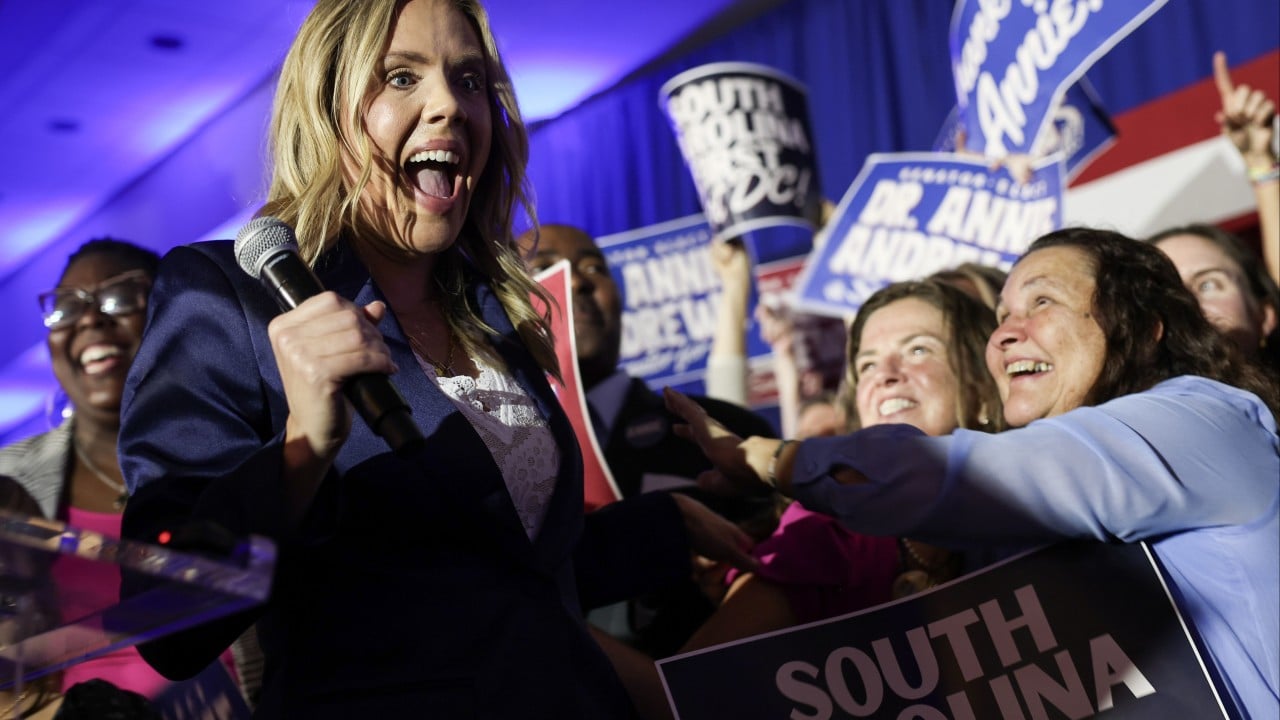
In South Carolina, Democrat Annie Andrews is on track to defeat Republican Darline Graham, sister of the late Senator Lindsey Graham, who was appointed to the seat after her brother’s death earlier this year.
She was hand-picked by Trump to run for a full term, in a race which would be a major upset if it flipped a long-time Republican seat.
The AP projected former North Carolina governor Roy Cooper as the winner of the state’s Senate race, flipping a Republican-held seat. Democrats entered the night needing a net gain of four seats to take the Senate.
In Ohio, former senator Sherrod Brown is projected to defeat Republican incumbent Jon Husted in the special election, flipping the seat. Brown, who lost re-election in 2024, returns to the Senate two years later.
In Ohio’s governor’s race, Democrat Amy Acton is projected to defeat Republican Vivek Ramaswamy, according to NBC News and the Associated Press. Ramaswamy has conceded defeat.
Acton becomes the first woman to be elected governor of Ohio and the first Democrat to win the office in 20 years, ending a long stretch of Republican control in a state Trump carried by a wide margin in 2024.
In Iowa, Democrat Josh Turek is projected to defeat Republican Ashley Hinson, flipping the open Senate seat. It is the first Democratic Senate victory in Iowa since 2008.
The AP also called Democratic holds for Senator Jon Ossoff in Georgia, Representative Chris Pappas in New Hampshire’s open seat and Senator Cory Booker in New Jersey.
In the House, the Associated Press projected Democrat Jamie Ager as the winner in North Carolina’s 11th congressional district, in the first Democratic flip of the night.
In Michigan’s 13th district, Democratic Socialist of America-endorsed Democrat Donavan McKinney is projected to win a heavily Democratic Detroit-area seat, though the Associated Press has not yet issued its own call.
The remaining contests that will decide control are in Alaska, Iowa, Kansas, Maine, Michigan, Ohio and Texas.
High turnout and Chinese-American candidates
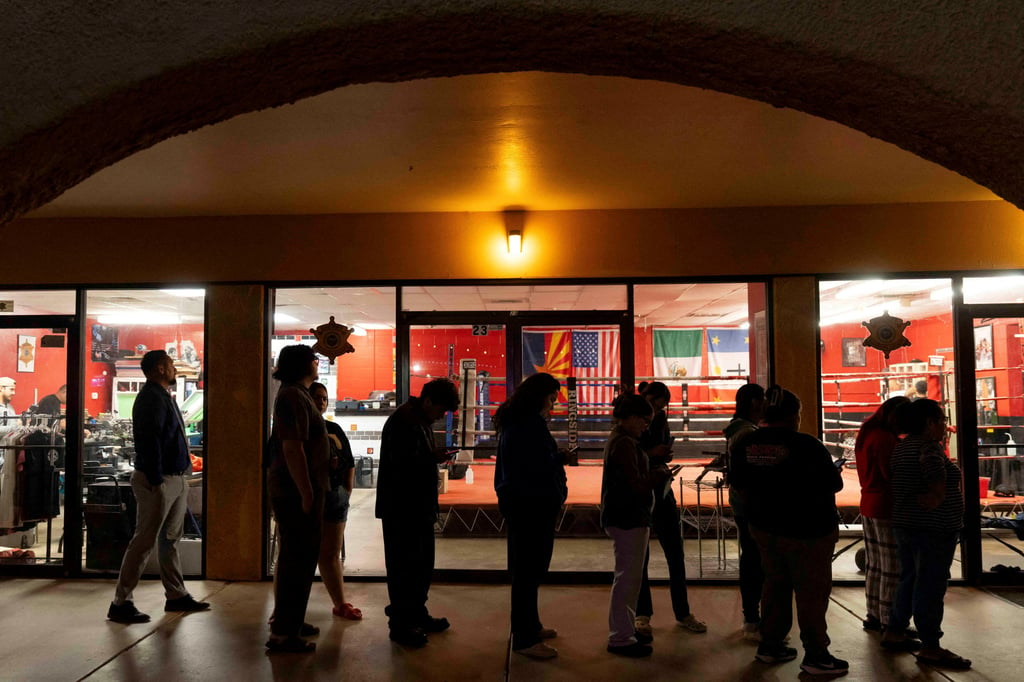
More than 59 million Americans cast ballots before election day, according to an Associated Press analysis, surpassing early-voter turnout from the 2022 midterms and setting a new midterm record.
Candidates of Chinese-American descent are also running in several races. The most prominent is Connie Chan, a San Francisco supervisor seeking the California seat being vacated by long-time Democratic leader Nancy Pelosi.
There are roughly 16 million eligible Asian-American and Pacific Islander (AAPI) voters in 2026, including about 1.6 million who are newly eligible since 2022.
Pre-election surveys showed AAPI registered voters leaning strongly Democratic in congressional races, typically in the range of 55–64 per cent Democratic versus 20–25 per cent Republican, with cost of living and the economy as their top issues.
Historic victories
Several historic victories have already made headlines.
Republican Byron Donalds is projected to become Florida’s first Black governor.
In Georgia, Democrat Keisha Lance Bottoms is projected to make history as the first Black woman to be elected governor of a US state, defeating a self-funded opponent who spent more than US$200 million of his own money.
In New Hampshire, Democrat Chris Pappas is projected to become the first openly gay man elected to the US Senate.
Close races can take days to resolve. Most of the country has finished voting, though polls in Alaska remain open until midnight Eastern Time in most of the state.
KioskNews shows a cleaned-up reading view extracted from the publisher’s page — the original always lives on their site, not ours.