Arab parties revel as exit polls project historic gains, but kingmaker role still in doubt

The Knesset’s two Arab-led parties celebrated an apparently unprecedented success in the Tuesday election, even as significant questions remained regarding their inclusion in the next governing coalition.
Exit polls published by Channels 11, 12 and 13 predicted 11 or 12 seats for the Joint List and seven seats for Ra’am, which would give the so-called “Arab bloc” 18 or 19 seats.
The previous highest result for Arab-majority parties in Israel was in 2020, when the Joint List — which then included Ra’am — won 15 seats. The two parties currently hold just 10 seats in the Knesset, after Balad ran on its own in the previous election and did not cross the electoral threshold.
0:00 / 0:00
Promoted: Jewish Crossroads, Avi Issacharoff

Turnout across Arab towns appeared to spike on Tuesday, with many voters saying they were motivated to oust the current government — the most right-wing in Israel’s history — which they viewed as uniquely hostile toward their community.
In Nazareth, turnout was reported at 72.2%, compared to 48.29% in 2022, while in Rahat, turnout was listed as 82%, a sharp increase from the 60.61% seen in 2022. In Umm al-Fahm, turnout stood at 75.7% on Tuesday, compared to just 38.29% four years earlier.
Get The Times of Israel's Daily Edition by email and never miss our top stories
By signing up, you agree to the terms
Ra’am — led by MK Mansour Abbas — has expressed interest in joining a governing coalition led by the “change bloc” opposed to Prime Minister Benjamin Netanyahu. However, several parties in that bloc have vowed they would not sit with an Arab-majority party.
The more Palestinian nationalist Joint List has been more reticent to the idea of joining an alternative government, but has indicated willingness to cooperate with opposition parties in order to replace Netanyahu — possibly by abstaining or voting in favor of the establishment of an alternative coalition, without actively joining it.
Joint List MK Ahmad Tibi tweeted on Tuesday night: “It’s either Bibi or Tibi.”
‘We’re here — not on the sidelines’
Meanwhile, at the Ra’am party headquarters in Sakhnin, supporters roared with joy as exit polls projected seven seats for the party — two to three seats higher than most polls in the months leading up to the election. The cheers turned to jeers and gloats as the screen changed to show National Security Minister Itamar Ben Gvir’s Otzma Yehudit and Finance Minister Bezalel Smotrich’s Religious Zionism, which were predicted to win six or seven seats each.
“All of us together achieved this,” Abbas told his supporters. “We’ll translate this electoral power into an influential political force. We’re here — not on the sidelines.”
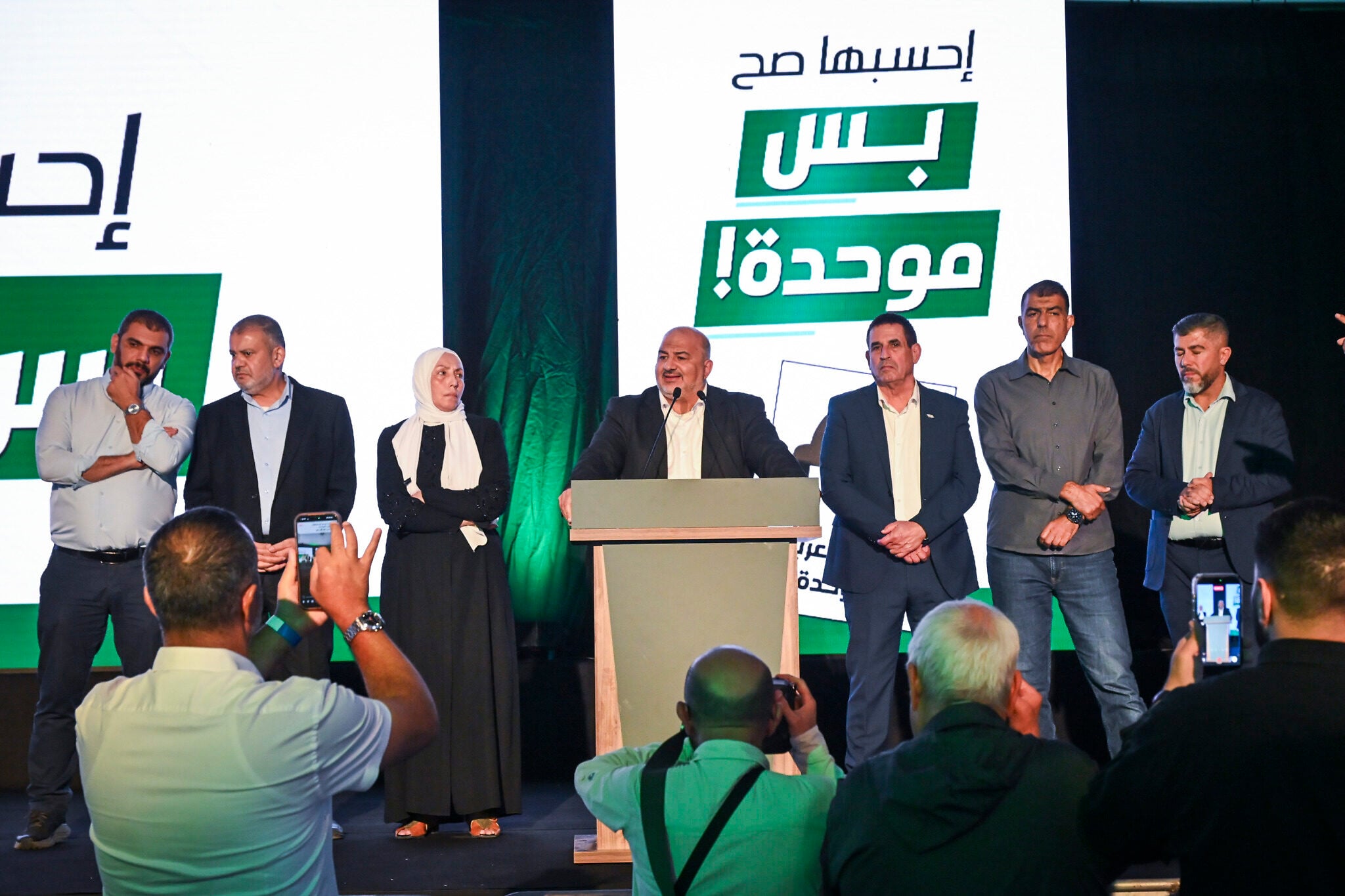
Turning to Yoav Segalovitz — the Jewish lawmaker and senior police officer who mounted an unprecedented run as No. 2 on the party’s list — Abbas added, in Hebrew: “Brave friend, you made history.”
Speaking on Channel 12 shortly thereafter, Abbas indicated that he was in contact with figures from both the pro- and anti-Netanyahu blocs regarding political cooperation.
“Everyone is speaking with us — and not just from the change bloc,” Abbas told Channel 12, suggesting that figures from the pro-Netanyahu bloc have also approached him. Abbas signaled his willingness to join a government led by Yashar leader Gadi Eisenkot, but said it must first become clear that such a coalition is viable.
He acknowledged that “currently there aren’t numbers for [such] a government,” with exit polls projecting 49 to 51 seats for the Zionist opposition parties and seven for Ra’am — two to four short of the 61-seat majority needed to form a coalition.
Ra’am MK Iman Khattib Yassin told The Times of Israel early Wednesday morning in Sakhnin that “it’s still too early to talk about” the party’s red lines in talks to join the next government.
“We’ve come to serve our citizens, and we’ll do that at all costs. But there’s no need to pay excessively high costs,” she said.
As for Arabs who aren’t citizens of Israel, she said: “They deserve their own Palestinian state,” adding that “it’s time to start a diplomatic process” for peace. “This land can sustain all of us.”
Supporters at the Joint List headquarters in Nazareth also clapped and cheered as the TV exit poll results rolled in.
Jubilant chants of “Go away Ben Gvir” could be heard in Arabic, with party chair Yousef Jabareen and other lawmakers and soon-to-be lawmakers joining in.
Jabareen told supporters that his party “hopes to send Bibi, Ben Gvir, Smotrich and the bloodstained government home.”
Earlier Tuesday, Jabareen said: “Netanyahu, you continue to incite against Arab citizens and question our legitimacy to vote and influence the political map,” in response to the premier’s repeated rhetoric calling on his supporters to counter predicted high Arab turnout. “The Arab public knows how to punish you today and send you and your blood-soaked government home.”

‘We want a normal gov’t — it makes no difference, Jew or Arab’
Analysts and voters pointed to the turnout in Arab communities rising at least in part as a response to Ben Gvir’s four years of antagonistic behavior as the national security minister and his failure to tackle soaring violent crime in the Arab sector.
In the southern Bedouin city of Rahat, voters told The Times of Israel on Tuesday that Ben Gvir had united and galvanized them like never before, pointing to a massive uptick in housing demolitions and lack of effort to deal with gun violence under the current government.
In the central Arab city of Qalansawe, Ahmad Matana, 40, told The Times of Israel that he voted in a Knesset election for the first time in his life, casting his ballot for Ra’am.
Asked why he is voting now, he said: “The whole mess — in short, we want change.”
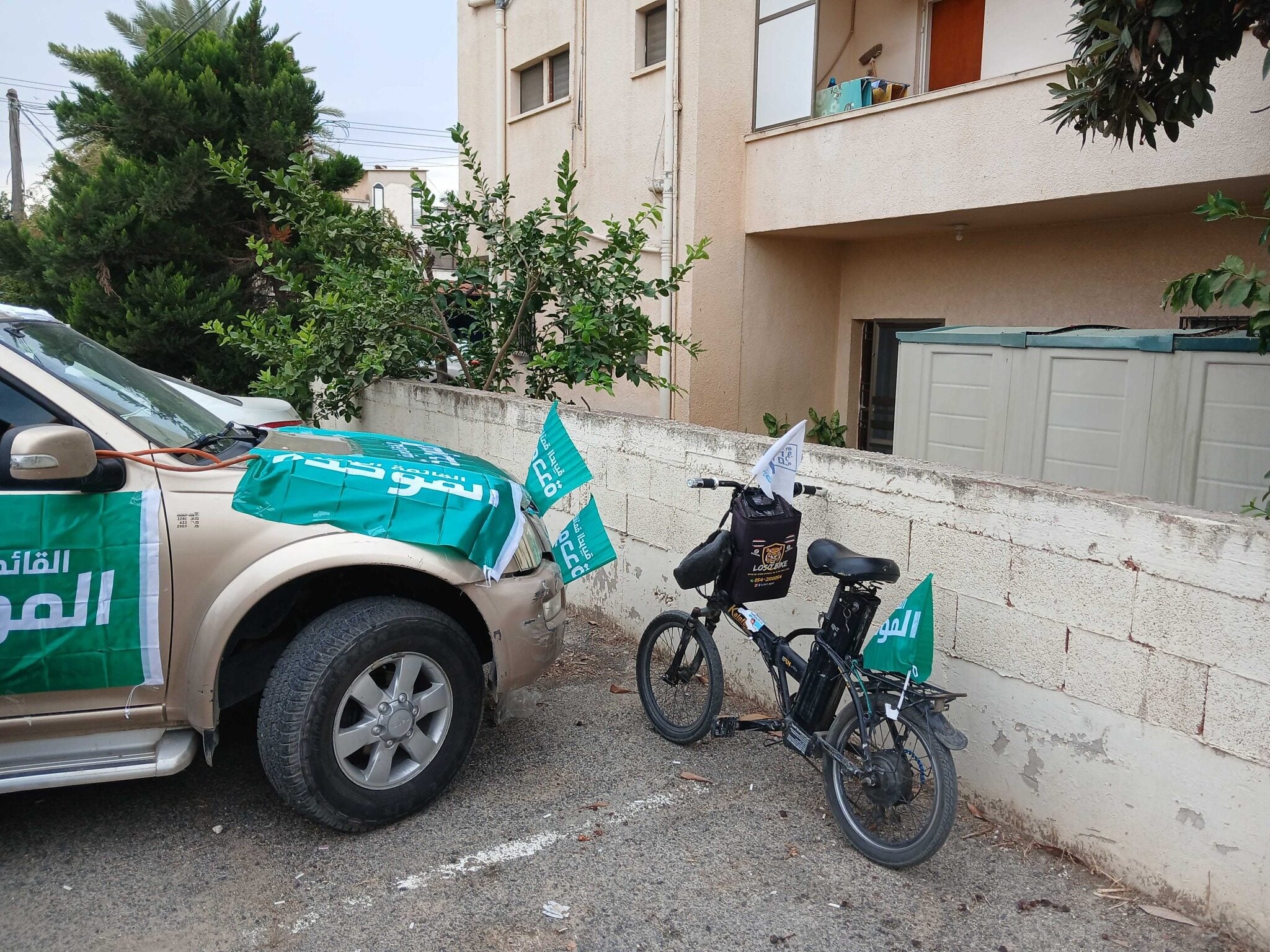
“We want a normal government,” he said. “It makes no difference, Jew or Arab. We want to live in peace and quiet. That’s the most important.”
Rana, 26, also voted for the first time in her life, spurred by skyrocketing crime in the Arab community, she told The Times of Israel: “This time it’s important.”
She said she voted for the Joint List, though most of her family voted for Ra’am.
Qalanaswe’s Deputy Mayor Afif Jayousi, a Ra’am member, told The Times of Israel that “for four years we’ve suffered a lot under this government. It was far too racist.”
Hanna Swaid, a former MK and Arab Israeli Christian from the Galilee, said four years of simmering anger toward Netanyahu is pushing turnout to record levels among both Arab and Jewish citizens of Israel.
“Palestinian citizens want to change things and kick out the extremist ministers,” he said, referring to Ben Gvir and Smotrich. “The only way to do that in a democratic state — as far as you can still call Israel that — is elections.”
Diana Bletter, Sue Surkes and agencies contributed to this report.
KioskNews shows a cleaned-up reading view extracted from the publisher’s page — the original always lives on their site, not ours.