AI, Nuclear War, Bioweapons May Trigger End Of Humanity By 2100: Report
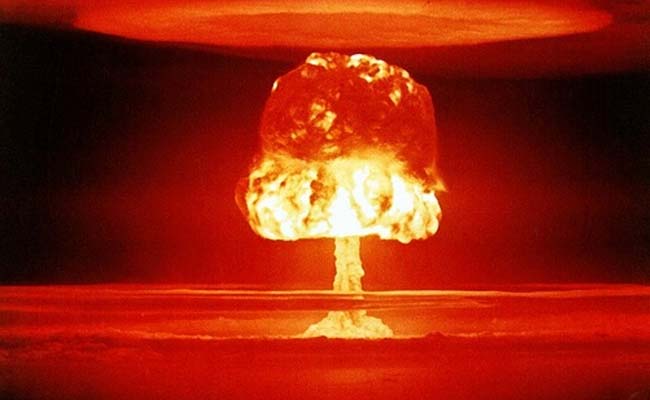
Nuclear war and the misuse of artificial intelligence (AI) could put the future of humanity at risk, a new report published by The Lancet has warned. The report says these threats could potentially wipe out humanity by 2100, although the chances of this happening remain low.
The report lists 17 major threats that could harm human health over the next 75 years. These include nuclear war, misuse of AI, climate change, air pollution, childhood malnutrition, obesity and cuts in international aid.
The report, titled Lancet Commission on 21st Century Global Threats to Health, said these problems are connected and need to be tackled together. However, experts said governments can still take steps to reduce these risks and protect future generations.
READ | Elon Musk Wants Users To Shop By Uploading Credit Card Photos To Grok, Users Raise Security Concerns
"Malicious use of AI, including bioweapons, and nuclear conflict with nuclear famine carry risks of extinction in the next 75 years," the report said.
The commission includes 35 experts. Its findings will be presented at the World Health Summit in Berlin, Germany.
The report warns that AI could be misused to create biological weapons that could cause harm. Such weapons could put millions of lives at risk and, in an extreme case, threaten human survival.
Prof. Christopher Murray, commission co-chair and the director of the Institute for Health Metrics and Evaluation, University of Washington, said, "Decisions made by leaders today will shape the health and wellbeing of the next generation.
"READ | 'Superintelligence Can Become Super Dangerous': SoftBank Chief On AI Risks
A nuclear war could also threaten humanity. It could send large amounts of particles into the upper atmosphere, blocking sunlight and affecting food production. This could lead to widespread famine and threaten human survival.
An editorial published alongside the report in The Lancet also warned that these threats could cause enormous harm to humanity if they become a reality.
Apart from nuclear war and the misuse of AI, the commission identified 15 other major threats to human health.
These include air pollution, climate change, antimicrobial resistance, childhood malnutrition, conventional wars, cuts in international aid, high alcohol consumption, high blood pressure, income inequality, low levels of education, natural pandemics, obesity, poor mental health, smoking and unhealthy ageing.
The researchers studied how many years of healthy life could be lost because of illness, disability or early death due to each threat. They used a measure called disability-adjusted life years (DALYs) to estimate the impact.
The report classified threats that could lead to the loss of more than one billion healthy life years as major catastrophic threats.
The assessment found that climate change could have a major impact on human health if global temperatures continue to rise. According to the report, limiting global warming to around 1.8 degrees Celsius, instead of allowing it to reach 4.4 degrees Celsius, could prevent the loss of 1.89 billion healthy life years.
A major reduction or collapse in international health aid could lead to the loss of up to 1.5 billion healthy life years by 2100, according to the assessment. Nearly 70% of these losses could occur in sub-Saharan Africa, where childhood malnutrition is already a major concern.
The report also found that the biggest health threats vary between regions.
In higher-income regions, conditions such as obesity and poor mental health were among the main concerns. In lower-income regions, low levels of education and childhood malnutrition can lead to health problems.
"We started this process three years ago, thinking that there were three big threats: conflict, climate, and pandemics. There's a much larger number of threats that we need to worry about, and governments really need to dedicate some money and staff to the task of anticipation, prevention and preparation for this more diverse set of threat," Murray said.
The commission plans to update its findings every year to review the existing threats and identify new ones.
KioskNews shows a cleaned-up reading view extracted from the publisher’s page — the original always lives on their site, not ours.