A portrait puts Cainta’s sepoy heritage in the spotlight
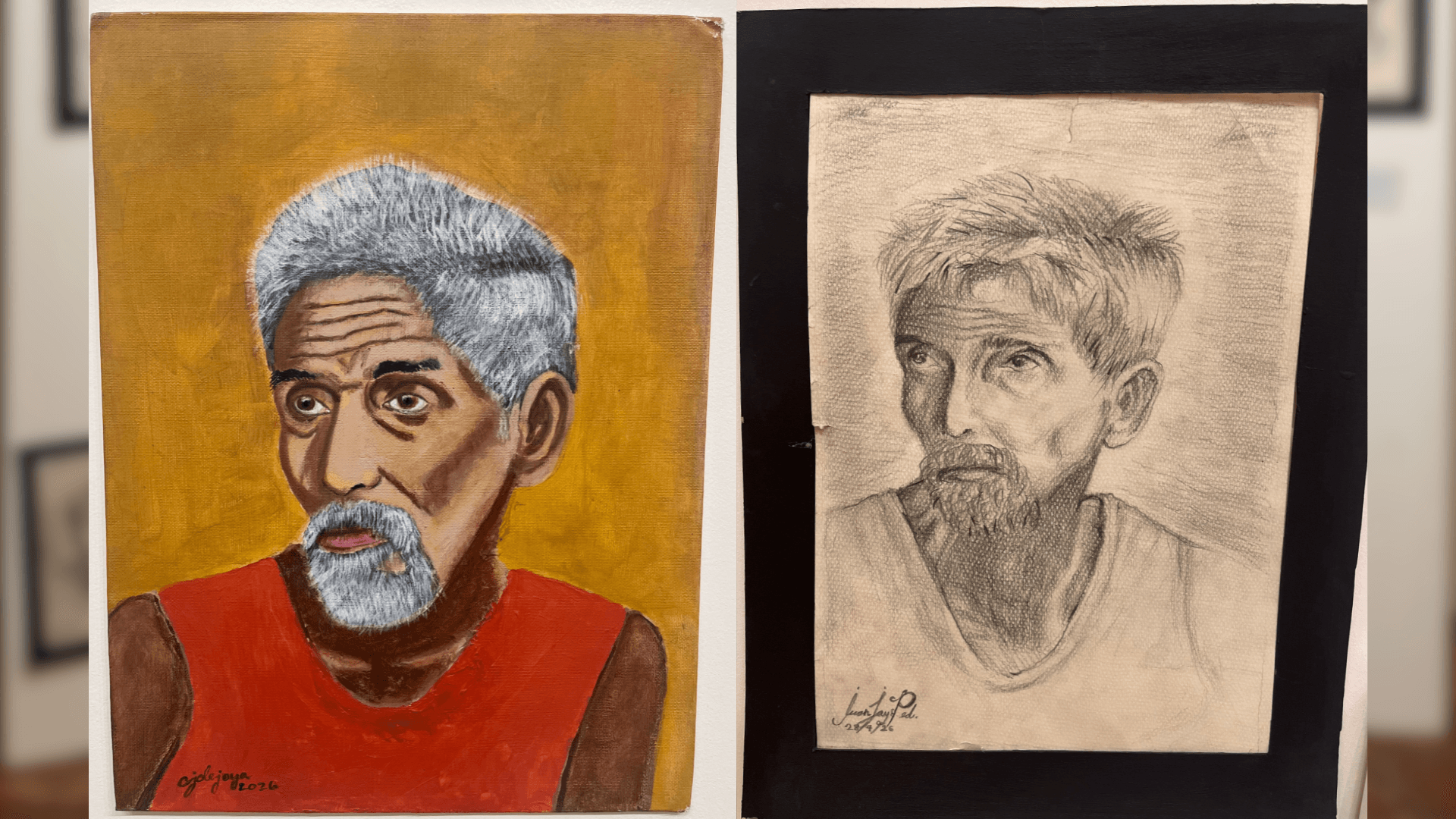
CAINTA, Rizal – Ask residents of Barangay Sta. Rosa where to find “Papay, the sepoy,” and they can point you to P. Burgos Street, to an old-looking house just before an arch.
At lunchtime, 61-year-old Generoso “Papay” Sumulong carried a bowl of rice to a tiled bench across from his family’s house, one of the spots where neighbors gather to pass the time. After returning to the house, he was greeted by a little girl who wrapped her arms around his waist from behind and called him “Pappy.”
Sumulong said the nickname “Papay” was derived from Popeye the Sailor Man, the fictional sailor created by American cartoonist E.C. Segar, who first appeared in the newspaper comic strip Thimble Theatre in 1929.
Sumulong, meanwhile, has become a recognizable figure in his own community: a relative who once took his niece’s daughter to school on his bicycle, a neighbor whom people approach for directions, and a longtime performer in Cainta’s senakulo (Passion play).
A living face
Sumulong’s face now has another kind of public presence. A large portrait of Sumulong hangs on the second floor of Museo Cainta, where it forms part of the town’s effort to preserve its sepoy heritage.
Created by artist Joel Rocafort, the seven-by-5.5-foot artwork, titled Sepoy, depicts Sumulong using charcoal and turmeric.
In a Facebook post on September 8, Cainta Mayor Johnielle Keith “Kit” Nieto described the portrait as “isang mukha na kumatawan sa kasaysayan ng bayan natin” (a face that represents the history of our town).
Rocafort said the charcoal used to draw Sumulong’s face and the turmeric used to color his headcloth were materials associated with Cainta’s famous suman and other traditional rice cakes. His piece went on display on the second floor of Museo ng Cainta when the space opened to the public in early October.
The portrait drew praise from residents on Facebook, with some calling Sumulong a “buhay na alamat” (living legend) and others commending Rocafort for bringing local history into public view.
But among the congratulatory messages were calls for Sumulong to receive an award, pension, or financial assistance. Some commenters noted that he no longer had regular work and asked the local government to help with his daily expenses.
The response raises a question beyond the artwork itself: What does it mean to recognize the people who embody a town’s heritage, and what does that recognition look like beyond a museum display?
Cainta’s history
Cainta’s official history traces the town’s sepoy heritage to the British invasion of Manila in 1762, when British forces brought Indian soldiers known as sepoys.
According to the municipality’s website, some of the soldiers stayed in Cainta after the British withdrawal in 1764 and settled among the local population. Their descendants remain part of the town’s historical and cultural identity.
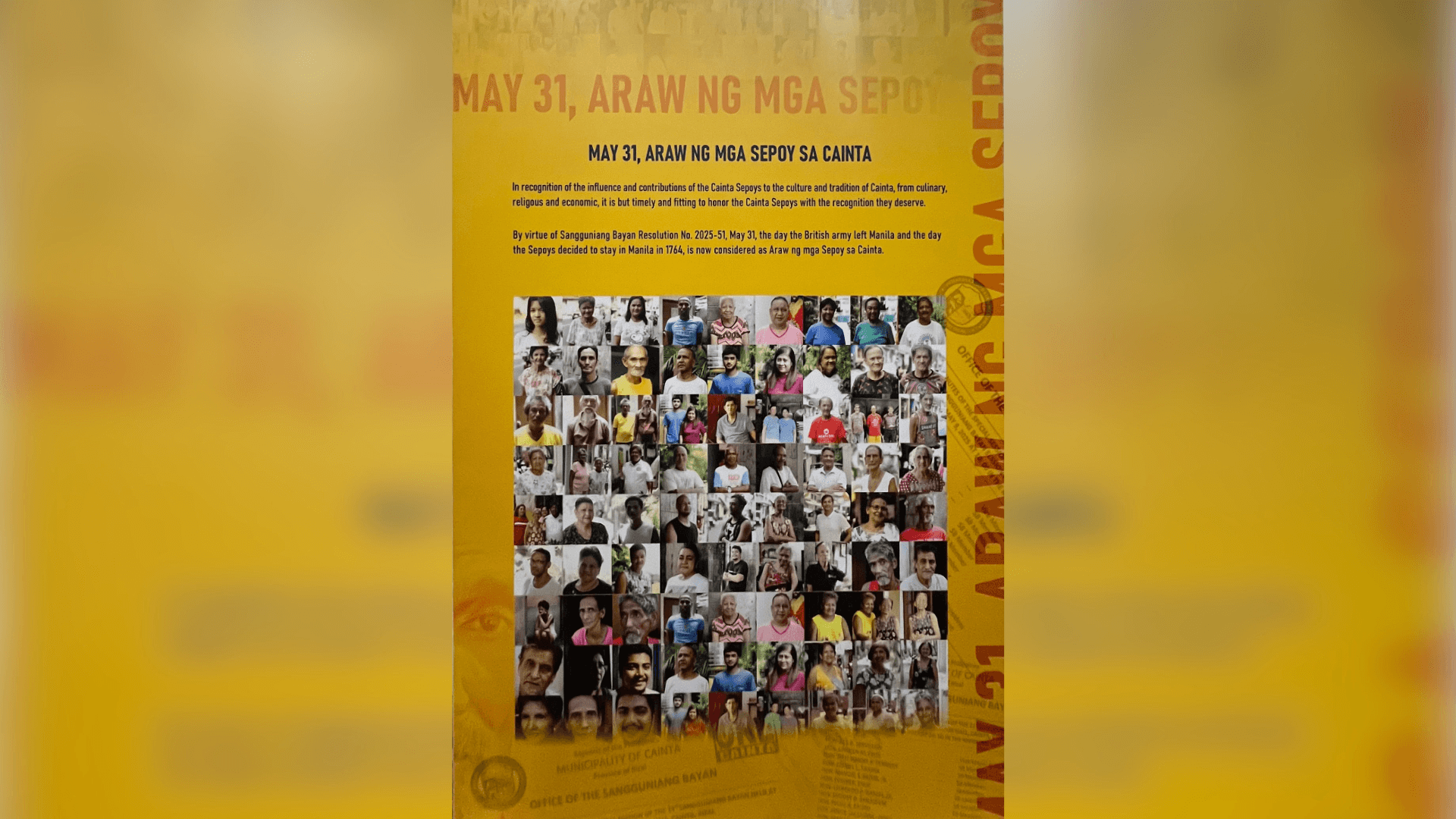
The town has also formalized its recognition of this heritage. Museum exhibits cite Sangguniang Bayan Resolution No. 2025-51, which designates May 31 as Araw ng mga Sepoy sa Cainta (Day of the Sepoys in Cainta), in recognition of the community’s contributions to local culture and tradition.
For Barangay Sta. Rosa Chairman Richard dela Cruz, who said his own family traces its sepoy ancestry through his grandmother, Sumulong is a recognizable representative of that history.
“Sakto talaga ‘yung mukha niya (His face is absolutely perfect for it),” Dela Cruz said.
Older residents with similar features had died, he added, leaving Sumulong among the people who remain recognizable to the community.
Dela Cruz clarified, however, that Sumulong is not Cainta’s oldest living sepoy descendant. Other families in the municipality have older members, including people in their 80s and beyond.

Sumulong said his grandmother told him about their family’s sepoy ancestry when he was a child. He could no longer recall many details about the family’s origins, explaining that older relatives knew more of the story.
For him, the connection to Cainta’s history is also expressed through performance.
He said he began participating in the senakulo in 1976 and helped establish Kabataang Walang Sindak (KWS), his first group, before joining The Romans Club. He described the performances as a panata (religious vow).
In her book Semana Santa: Senakulo at Penitensya sa Bayan ng Cainta, former Cainta mayor Atty. Maria Elenita “Elen” Nieto traces the town’s senakulo tradition to 1904, when residents of Barrio Dayap began staging the Passion play. Over time, the tradition developed into larger productions involving actors, musicians, artisans and production teams.
Dela Cruz said Sumulong was known for portraying the high priest Annas and the biblical figure Samuel. Photographs he shared with Rappler show the two men during a 2009 Lenten observance. Dela Cruz said Sumulong had been performing since his younger years.

The barangay chairman and Sumulong became friends through The Romans Club, which also participates in Cainta’s Lenten religious observances.
Dela Cruz described their relationship as close, saying Sumulong supported him even before he became barangay chairman.
Outside the frame
Despite his longstanding involvement in local traditions, Sumulong has no regular source of income. He previously took welding jobs, but said illness and health limitations have reduced the work he can do.
“Wala. Minsan, natatawag, nagwe-welding sa araw,” he said when asked about his livelihood.
(Nothing regular. Sometimes someone calls me to do welding work during the day.)
His niece, Evangeline Sumulong Jambalos, said he still accepts occasional jobs and helps the family when needed. She operates a small street food business in front of their house.

Jambalos recalled that Sumulong helped raise her daughter, taking her to and from school on his bicycle. He also helps with errands and arranging goods for the family’s business.
“Malaki rin naman ang naitulong niyan (He has also helped us a lot),” she said.
Jambalos said Sumulong sometimes receives money and food from relatives. A distant relative living abroad previously paid him to tend plants, and family members have contributed to his expenses when needed.
Jambalos recalled that she and her cousins pooled money to prepare a small celebration for Sumulong’s 60th birthday.
“Nung nalaman naming senior na [si Papay], sabi ko, ‘Sige, lalakad kaming magpipinsan.’ [Kasama] ‘yung mga pinsan namin sa Cogeo, pinag-ambagan namin,” she said.
(When we found out that Papay would be a senior citizen, I said, ‘Alright, us cousins will take care of it.’ Together with our cousins from Cogeo, we all chipped in.)
Sumulong lives in the family home with relatives from several generations. He never married, but remains part of a household where family members continue to rely on and look after one another.
The family was surprised when they learned that Sumulong’s image would be displayed at Museo Cainta. Jambalos said they had not known the municipality intended to exhibit the artwork until other people began telling them about it.
“Hindi naman niya kasi inakala [na] lalabas siya sa mga gano’n,” she said.
(He never expected to appear in something like that.)
She acknowledged the public calls for assistance, but said the family was not asking others to solicit help on Sumulong’s behalf. Any assistance, she said, should come from the initiative of those willing to provide it.
Sumulong was similarly noncommittal when asked whether he wanted particular assistance from the local government.
“Kung ano ang ibibigay nila. Wala na akong magagawa. Kung anong gusto nilang ibigay,” he said.
(Whatever they give. There is nothing I can do about it; whatever they choose to give.)
He added that he would accept whatever help was offered rather than demand a specific amount or form of support.
What recognition means
The calls for financial assistance have also raised questions about what benefits Sumulong may qualify for.
Sumulong said he had completed paperwork for assistance but was told he could receive benefits only at age 65. His niece, meanwhile, said the family understood that he was too young for the Expanded Centenarians Act cash gift, which is reserved for Filipinos reaching the milestone ages of 80, 85, 90, 95 and 100.
These are distinct from the broader benefits available to senior citizens. Republic Act No. 9994 defines a senior citizen as a resident Filipino aged 60 or older, although eligibility for particular forms of financial assistance depends on the program’s requirements.
For Sumulong’s family, recognition is not only about what the local government might provide. It is also reflected in the everyday ways Sumulong has contributed to their lives and the neighborhood he has called home since childhood.
For the municipality, his portrait offers a visible way to preserve a part of Cainta’s past. His decades in the senakulo also place him within a tradition sustained not only by museum displays but by people who continue to perform, organize, and pass their practices on to younger generations.
The portrait gives Cainta’s sepoy heritage a recognizable face. But as residents’ comments suggest, honoring a person’s place in history and supporting the person behind that history are separate questions. – Rappler.com
Dominique Astucia is a Rappler intern studying BA Journalism at the University of Santo Tomas.
KioskNews shows a cleaned-up reading view extracted from the publisher’s page — the original always lives on their site, not ours.