Shin Bet accused of torturing Palestinians to extract confessions; Israel rejects report
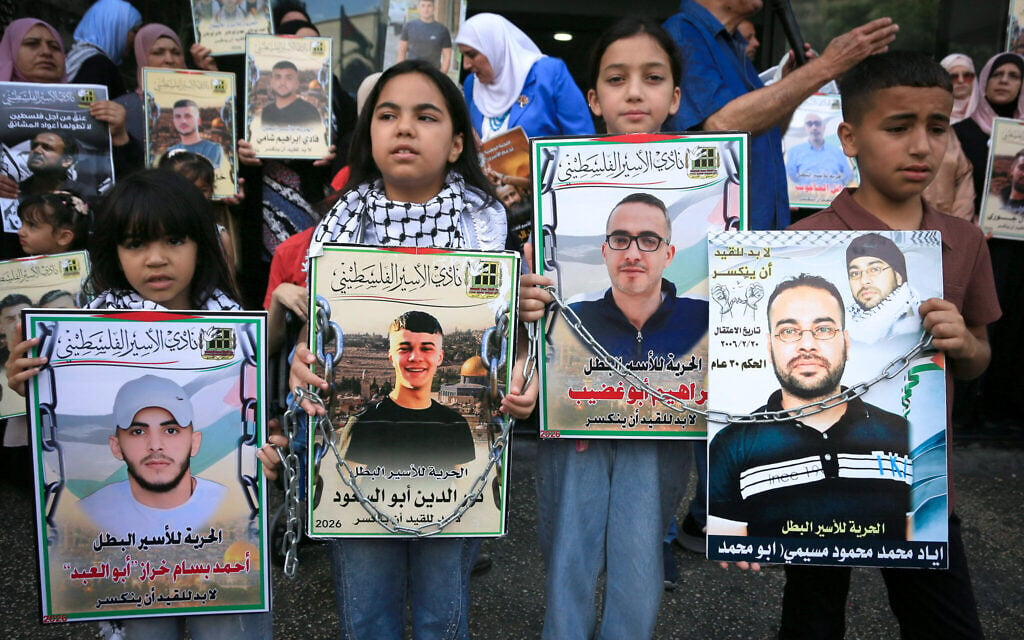
The Public Committee Against Torture in Israel published a report Wednesday morning accusing Israeli authorities of convicting Palestinian security detainees on the basis of confessions extracted under torture.
The report is based on an examination of 42 cases in which PCATI filed complaints on behalf of Palestinians alleging they were tortured by Shin Bet interrogators between 2016 and 2026, saying that detainees confessed “under torture or other unlawful methods” in 33 of them.
The organization said that of the 42 cases, it only had the results from 29 legal proceedings, but that 25 of those resulted in convictions.
0:00 / 0:00
Promoted: Z3 Project Conference 2026

The study found that physical violence was used against suspects in 57 precent of the cases examined, stress positions “causing severe pain and even permanent damage” were used in 55% of cases, and sleep deprivation used in 83% of cases.
As well as denouncing the use of torture, the report accused the courts of failing to protect Palestinian detainees, saying judges failed to intervene when hearing suspects were allegedly tortured during legal proceedings, and evaluated the allegations on a factually incomplete basis.
Get The Times of Israel's Daily Edition by email and never miss our top stories
By signing up, you agree to the terms
The report also strongly criticized the Mavtan unit in the Justice Ministry, which is responsible for examining complaints about Shin Bet interrogators, noting that out of 1,680 complaints alleging abuse during interrogation filed between 2001 and 2024, the unit recommended opening a criminal investigation only in five cases that were ultimately closed without indictment.
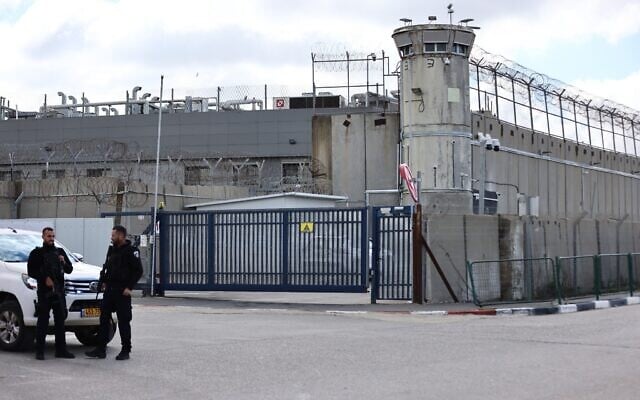
“When it comes to Palestinian detainees, the Israeli legal system officially sanctions torture as a tool for extracting confessions, regardless of whether the content of those confessions is true,” asserted PCATI Executive Director Sari Bashi.
“The entire system is contaminated by unlawful violence that violates the rights of the accused and prevents the truth from coming to light,” she said.
The Shin Bet did not respond to a request for comment, nor did the Judicial Authority.
The Justice Ministry said in response that it “totally rejects” the claims in PCATI’s report. It said every complaint to Mavtan is “thoroughly examined,” and includes, in most cases, a meeting with the complainant and the questioning of the relevant Shin Bet officials.
“To date, the examination of complaints has led to criminal investigations, disciplinary proceedings, command-level actions, and the drawing of systemic lessons within the Shin Bet,” the ministry said. It also noted that several petitions to the High Court of Justice were filed against Mavtan and its handling of specific cases over the years, but that all of them were rejected by the court.
“It should be recalled that in most cases the complainants are accused of terrorist offenses, and they therefore are likely to have a clear interest in complaining against the investigators and making claims that may allegedly help them in their criminal trial,” the Justice Ministry added. “Therefore, the examination of the complaints requires extra caution and usually additional supporting evidence will be needed for the complaint.”
PCATI’s study is based on 42 cases in which it filed complaints that torture was used between 2016 and 2026, and said it does not purport to be a representative sample of all Shin Bet interrogations “but rather an indication of trends.”
The organization said that the cases were conducted in both regular civil Israeli courts and the military courts.
According to the report, in 35 of 42 cases examined, interrogators used sleep deprivation; in 24 cases, interrogators used physical violence; in 23 cases, they used stress positions “causing severe pain and even permanent damage”; and in 33 cases, detainees confessed under torture or other unlawful methods.
PCATI said that in four of the 33 cases in which the suspect confessed, the court either recognized that the confession was false or the charges were dropped.
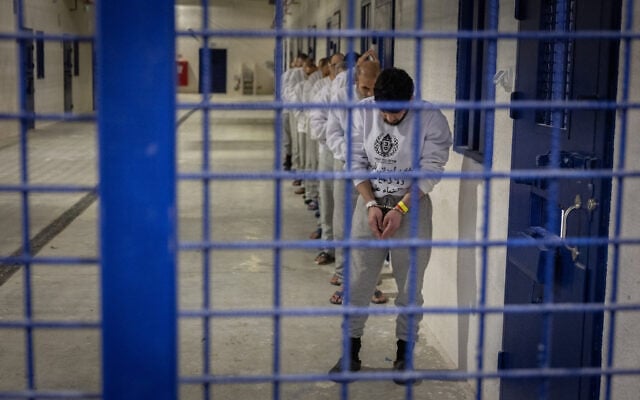
Bashi stated that the large majority of convictions were reached through a plea bargain, but did not have precise figures. She said that due to the frequent use of plea bargains it was not possible to say whether the convictions were based on evidence other than the confessions.
Bashi did not agree, when asked, if the termination of legal proceedings in the four cases it dealt with implied that the courts were properly reviewing the use of torture, saying those cases were exceptional.
She said that those four cases involved four suspects in two separate incidents. In one of them, a suspect was proven to have not been at the scene of the crime when it happened, but Bashi said such conclusive evidence proving a confession to be false was rare.
The other incident involved suspicions against two suspects over a plan to bomb a hotel, but it transpired that no such plot ever existed and the charges were dropped.
Although the High Court of Justice ruled in 1999 that the Shin Bet cannot use prohibited methods of physical interrogation, it left an opening for the use of physical force in interrogation in extreme circumstances if necessary to extract life-saving information.
The use of force in such circumstances was further sanctioned by the court in a 2018 ruling.
“In practice, ISA [Shin Bet] interrogators invoke ‘necessity’ routinely, well beyond even the flawed conception of an imminently ticking time bomb,” PCATI’s report alleged.
Although Israeli law requires that a defendant’s confession be provided “freely and voluntarily,” confessions made to police after interrogation by the Shin Bet can be admissible as evidence, the study said.
In one case PCATI dealt with, it described how a suspect whose name was given only as “R” was arrested in 2021. The organization said that “R” “underwent a month-long series of violent ISA [Shin Bet] interrogations that included humiliation, threats against family members and physical violence.”
PCATI said “R” confessed during the Shin Bet interrogation and was taken to a police station to sign the confession, but retracted it. He was then further interrogated and tortured, PCATI alleged, and confessed again. But when Shin Bet officials returned him to the police station, he once again retracted his confession.
According to PCATI this sequence of events happened multiple times, until “R” signed the confession in the presence of police investigators “according to him – just to make the torture stop.” His confession was then submitted to court as evidence, but after months in prison, video footage was found proving he had not been at the scene of the crime and that the confession could not have been truthful.
The charges against “R” and his brother, who also was indicted, were subsequently dropped, PCATI said.
The organization did not provide documentation on that case from Mavtan’s review, saying it was barred from transmitting such documents to third parties by the unit.
“PCATI’s findings show that Israel’s law enforcement system does not prevent torture and has no interest in doing so. On the contrary: Under internal procedures, ISA interrogators receive advance approval to use ‘special measures,’ which include what they call ‘moderate physical pressure’ and which in practice amount to torture,” PCATI said.
“This violates not only the interrogee’s right not to be tortured, but also the principles on which the entire criminal process is supposed to rest: the presumption of innocence, the state’s burden of proof, the requirement of proof beyond a reasonable doubt, and the ability to effectively examine the reliability of the evidence presented by the prosecution.”
KioskNews shows a cleaned-up reading view extracted from the publisher’s page — the original always lives on their site, not ours.