EU commits Sh7.38bn to help Africa eradicate livestock disease
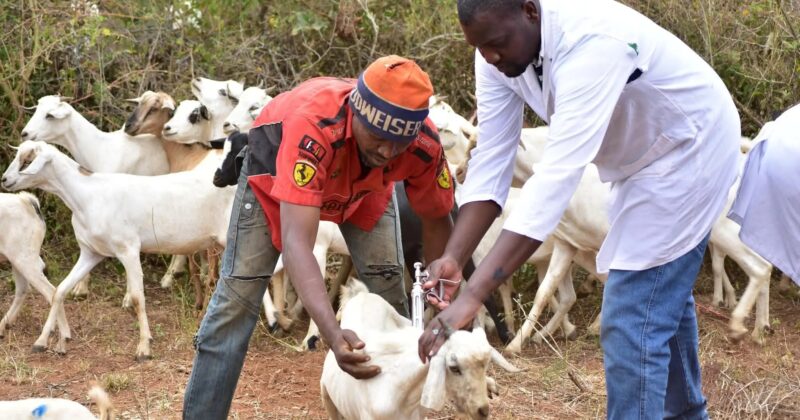
NAIROBI,Kenya, Sep 24— The European Union has committed Sh7.38 billion to accelerate Africa’s campaign to eradicate a contagious livestock disease threatening sheep and goats, with a further Sh5.90 billion expected to be mobilised through blended financing.
The additional financing could raise the total investment to about Sh13.29 billion, providing a major boost to efforts to eliminate Peste des Petits Ruminants (PPR) and strengthen animal-health systems across the continent.
The announcement was made during a high-level dialogue in Rome bringing together African governments, international financial institutions, development partners and animal-health organisations to discuss financing for the transformation of agrifood systems under the One Health approach.
PPR primarily affects sheep and goats, which are a critical source of food, income and household assets for pastoralists and smallholder farmers.
Although the disease does not infect humans, outbreaks can wipe out livestock, reduce household incomes, disrupt trade and worsen food insecurity in communities that depend heavily on small ruminants.
The EU said PPR should be treated as more than an animal-health problem because of its wider impact on livelihoods and rural economies.
The new financing is intended to support the second phase of Africa’s PPR eradication efforts, helping countries strengthen vaccination and the wider systems required to detect, contain and ultimately eliminate the disease.
Funding gap
Participants warned that vaccination alone would not be enough to eradicate PPR.
Countries need stronger veterinary services, disease surveillance, diagnostic laboratories, reliable vaccine supply and cold-chain systems, as well as better animal-health data and cross-border coordination.
Africa already has national eradication strategies, laboratory networks, vaccination programmes and regional coordination structures. But inadequate and unpredictable financing has continued to slow implementation.
The Intergovernmental Authority on Development (IGAD) urged countries to prepare fully costed national PPR plans and integrate them into wider national investment frameworks.
Such plans, it said, would allow governments to identify financing gaps while demonstrating the economic benefits of eliminating the disease.
The financing comes as African countries seek to protect livestock-dependent communities from preventable losses and strengthen the resilience of rural economies.
Leaders from Tanzania, Chad, Cameroon, Bangladesh and Burkina Faso attended the Rome dialogue alongside representatives of the World Bank, Bill & Melinda Gates Foundation, IGAD and African Union institutions.
Tanzania highlighted investments in livestock vaccination, animal health and transformation of its livestock sector, while Chad and Cameroon outlined efforts to strengthen veterinary services and protect pastoral communities.
The EU commitment is expected to help countries address gaps that have left some livestock populations beyond the reach of regular vaccination and veterinary programmes.
KioskNews shows a cleaned-up reading view extracted from the publisher’s page — the original always lives on their site, not ours.