Why are Turkey, Pakistan, Qatar and Indonesia joining forces?
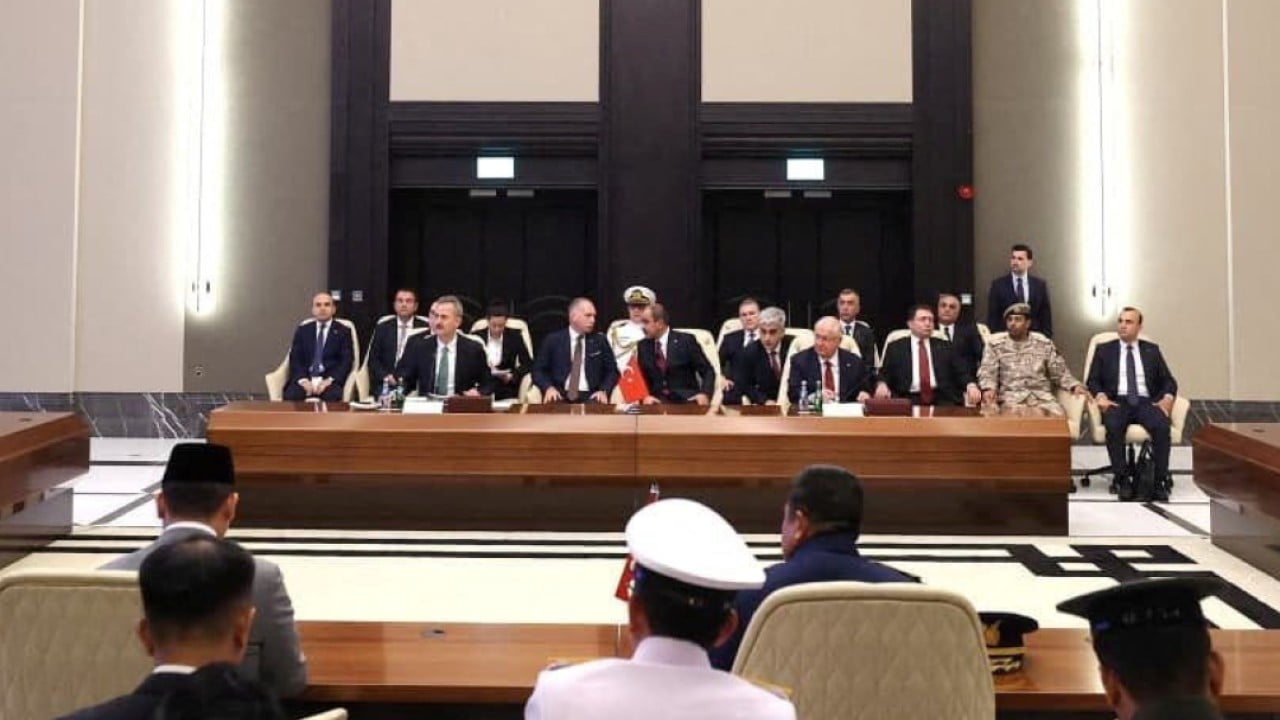
A decision by Turkey, Pakistan, Qatar and Indonesia to jointly develop and produce weapons systems marks a major push to reduce reliance on Western armaments that come with political strings attached, observers say.
Following the signing of the Badr memorandum of understanding in Doha on Wednesday, the four governments separately said they would work towards integrating their defence industries and supply chains to meet military needs.
“By leveraging the capabilities of each country in the field of military production, cooperation and integration will be achieved, defence industry capacities will be developed, and the needs of allied and friendly nations can thus be met,” Turkey’s Ministry of Defence said.
Nato member Turkey, which has the most prolific defence industry of the new grouping, is slated to host most of the production facilities. But Western technology would remain indispensable – especially for advanced propulsion, avionics, sensors and certain electronic components, analysts said.
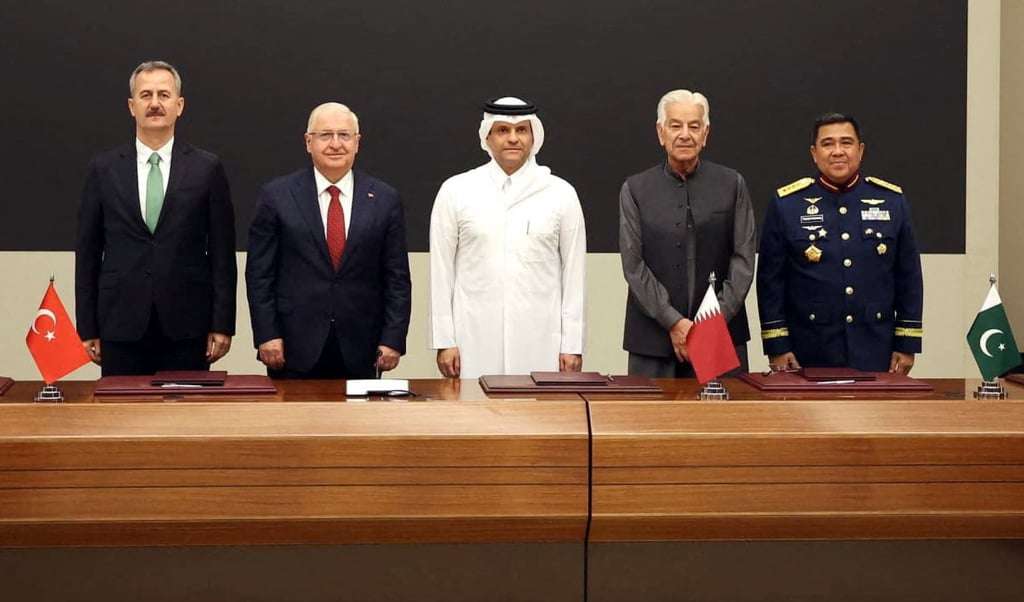
Access to these technologies is frequently subject to export controls and political restrictions – and the Badr pact is partly “to escape precisely this vulnerability”, according to Andreas Krieg, a former British defence ministry adviser to Qatar’s armed forces.
He described the new pact as an attempt to reduce dependency on Western suppliers of sophisticated equipment for maintenance, ammunition, technology – and “ultimately political decisions about how and when those systems can be used”. The Iran war had “exposed the limitations” of a regional security system reliant on external suppliers.
“Badr is an attempt to reduce that dependence by pooling industrial capabilities, rather than simply pooling military forces,” said Krieg, an associate professor of defence studies at King’s College London.
The Badr MOU is the second such step taken recently by Muslim-majority states in response to the chaos from the US-Israel conflict with Iran and its regional militia allies. Turkey, Saudi Arabia and Pakistan formed the Mecca Defence Alliance in early August.
“[Mecca] offers a political promise of deterrence, while [Badr] could eventually help supply the means to sustain it,” Krieg said.
Badr was as much an exercise in building strategic relationships as it was an industrial agreement, he added. Joint factories, shared intellectual property and integrated supply chains “can bind countries together more durably than declarations of strategic friendship”.
‘Statement of desire’
Viewed together, the overlapping agreements could be seen as an emerging strategic challenge by countries viewed as hostile to the Badr signatories, analysts said.
Former senior Pentagon official Dave Des Roches said the Badr MOU was politically significant because it represented a “statement of desire” by the four countries to acquire advanced military capability for defence.
For Qatar, “of course, right now the main issue is Iran”, which has repeatedly targeted its energy infrastructure and shipping in response to the war launched by Israel and the US on February 28, said Des Roches, a senior non-resident fellow at the Gulf International Forum, a think tank based in Washington and Doha.
Tensions between Turkey and Israel over Syria have been rising since Islamist rebels seized power from Bashar al-Assad’s regime in December 2024. Des Roches saw the possibility of “limited clashes” between the two in Syria because Ankara viewed the country as a “client state and spirit influence”, while Tel Aviv thought of President Ahmed Sharaa’s regime as a “serious defence vulnerability”.
Indonesia differs in that it faces no imminent threat, being far from the Middle East and not a party to the South China Sea dispute. Its prime objective is strategic autonomy.
01:10
US launches more Iran strikes, hits oil tanker trying to break Hormuz blockade
On the other hand, Pakistan has fought several wars with India over the last 80 years, most recently a short air conflict in May 2025.
The nuclear-armed rivalry between Pakistan and India was “the wild card”, Des Roches said, because the ruling Hindu nationalist government in New Delhi could potentially view Badr as evidence that Indonesia, the world’s most populous Muslim-majority country, had been “enlisted as a military ally or partner” of Islamabad.
Similarly, Krieg said Tehran would see Badr as an increasingly interconnected defence-industrial network emerging around it, even though its individual members have different threat perceptions.
While Qatar was not joining an anti-Iranian military alliance and remained committed to dialogue with Tehran, Doha “increasingly recognises that diplomacy must be supported by credible deterrence” – particularly through the ability to deny an adversary the military advantages of attacking the country.
“This creates an additional deterrent, but also the risk that Iran interprets greater Gulf military cooperation as a form of strategic encirclement,” Krieg said.
Military balance
Israel’s greatest concern would be Turkey’s growing ability to organise defence-industrial relationships beyond Nato while for India, the principal issue would be Pakistan’s ability to diversify its military-industrial partnerships beyond China, Krieg said.
Turkish technology, Qatari investment and access to additional industrial partners could gradually improve Pakistan’s technological capabilities and reduce some of its supply vulnerabilities. “That is consequential for the long-term military balance with India,” Krieg said.
Both analysts were sceptical, though, that the Badr MOU could have an immediate impact on the military capabilities of all four nations. “It would take a very long time indeed,” Des Roches said.
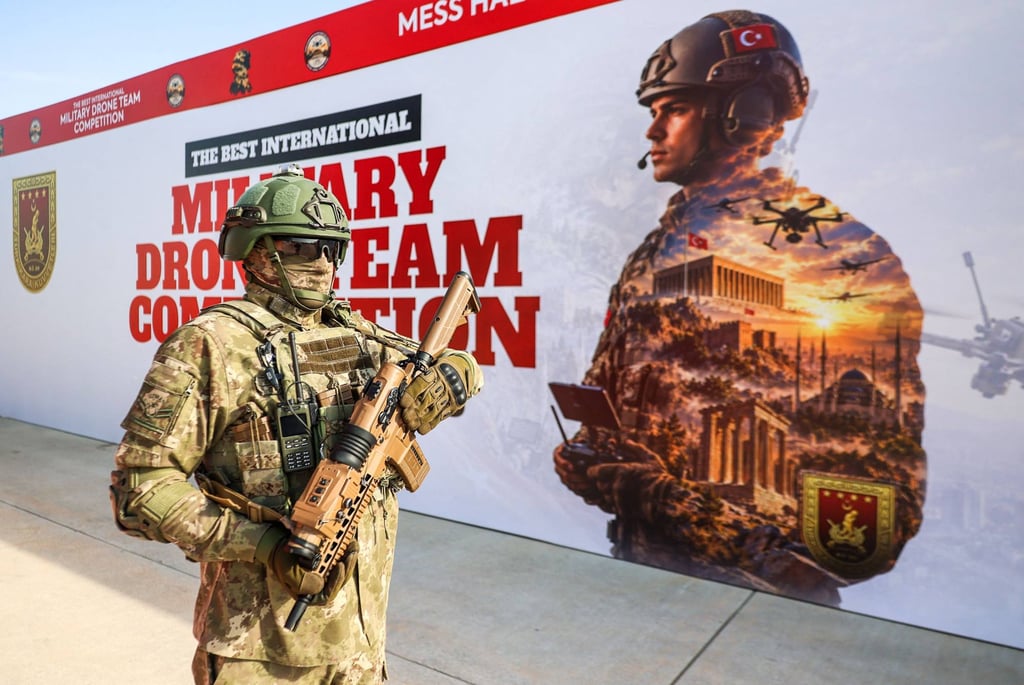
There was obvious scope for Turkey to develop unmanned aerial systems and naval ships for its partners, while Pakistan’s defence industry could provide basic military materials like Nato-standard artillery ammunition – “but it’s hard to see how they would acquire, for example, the sort of air defence network that they need from this alliance”, Des Roches said.
He saw the agreement as “making sense in the abstract but not … in real life” because of issues such as transfer of technology restrictions placed on Turkey by its Nato suppliers.
Badr risked becoming “another ambitious memorandum that generates committees and announcements without creating a functioning industrial ecosystem”, Krieg said.
Its credibility would depend on whether the partners commit real funding, allocate production responsibilities and agree on intellectual property and export rights.
Badr’s success should be measured “not by the number of agreements signed”, but by whether it produces equipment that member states can manufacture, maintain and replenish “without constantly turning to outside suppliers”, Krieg said.
KioskNews shows a cleaned-up reading view extracted from the publisher’s page — the original always lives on their site, not ours.