Are Lebanese Shi'ites abandoning Hezbollah? Poll shows majority favor disarming group - analysis
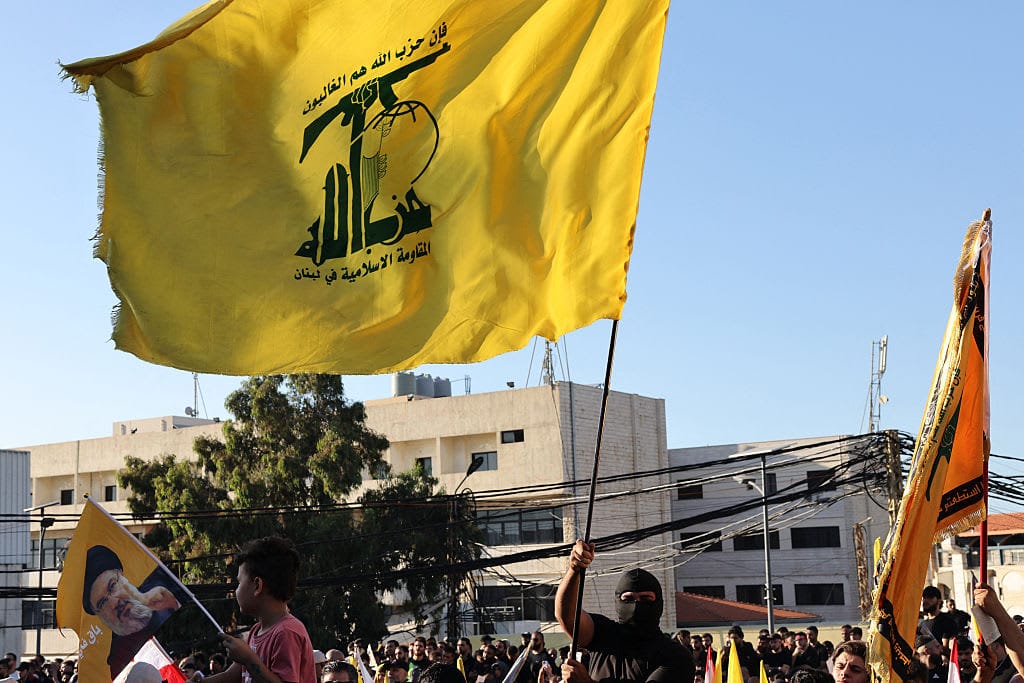
Hezbollah may face growing criticism from within Lebanon's Shi’ite community, which has formed the backbone of its support for decades, according to a report from KAN on Saturday.
A recent survey of Shi’ites got attention in regional media. As reported by Israel's KAN public broadcaster and the Lebanese Kataeb.org website, the survey, whose results emerged in mid-October, suggested that many Shi'ites are increasingly questioning the terrorist group.
The main question is whether Hezbollah should keep its arsenal. People also questioned Hezbollah’s conduct in the wars with Israel. However, this did not necessarily mean that Hezbollah is losing its influence over the community.
Respondents said decisions regarding war and peace should be left to the Lebanese state
The survey, conducted by Statistics Lebanon in September among 800 Lebanese Shi'ites, found that 66.4% supported transferring Hezbollah's weapons to the Lebanese state. Another 29.6% preferred that the terrorist organization retain its weapons. The results were significant because Hezbollah has argued that its arsenal is essential for defending Lebanon against Israel.
Roi Kais at Israel’s KAN noted, “A new survey has revealed that about 66 percent of Lebanese Shi'ites support Hezbollah's transfer of weapons to the state, and more than 40 percent express anger and disappointment with its leadership. Amid growing criticism, the support networks and status the terrorist organization has given the sect still maintain its power - as long as no other entity fills the vacuum.”

Notably, Kataeb.org, the website of the Phalange Party (Kataeb Party), a political party in Lebanon, published details on the survey. The Christian Kataeb Party opposes Hezbollah. The website noted that 71.1% of respondents believed that decisions about war and peace should rest exclusively with the Lebanese state. Only 5.9% believed Hezbollah's leadership should have a greater role in determining Lebanon's future.
Only 16.5% of respondents had confidence in Hezbollah's ability to guarantee security
The survey also revealed considerable confidence in the Lebanese Armed Forces. Some 78.5% expressed trust in the army, while 51.1% identified it as the institution best suited to guarantee long-term security. Only 16.5% selected Hezbollah.
These findings raised questions about Hezbollah's traditional claim to represent the security interests of Lebanon's Shi'ites. They suggested that many within the community may prefer stronger state institutions, even if they continue to identify politically or socially with Hezbollah.
The survey also found that 67.4% believed Hezbollah had either failed to achieve its objectives in the war with Israel or had achieved only some of them. Another 42.1% expressed disappointment, anger or concern about Hezbollah's leadership and the consequences of the conflict. Nevertheless, 59.5% continued to express varying degrees of trust in Hezbollah, including 37.1% who reported a great deal of trust.
An earlier survey presented a very different picture. In a June 10 analysis published by Israel's Institute for National Security Studies (INSS), researchers Orna Mizrahi and Moran Levanoni cited a May 2026 survey by Lebanon's Information International in which 87.5% of Shiite respondents opposed disarming Hezbollah, while only 7.9% supported surrendering its weapons. More than 90% opposed ties with Israel.
The contrast with the September findings led to many questions. How can people hold such different views? Is it possible that some of the surveys are biased in their questions or agendas?
Mizrahi and Levanoni argued that Hezbollah's influence rests on its social and economic networks, political power, and the historical marginalization of Lebanon's Shi'ites.
They also noted that intimidation has discouraged opposition within the Shi’ite community. The researchers suggested that weakening Hezbollah's influence would require a stronger Lebanese army and Western and Gulf financial assistance to enable the state to replace Hezbollah's services.
This illustrated the complex relationship between Hezbollah and Lebanon's Shi'ites. Hezbollah is not just a terrorist group. It built networks of social services, financial institutions, and political influence to hedge its bets and take over the Lebanese state.
Now that it is so powerful, it is hard to uproot. Many people in Lebanon feared opposing Hezbollah over the years. For some Shi’ite families, it remains an important source of employment and assistance, even if they have to sacrifice their security due to the wars that Hezbollah has caused.
Lebanese fear Hezbollah-linked facilities could become Israeli targets
KAN highlighted an example from the southern Lebanese city of Tyre, where property owners reportedly opposed opening a branch of Hezbollah-linked financial institution Al-Qard Al-Hassan in their building. They feared the branch could become a target for Israeli strikes. The branches have been targeted in the past.
Hezbollah is attempting to regain support through reconstruction assistance. According to KAN, Hezbollah recently announced aid of up to $14,000 for eligible families in Beirut and its southern suburbs whose primary homes were destroyed, and up to $12,000 elsewhere.
The broader question is whether dissatisfaction will translate into political change. Hezbollah has suffered significant military and leadership losses since the war began, including the killing of Hassan Nasrallah in September 2024.
Yet its influence is rooted in decades of political and social organization. Lebanon did not jump at the opportunity to uproot the group in 2025. In March 2026, a new war broke out, leading to massive destruction of villages in southern Lebanon. Even today, Beirut moves at a snail’s pace.
The survey suggests that support for Hezbollah's terrorist role may be weakening even among its traditional constituency. However, unless the Lebanese state can provide security, reconstruction, and economic opportunities, the criticism won’t lead to major change.
KioskNews shows a cleaned-up reading view extracted from the publisher’s page — the original always lives on their site, not ours.