AI Stocks Bleed After Democrat Sweep. Why Wall Street Lost $2.5 Trillion In A Day
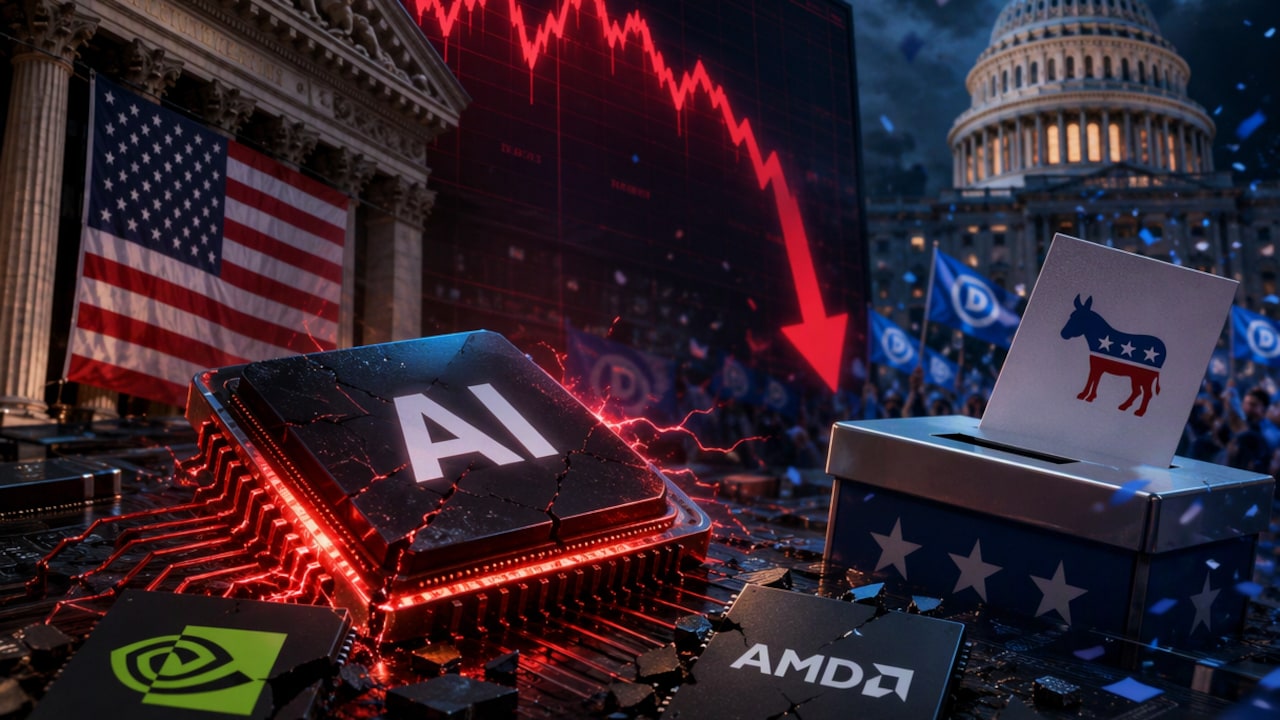
Share Market News: Wall Street's artificial intelligence (AI) trade suffered a brutal reality check on Thursday. Overnight, technology stocks plunged, wiping out an estimated $2.5 trillion in market value from the Nasdaq 100.
The sell-off was among Wall Street's worst in months. Investors dumped chipmakers, data centre operators and companies riding the AI boom as concerns grew that Democrats could put the brakes on America's massive AI infrastructure expansion.
The Nasdaq Composite fell 5.5 per cent, entering correction territory. The S&P 500 dropped 4.4 per cent, while the Dow Jones Industrial Average shed 3.4 per cent. It was the S&P 500's worst session since April 2025. FOLLOW LIVE MARKETS UPDATES
Also Read | Layoffs Are Rising In Tech, But These Skills Are Helping People Unlock Better Pay
Why Did AI Stocks Crash After The Democratic Victory?
At first, markets welcomed the Democratic sweep. US stocks rallied on November 4, with investors breathing a sigh of relief that Democratic control of Congress could reduce uncertainty surrounding President Donald Trump's policies. However, the optimism quickly faded.
Investors are now worried that Democrats could push for tighter oversight of data centres, stricter environmental rules and restrictions on new projects. Several Democratic candidates campaigned on slowing the industry's rapid expansion.
The political shift is crucial because AI's growth depends heavily on infrastructure. Technology companies are spending billions of dollars on chips, servers, electricity and data centres to support AI services. If new projects face delays or face tougher approval processes, the entire investment chain could feel the impact, from chipmakers to power suppliers.
According to a Reuters report, around 30 per cent of expected US data centre capacity additions in 2028 could be at risk due to potential construction pauses.
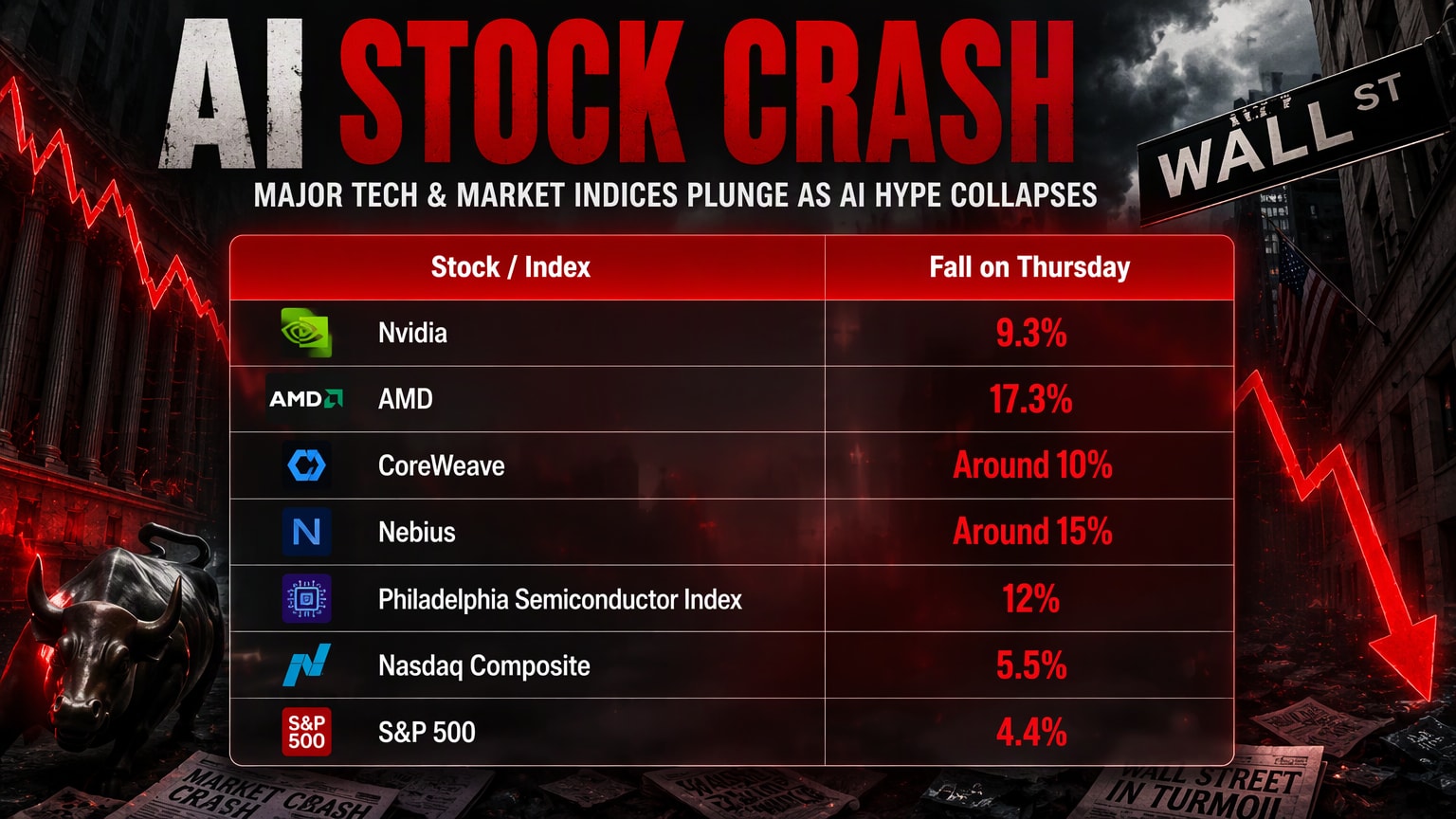
The pressure extended beyond chipmakers. Data centre operators, equipment suppliers and power companies also fell as investors reassessed the pace of AI infrastructure spending.
The weakness was not simply about election results. Disappointing earnings signals from major technology companies and concerns over the returns on enormous AI investments had already made investors nervous.
Is The AI Boom Losing Its Shine?
For years, markets rewarded companies promising to benefit from AI. But building the infrastructure needed to power the technology requires enormous capital. Investors are increasingly asking when those investments will translate into profits.
Abhishek Bhilwaria, Partner at Bhilwaria Finserv, told NDTV that the sell-off reflects changing investor expectations rather than necessarily a loss of confidence in AI's long-term potential. "The recent sell-off in AI-linked stocks on Wall Street reflects a shift in investor expectations rather than necessarily a loss of confidence in artificial intelligence as a long-term opportunity," Bhilwaria said.
He said investors are becoming more selective, examining revenue visibility, profitability and the time required for substantial AI infrastructure investments to generate returns. According to Bhilwaria, political developments and regulatory uncertainty may add to near-term volatility, but the broader market is reassessing valuations.
What The AI Stock Rout Means For India
The Wall Street sell-off could have implications for Indian markets, particularly through foreign portfolio investment flows and sentiment towards technology stocks.
Indian IT services companies could also face greater scrutiny over how quickly they can convert AI adoption into business growth and improved margins.
However, Bhilwaria cautioned against interpreting the correction as a broad-based slowdown in India's technology sector. "Companies with strong fundamentals, sustainable earnings and clear AI-led business applications could remain resilient," he said.
KioskNews shows a cleaned-up reading view extracted from the publisher’s page — the original always lives on their site, not ours.