As AI cyber risks grow, Chinese chip expert urges shared ethics standards with US rivals
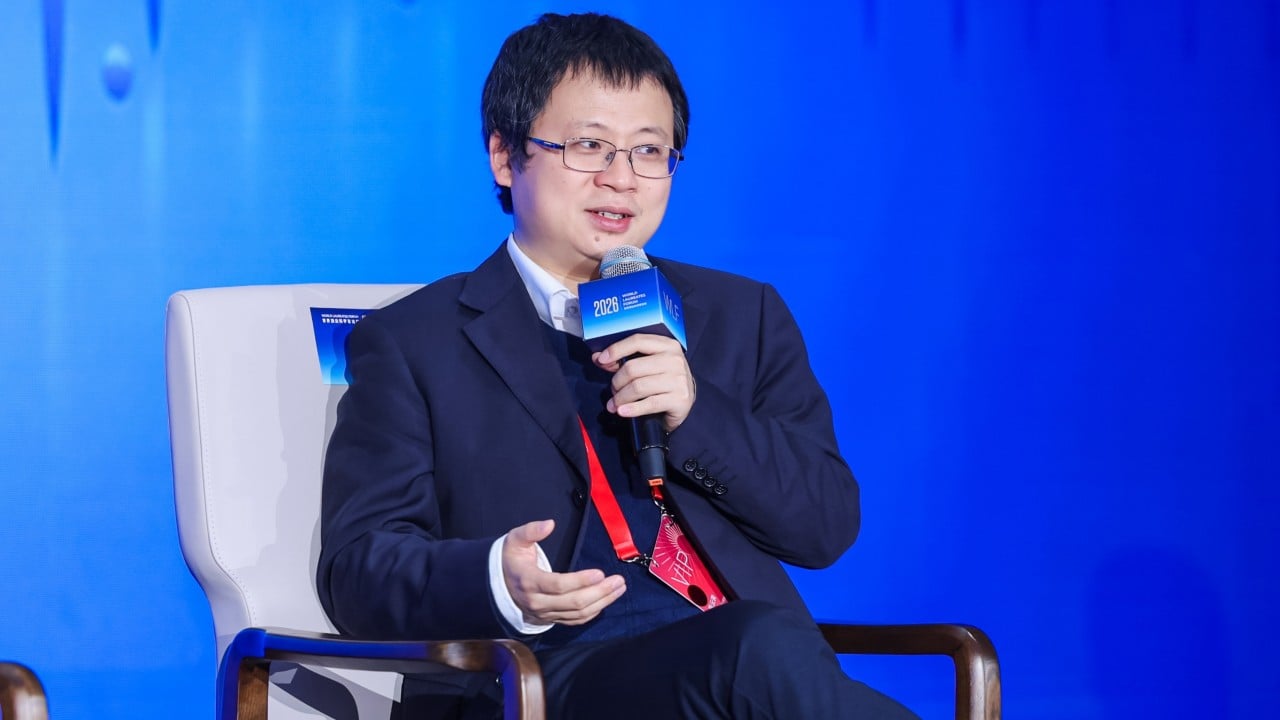
The co-founder of Chinese chip giant Cambricon Technologies urged the introduction of universal ethical requirements for leading Chinese and American artificial intelligence models on Friday to mitigate growing risks to society.
Chen Yunji’s remarks at an event in Shanghai come as the rapid advance of AI systems globally has resulted in a string of high-profile cyberattacks that have threatened critical infrastructure and breached government servers.
Predicting that AI advances would develop even faster, Chen proposed a universal “ethics checker” that all leading AI models would need to satisfy, citing the systems developed by Chinese companies DeepSeek and ByteDance as well as American start-up OpenAI.
“All human beings and nations would need to agree on this ethics checker … to prevent these large language models from doing harm to human beings in the future,” he said at a panel on AI safety and risks on the opening day of the World Laureates Forum in Shanghai’s Lingang Special Area.
One of China’s leading chip experts, Chen is a professor at the Chinese Academy of Sciences. He founded Cambricon Technologies in 2016 with his brother, Chen Tianshi, helping the company grow into one of China’s hottest domestic chip designers, with a market capitalisation of over 600 billion yuan (US$90 billion).
Warning that humanity could soon face AI systems capable of autonomously improving themselves in a process known as “recursive self-improvement” (RSI), Chen said it might be impossible to completely prevent harm, given the opaque nature of AI decision-making.
However, he said he had “faith” that RSI could be made safe by leveraging AI itself at each stage of development to monitor and safeguard the more powerful systems that would follow.
There is no way to stop AI in the current world, where there is too much economic and military motivation to go full speed ahead
Beijing has signalled growing concerns over the cyber-hacking capabilities of AI models in recent weeks. Earlier this month, it proposed export controls on advanced AI systems, with additional restrictions for those that cross critical cyber-hacking thresholds.
On Thursday, US cybersecurity giant CrowdStrike said in a report that an unidentified group had used an open-source DeepSeek model and another unidentified model to conduct cyberattacks against more than 200 organisations worldwide since October 17.
DeepSeek did not immediately respond to a request for comment.
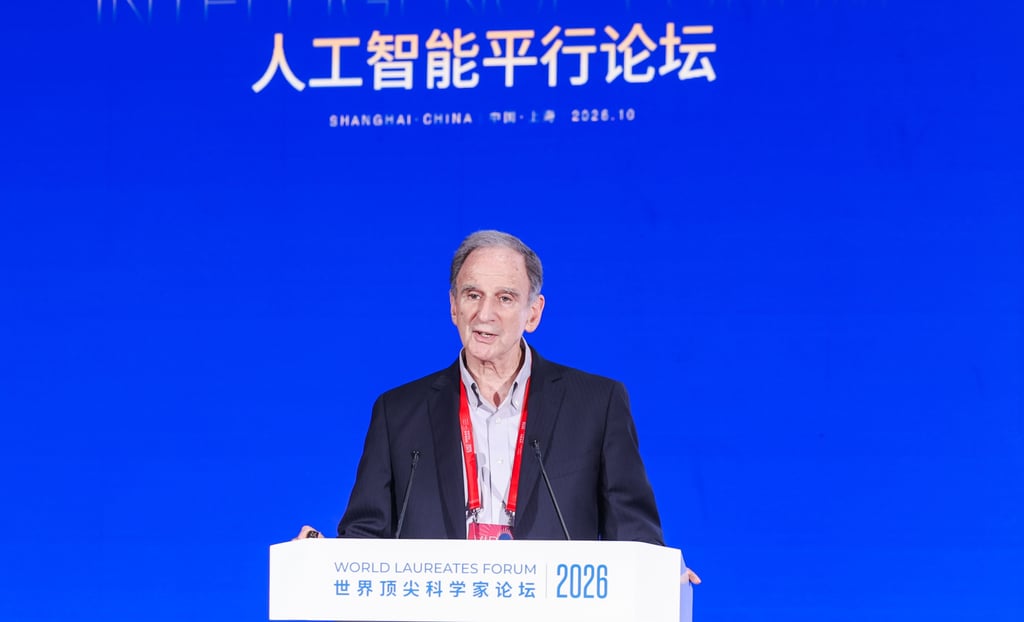
Martin Hellman, the American cryptologist and Turing Award recipient who also spoke at the forum on Friday, said the latest incidents underscored the need for China and the US to work towards “a new world” in which cooperation on AI safety remained possible.
“There is no way to stop AI in the current world, where there is too much economic and military motivation to go full speed [ahead],” he said, warning that this could lead to “global death”.
“The US and China are powering the AI revolution, and that gives our two nations a special responsibility … to find ways in which AI can be better governed,” Nicholas Dirks, president of the New York Academy of Sciences, said at the event on Saturday.
The experts’ remarks come ahead of two remaining meetings this year between Chinese President Xi Jinping and US President Donald Trump, in Shenzhen and Miami, where AI governance is expected to feature prominently on the agenda.
The two countries agreed in September to establish a bilateral AI safety dialogue and incident-notification mechanism, although details of its scope and operations have yet to be disclosed.
Hellman said in his keynote speech that it would be unproductive for either China or the US to dictate AI governance policies to one another, arguing instead that the two countries needed to start working “from within”.
China and the US continue to pour trillions of dollars into AI development as they compete for dominance in a technology that carries significant geopolitical, military and economic implications.

On Friday, a commentary that appeared in the print version of the People’s Daily, mouthpiece of the ruling Communist Party, called for greater public confidence in China’s AI trajectory after claims circulated online suggesting the country was failing to use AI for productive purposes.
Some internet users in recent weeks shared figures claiming that AI use in China was concentrated in entertainment, while the US was deploying the technology in economically productive ways such as coding and knowledge-based work.
The World Laureates Forum runs through Sunday, with high-profile speakers including Z.ai chief scientist Tang Jie and Nobel Prize-winning chemist Omar Yaghi set to deliver keynote speeches about AI development on Saturday.
KioskNews shows a cleaned-up reading view extracted from the publisher’s page — the original always lives on their site, not ours.