High Court demands answers on safe return of displaced Palestinian Bedouin community
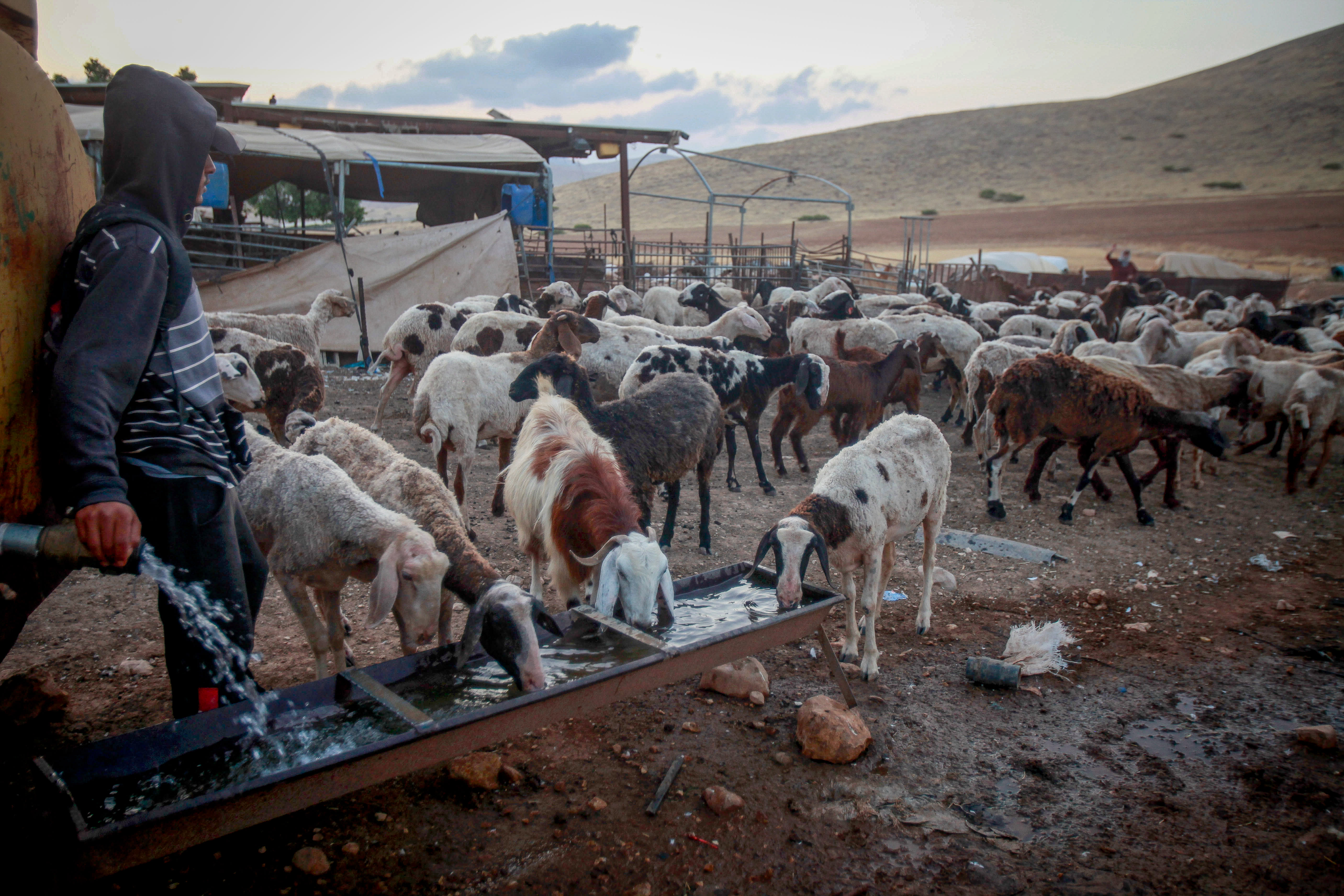
The High Court of Justice on Thursday ordered Israeli authorities to explain why they should not take concrete steps to secure the return of a Palestinian Bedouin community in the southern Jordan Valley whose residents say they were driven out by settler violence.
The conditional order concerns Ras Ein al-Auja, where residents still have not been able to return approximately nine months after leaving their homes. It requires answers on measures, including restricting Israeli access to the community’s living area, evacuating illegal outposts, and ensuring protection after residents return.
The authorities acknowledge their responsibility to protect the residents and say they are prepared to coordinate their return. But they have said they cannot station a permanent force there and have raised concerns about security arrangements involving civilian guards outside their control.
Residents fear that once soldiers leave, they will again be exposed to violence. The court said that, given past events, this fear was not groundless.
“Such a state of affairs requires correction,” the justices wrote, pointing to the months that had passed with the residents being unable to return.

Affidavit responses to court's order due by December 1
Supreme Court President Isaac Amit and justices Dafna Barak-Erez and Yechiel Kasher issued the order following a hearing on Monday. The respondents must submit an affidavit in response by December 1, and a further hearing is to be scheduled in the first half of December.
The petition was filed in March 2025 by six residents and the Center for the Advancement of Peace Initiatives (CAPI). It described what it characterized as a months-long pattern of harassment, grazing takeovers, infrastructure damage, and livestock theft, centered around the establishment and expansion of nearby illegal settler outposts.
Across the West Bank, 166 settler outposts have been established since the beginning of 2025, according to Dror Etkes, founder of Kerem Navot, an Israeli organization that monitors settlement expansion and land policy. Responding to a query from The Jerusalem Post, Etkes said those sites were among a total of 440 outposts in his count.
“This includes outposts that have been retroactively legalized or are undergoing legalization,” he said. Etkes added that the count excludes sites he has heard about but has not yet personally inspected.
According to the petitioners’ account, summarized in the decision, the entire community - approximately 110 families comprising more than 1,000 people – was eventually forced to leave. They said they had lived there for about 70 years.
The court emphasized the military commander’s duty to protect residents and maintain public order in territory held under belligerent occupation, a responsibility the authorities did not dispute.
Thursday’s order requires the respondents to explain why they should not act as soon as possible to return the petitioners and their families to their homes. It also asks why the military commander should not bar Israelis from entering the petitioners’ residential and living area, except those whose entry is coordinated with the petitioners.
The authorities must further explain why they should not evacuate illegal outposts established within the area the petitioners claim as their living space, and demolish or block a nearby road built without permission.
They must also detail the concrete steps they intend to take to ensure the residents’ safety both during their return and afterward.
The conditional order requires the respondents to explain why those measures should not be taken, ahead of a further decision.
Civil group Looking the Occupation in the Eye characterized the order as “expressing disgust from the lies and feet-dragging by the military and police throughout the legal process.”
It described the petition as “trying to do justice in a classic case of ‘the poor man’s lamb’ [a biblical reference to the powerful taking the little that the poor possess]. This Bedouin community was robbed of the little it had – a roof over their heads and a plot of land – by a group of settler vandals who have neither fear of God nor common decency.”
Case remained in front of court since February direction to coordinate return
The case has remained before the court since an earlier intervention in February, it directed the authorities to assist a coordinated return to a defined area of the community and report on enforcement measures within 60 days.
In its subsequent position, reported in May, the state maintained that residents could return in coordination with the army but rejected demands for a permanent security presence, restrictions on Israeli access, and private security arrangements.
The petitioners argued in a response to the state’s proposal that a brief military escort would leave them exposed to the same conditions that had forced them to leave. They also raised concerns that restrictions on rebuilding the homes and livestock structures dismantled when they departed would prevent an effective return.
Thursday’s decision brings the question of lasting protection to the center of the proceedings: not only whether the residents can be escorted back but also whether they can remain safely in their homes.
KioskNews shows a cleaned-up reading view extracted from the publisher’s page — the original always lives on their site, not ours.