Rajnath Singh chairs defence modernisation meeting in Jaisalmer, targets ₹3 lakh crore production by 2029
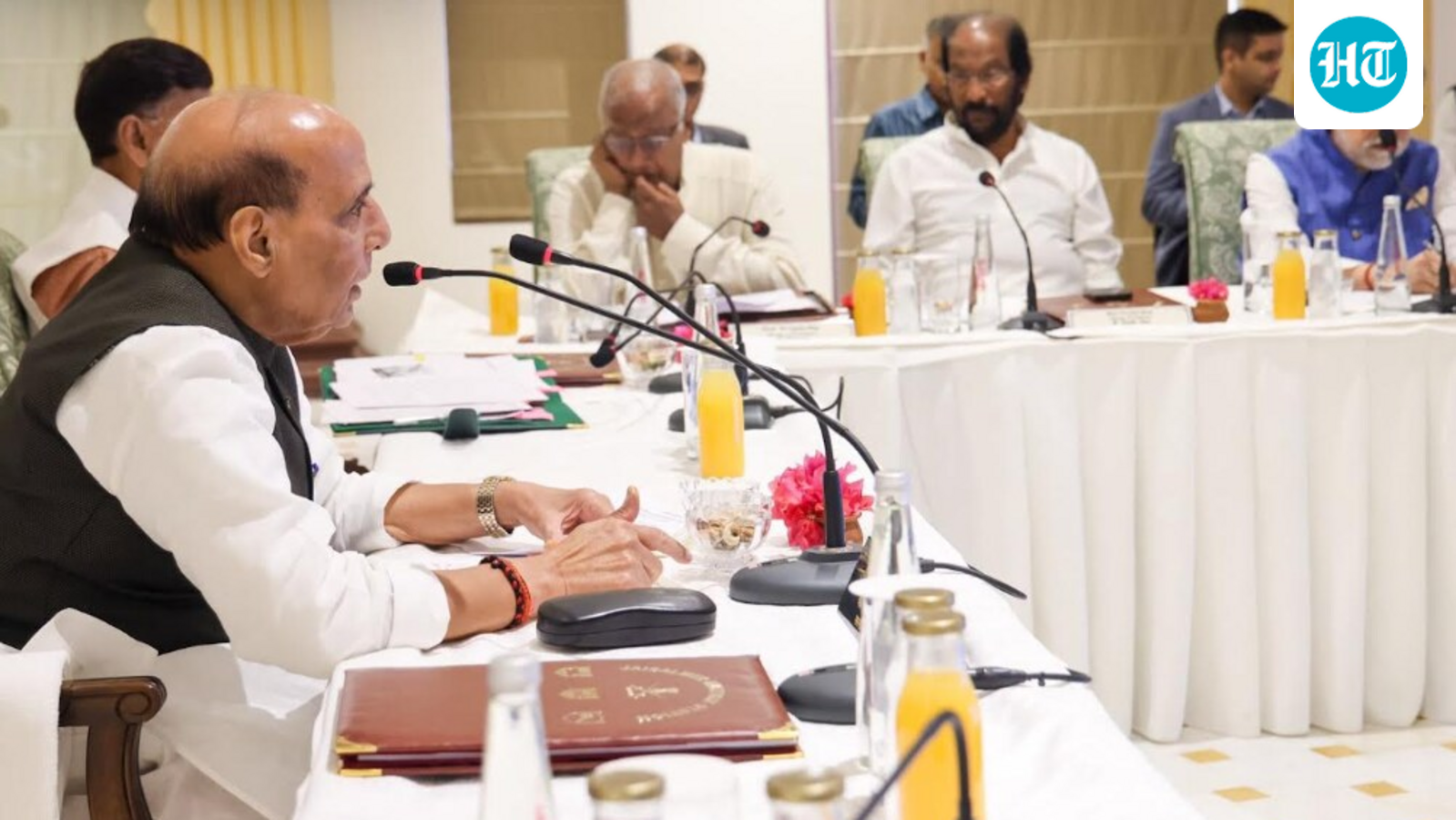
Union defence minister Rajnath Singh on Tuesday chaired a meeting of the Consultative Committee of the Ministry of Defence on ‘Modernisation of Indian Defence Forces’ in Jaisalmer, emphasising the government’s commitment to building a technologically empowered military capable of meeting present-day and emerging security challenges.
Attended by minister of state for defence Sanjay Seth, defence secretary Rajesh Kumar Singh, Secretary (defence production) Sanjeev Kumar, secretary (ex-servicemen Welfare) Sukriti Likhi, secretary (defence finance) Vishvajit Sahay, and senior civil and military officials, the meeting deliberated on changing warfare patterns, emerging security threats, technological advancements and the need to strengthen the operational preparedness of the armed forces.
Addressing the committee, Singh said the government, under the leadership of Prime Minister Narendra Modi, was focusing on three key areas — budget and capital acquisition, self-reliance in defence manufacturing, and technology and human capital — to prepare the armed forces for the evolving demands of modern warfare.
Increased support for military modernisation, production
Highlighting the increased financial support for military modernisation, Singh said the defence budget for FY 2026-27 had been raised to a record ₹7.85 lakh crore, including a capital outlay of ₹2.19 lakh crore for modernisation and capital procurement.
On India’s growing self-reliance in defence manufacturing, the defence minister said domestic defence production had increased from ₹46,429 crore in FY 2014-15 to a record ₹1.78 lakh crore in FY 2025-26. Defence exports, which were below ₹2,000 crore in 2014, had also grown to approximately ₹40,000 crore.
“We aim to achieve defence production worth ₹3 lakh crore and defence exports worth ₹50,000 crore by 2029,” he said.
Singh highlighted the growing role of technology in modern warfare and the initiatives undertaken by the Defence Research and Development Organisation (DRDO) to develop advanced weapons, missiles and military systems.
He said the government was providing a level playing field to the private sector, encouraging participation from MSMEs to large corporations in the defence ecosystem.
Describing it as a ‘whole-of-the-nation’ approach, he expressed satisfaction over the increasing contribution of private industry towards strengthening India’s defence capabilities.
Underscoring the importance of human capital, Singh said the strength of the armed forces depended not only on technology and financial resources but also on the capabilities and preparedness of their personnel.
Refining military structures
He said all three services were continuously refining their military structures and formations to adapt to changing battlefield requirements. The Indian Army’s new formations, including Asani, Bhairav and Shaktiban, were proving effective in addressing contemporary operational requirements, he added.
The defence minister emphasised that modernisation was not merely about procuring new weapons and equipment but also about enhancing operational preparedness, adopting advanced technologies and developing indigenous capabilities for the long term.
He said strategic autonomy and indigenous technological capabilities were essential to national security, and the government was working to build a robust domestic defence ecosystem to reduce dependence on foreign sources.
The meeting also focused on strengthening tri-service integration, joint operational planning, artificial intelligence, autonomous systems, unmanned platforms, cyber and space capabilities, electronic warfare and advanced communication systems.
Discussions further highlighted the need to strengthen collaboration among the armed forces, DRDO, defence public sector undertakings, private industries and academic institutions to accelerate research, innovation and the development of indigenous technologies.
Members of Parliament from both the Lok Sabha and Rajya Sabha shared suggestions during the meeting. The deliberations emphasised prioritising critical military capabilities, improving coordination among stakeholders, streamlining acquisition and development processes, and periodically reviewing progress against defined objectives.
KioskNews shows a cleaned-up reading view extracted from the publisher’s page — the original always lives on their site, not ours.