Reader Q&A: After Lula’s sensational victory in Brazil’s presidential election, post your questions for the Guardian’s Latin America correspondent

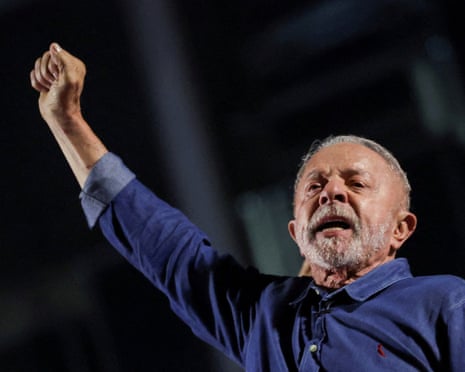
After losing the first round of Brazil’s presidential election to far right rival Flávio Bolsonaro, incumbent Luiz Inácio Lula da Silva, better known simply as Lula, pulled off the most stunning political fightback in modern Brazilian history by winning the second, in so doing securing a fourth presidential term. It will see him become the country’s longest-serving leader.
The result – 51.79% to Lula, 48.21% to Bolsonaro – was delivered after a supreme court judge had extended polling time by two hours, and after Lula’s camp accused their opponents of sabotaging public transport in an attempt to keep their voters from the polls. It was the first time in Brazilian electoral history that a first-round verdict had been overturned.
But Bolsonaro, son of former president Jair Bolsonaro who is serving a 27-year jail term for his part in an attempted coup after the last presidential election, refused to accept the result – just as his father had done, four years before. He called Lula’s victory “sacanagem”, a Portuguese word that roughly translates as “bullshit”.
Brazil remains a deeply divided country and Lula will have to navigate a hostile Congress, packed full of Bolsonaro allies, if he is to make significant legislative changes in his fourth term. His options are also constrained by a gloomy economic outlook, with Brazil experiencing soaring debt and entrenched structural problems. As he turns 81, will the re-elected president have the energy to face down the far right opposition for another four years and to lay out the ground for a credible successor?
And what does Lula’s latest victory mean for the wider region, and for the country’s relationship with Donald Trump’s administration? In the Guardian’s Opinion pages columnist Jordana Timerman wrote that “Lula’s victory shows that the rightward shift is neither inevitable nor irreversible. But the movement retains substantial electoral support, influence over the political agenda and a powerful ally in Washington.”
The Guardian’s Latin America correspondent Tom Phillips will be answering your questions on the election result, what it means for Brazil and the wider region, and what the country’s future may hold, here from 15:00 GMT on Tuesday 27 October. Comment with your question below, or email conversations@theguardian.com
KioskNews shows a cleaned-up reading view extracted from the publisher’s page — the original always lives on their site, not ours.