Hiring at this Puerto Princesa restaurant speaks a different language
Already have Rappler+?
to listen to groundbreaking journalism.

UNDERSTANDING. An International Basic Sign Language chart hangs inside Ka Inato, helping bridge communication between deaf and hearing staff.
Vic Albert Bagaan/Rappler
Beyond its Filipino comfort food, Ka Inato in Puerto Princesa, also serves equal opportunity. Around 20 of its 50 employees are persons with disabilities who get the same salary and benefits as their hearing colleagues
AT A GLANCE
- Ka Inato, a restaurant in Puerto Princesa, employs people who are deaf, providing them with a supportive community and livelihood.
- Owner Eric John Yayen emphasizes equal pay and benefits for deaf employees, alongside a savings program that has allowed them to experience travel opportunities.
- The restaurant's inclusive environment has required adjustments in communication and training, promoting understanding between employees and customers.
This is AI-generated. Read the article for full context. Report any errors.
PALAWAN, Philippines – For many visitors, a meal at Ka Inato means grilled chicken and Filipino comfort food.
But beyond its menu, the Puerto Princesa restaurant offers something visitors may not expect: a workplace where employees who are deaf make up nearly half of its workforce.
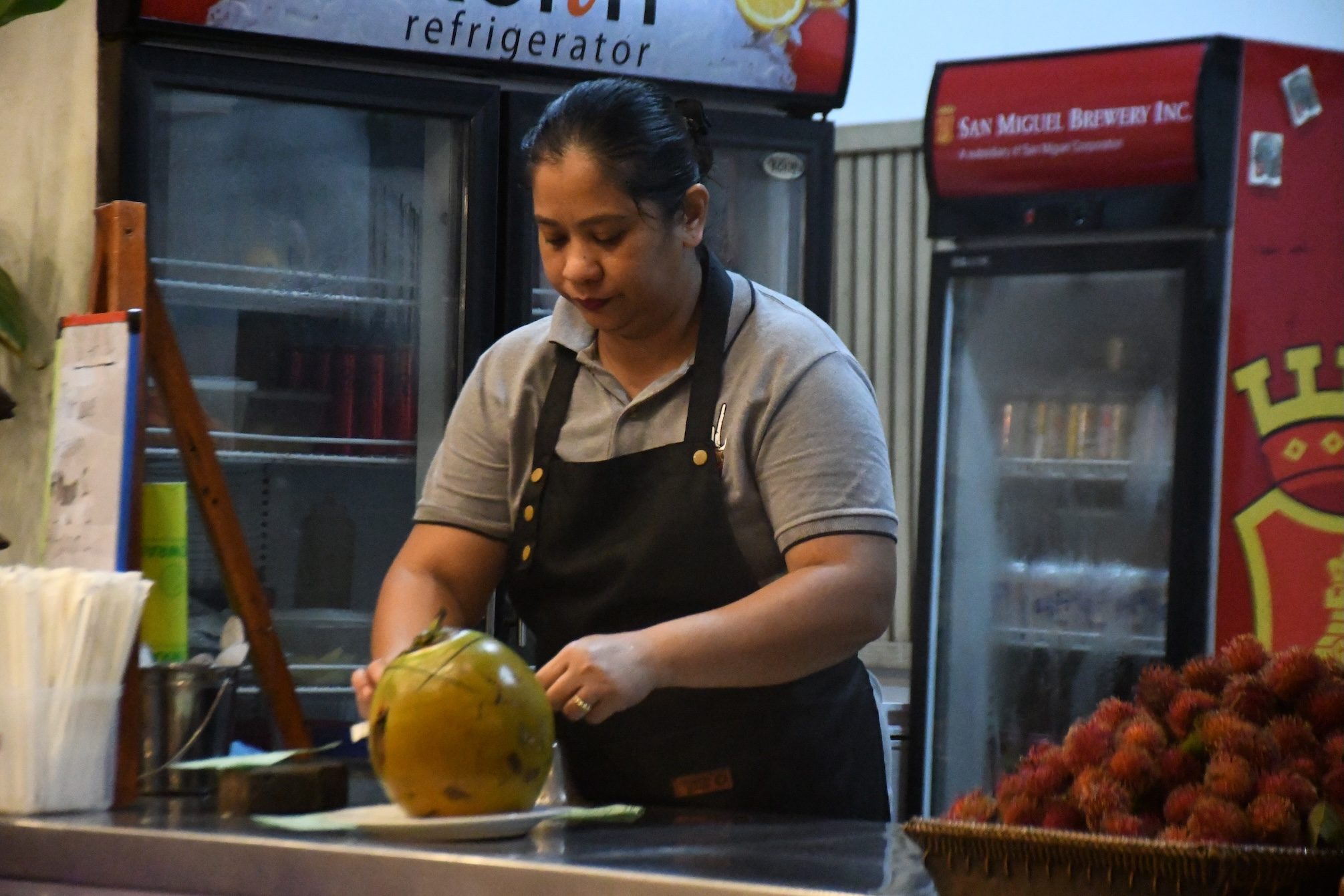
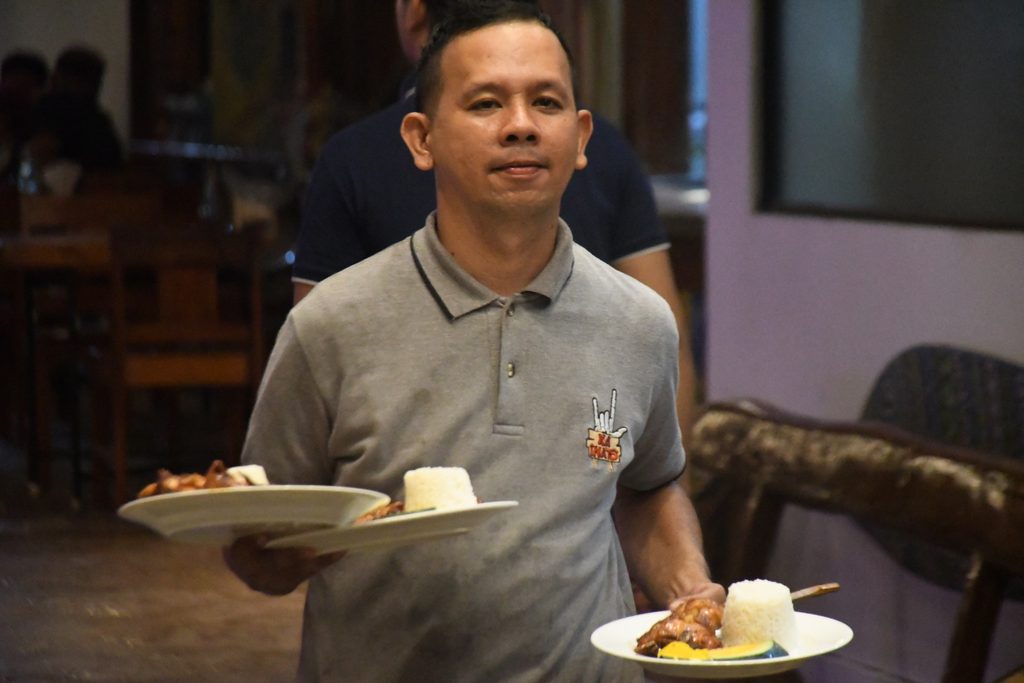
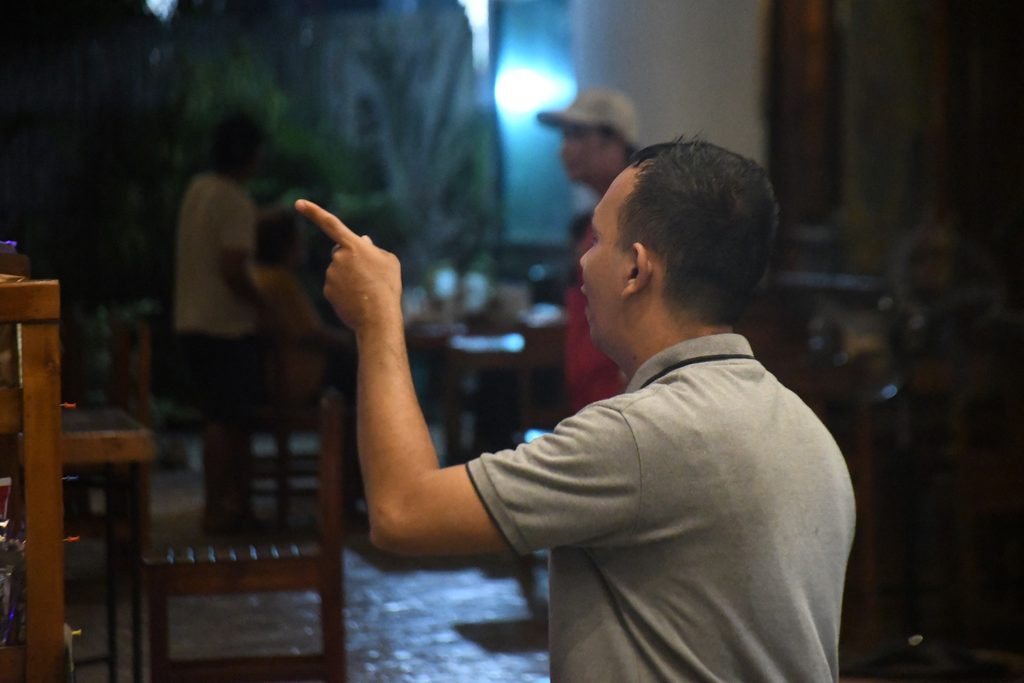
Around 20 of Ka Inato’s roughly 50 employees are deaf, according to owner Eric John Yayen. They work across the restaurant, from serving customers to the kitchen, bar, and office.
For visitors, their presence is part of the dining experience at Ka Inato. For employees, it is a livelihood that allows them to earn, save, and support their families.
Among them is 42-year-old Jocelyn Pilapil. To her, the job means more than being part of the workforce.
A 4th-year high school graduate from Barangay Mandaragat, Pilapil previously worked as a utility worker at a hotel for six months. At Ka Inato, she found not only employment but also a community of fellow deaf workers.
She said she is happy working alongside people who communicate in the same language. More importantly, she is building savings for the years ahead.
“My dream is to be able to save, to help my family,” Pilapil said in sign language, translated by a fellow employee.
A workplace that had to learn
Ka Inato’s inclusive workplace did not happen overnight.
Yayen began hiring persons with disabilities (PWDs) in late 2012 after coordinating with Sarah Sta. Ana of the Deaf Evangelical Alliance Foundation. At the time, the restaurant had around 15 employees, and Yayen said some initially opposed integrating deaf workers into the organization.
He began with one deaf employee, but communication soon became a challenge. She had no one else at work who could communicate with her in her own language, prompting Yayen to hire a second deaf employee.
The adjustments continued as employees and customers learned to navigate communication differences. Yayen recalled instances when customers misunderstood facial expressions used in sign language as signs of being unfriendly. The restaurant addressed these through training and encouraged employees to be mindful of how they interacted with guests.
For Yayen, however, inclusion does not mean lowering expectations.
Equal work, equal opportunity
“Deaf employees receive the same salaries and government benefits as their hearing colleagues, including SSS, Pag-IBIG, and PhilHealth,” Yayen said. They also face the same disciplinary measures when they commit workplace violations.
The restaurant also introduced a savings program, beginning with employees setting aside P20 from their wages and eventually increasing their savings to P50 or P100.
The program has helped make possible experiences outside the workplace. Yayen said some employees took their first airplane ride to Manila before traveling to Hong Kong and Thailand. An 18-person trip to Vietnam is planned for next year.
Yayen said he is most proud of employees who have remained with Ka Inato, and of having seen their children graduate.
More than a meal
For visitors, Ka Inato can be a place to eat. But the people working behind the counter and tables give the restaurant another story to tell.
Pilapil’s dream is simple: to keep saving, help her family, and have something to rely on when she grows older. Her message to fellow persons with disabilities is just as simple: “Don’t be sad. Always be happy. Family is important.”
For business owners considering hiring PWDs, Yayen’s advice is to do it for equal opportunity, not out of pity. He urges employers to provide the same salaries, benefits, privileges, and standards given to other workers, while being willing to learn and make the adjustments needed for an inclusive workplace.
“If you hire PWDs, you have to pay them equally,” he said, adding that businesses should give them opportunities to show what they can do.
Yayen believes the goal is not simply to give deaf workers a place at the table, but to give them the same chance to earn, grow, and belong. – Rappler.com
Vic Albert Bagaan is a petroleum engineering student at Palawan State University in Puerto Princesa City, Palawan. The development communication editor of Pioneer Publication, he is an Aries Rufo Fellow for 2026.
KioskNews shows a cleaned-up reading view extracted from the publisher’s page — the original always lives on their site, not ours.