How a hospital ship helps buoy China’s strategic mission in Africa
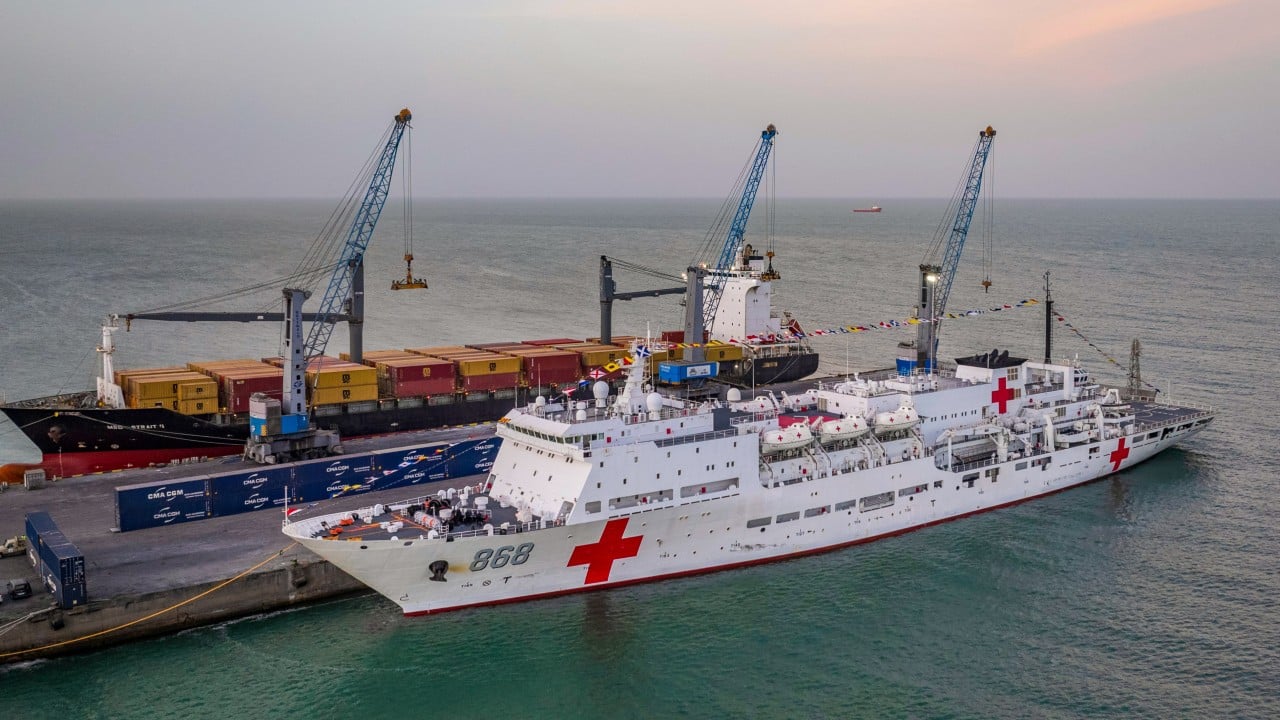
By the time the Chinese navy hospital ship had docked in the Guinean capital Conakry earlier this month, patients were already queuing for free consultations.
The queues in front of the Auspicious Ark were so long that some people were told to come back the next day, according to Guinean media reports.
The ship, operated by the PLA Navy, offers a range of medical services wherever it stops, including surgery to treat cataracts, appendicitis and hernias as well as gynaecological care. On this stop, teams were also sent to a local hospital and military camp.
Observers say that as well as medical care, such missions have a range of functions, from building goodwill for China to giving its naval crews experience far from home. Port calls and visits to military facilities also bring them into contact with their hosts’ armed forces and lay the groundwork for future cooperation.
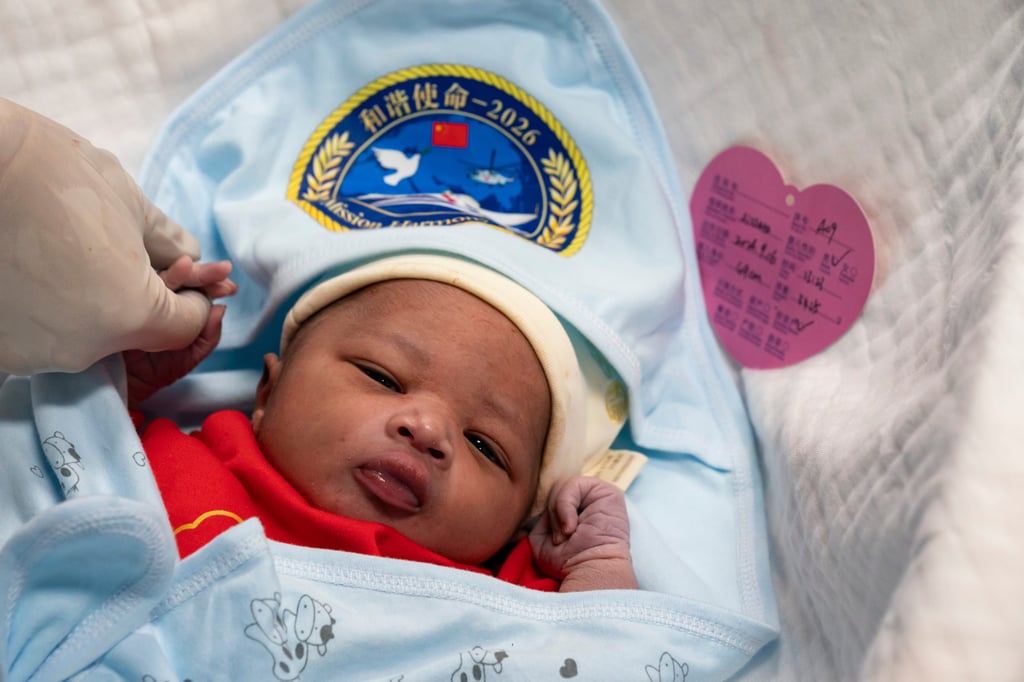
The Auspicious Ark is China’s third 10,000-tonne hospital ship and is part of Mission Harmony 2026, a PLA Navy medical programme running since 2010. It left Qingdao on July 22 for a voyage of more than 200 days across Africa and South Asia.
It stopped in Djibouti for supplies and medical care in August, then spent seven days in Mauritania, performing cataract and hernia operations and delivering a baby. In Senegal, it recorded 6,060 patient visits and its staff performed 29 surgical procedures. It left Guinea on October 10.
China’s medical presence in Africa dates to 1963, when it sent its first team to Algeria, and has since included the deployment of health workers who treat patients and train local staff.
Its medical diplomacy has also provided emergency aid during outbreaks, including support during the 2014-15 Ebola crisis in West Africa and Ebola-response teams sent to the Democratic Republic of Congo in June.
David Shinn, a China-Africa specialist and former US ambassador to Burkina Faso and Ethiopia, said the missions had generated “considerable goodwill and positive publicity for China”.
They also gave Chinese medical staff experience with tropical diseases and tested the ships “in sometimes harsh conditions far from China”, he said.
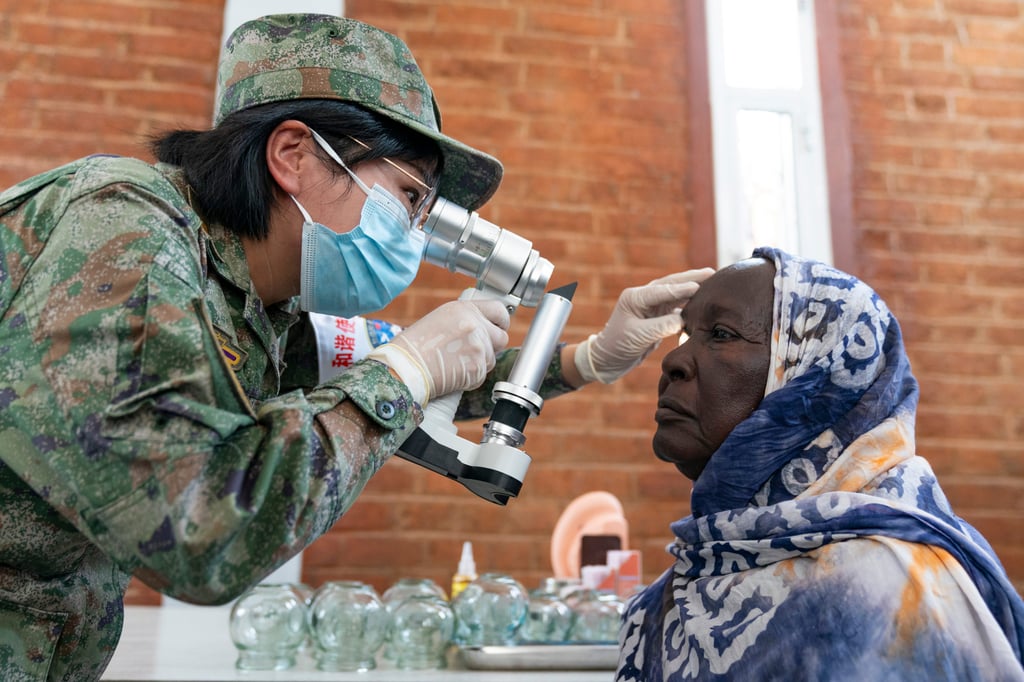
Beyond humanitarian aid, the mission aims to test long-range naval operations and build stronger defence ties with African countries.
Zhou Yuyuan, a professor at East China University of Political Science and Law’s Institute of Foreign-Related Rule of Law, said medical relief deepened bilateral ties and offered a way to give African countries practical support without direct military intervention. It also helped to counter accusations that China was a bystander on African peace and security issues.
Zhou described Mission Harmony as an “important exercise for the Chinese navy’s long-range deployment and logistical support capabilities”, and contributed to military modernisation and naval capacity building. He said the Chinese government also saw the missions as a way to present China as a responsible major power.
“Through cooperation in these ‘soft areas’ rather than direct military intervention, the Chinese military conveys its sincere attitude of upholding peace and cherishing life,” Zhou said.
The visits to African countries allow Chinese personnel to learn about each of their individual circumstances and particular needs in peace, security and military cooperation. African officials, meanwhile, can gain a more direct understanding of People’s Liberation Army personnel, equipment and technology, according to Zhou.
“This will help African countries and China better plan pragmatic cooperation based on their national conditions and needs, so that future projects address practical problems in the host countries,” he said.
The PLA Navy’s hospital ships are one part of a wider Chinese naval presence around Africa. Chinese navy warships have escorted commercial vessels through the Gulf of Aden and waters off Somalia since 2008, called at African ports and trained with other militaries.
In October 2025, the Chinese destroyer Baotou called at Mombasa before conducting manoeuvres with Kenya’s navy. And in January this year, China led a multinational naval exercise off the coast of South Africa that also included Russia, with Indonesia and Ethiopia attending as observers.
KioskNews shows a cleaned-up reading view extracted from the publisher’s page — the original always lives on their site, not ours.