Death toll up to 9 as survivor of Jordan church attack describes people crawling for their lives
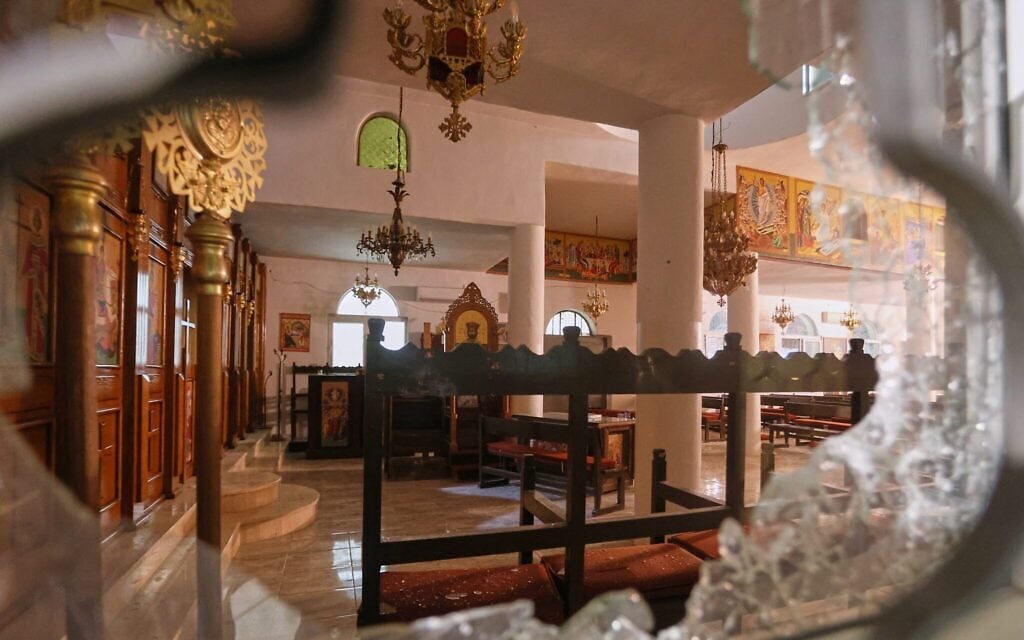
A survivor of a deadly attack on a church in Jordan has described people crawling for their lives and watching the gunmen return to fire more bullets into the dying — as well as at the church facade.
The death toll rose to nine on Saturday, a day after the attack, with nearly 40 others wounded.
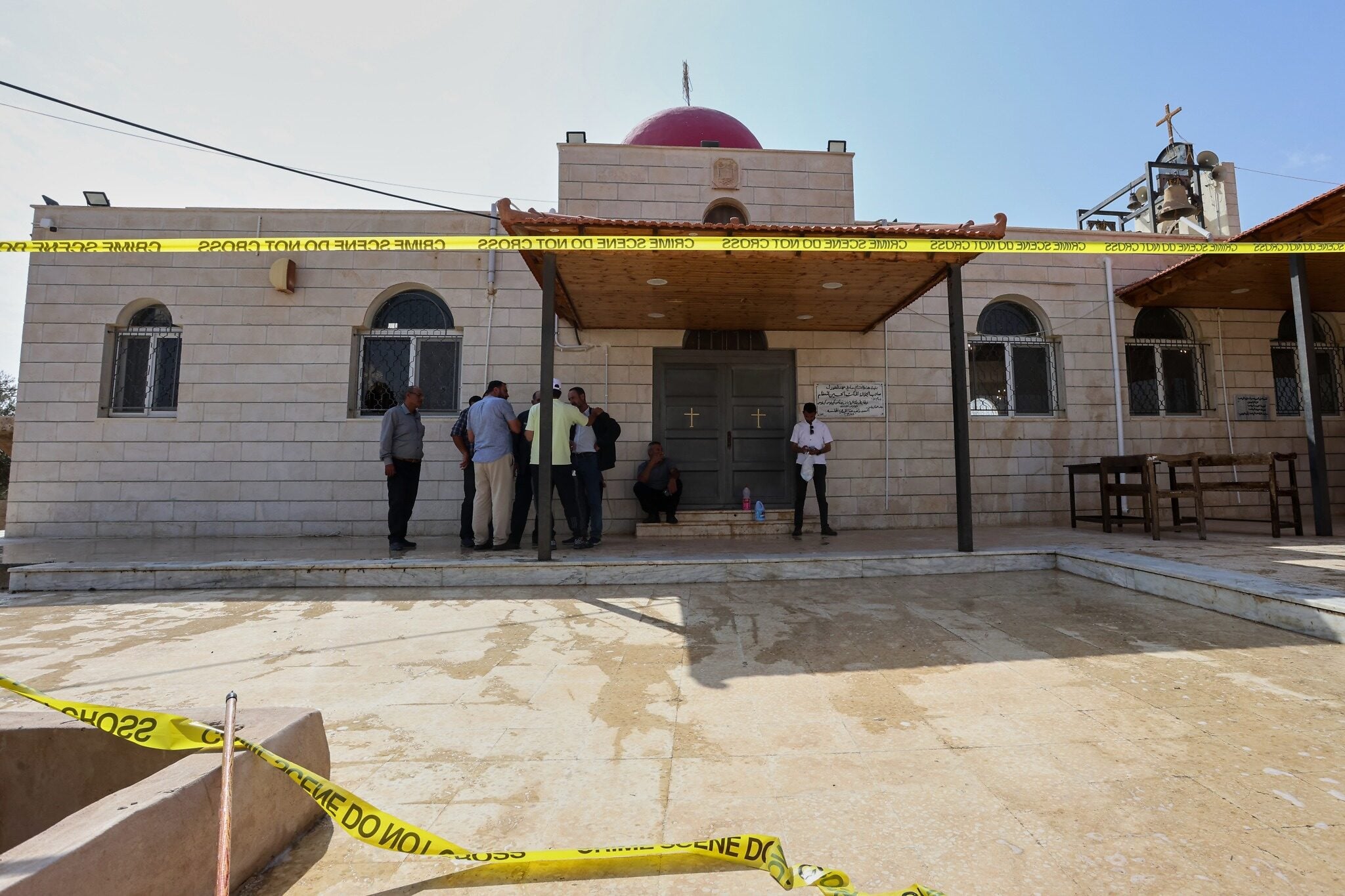
The motivation was still unknown for the shooting at a Greek Orthodox church in Karak, about 90 kilometers (55 miles) south of the capital, Amman. Karak is home to a minority Christian population.
0:00 / 0:00
Promoted: JPPI, Rabbi Sharon Brous

There was still no claim of responsibility, and no armed group has been accused of the attack that Jordan’s government described as a terrorist act.
King Abdullah II directed authorities to respond with “an iron fist” against what he called the outlaws of Islam and anyone attempting to undermine the unity of the Jordanian people.
Get The Times of Israel's Daily Edition by email and never miss our top stories
By signing up, you agree to the terms
Friday’s attack happened as people had gathered for a funeral. Some people were chatting outside the church when they heard what sounded like an engine backfiring.
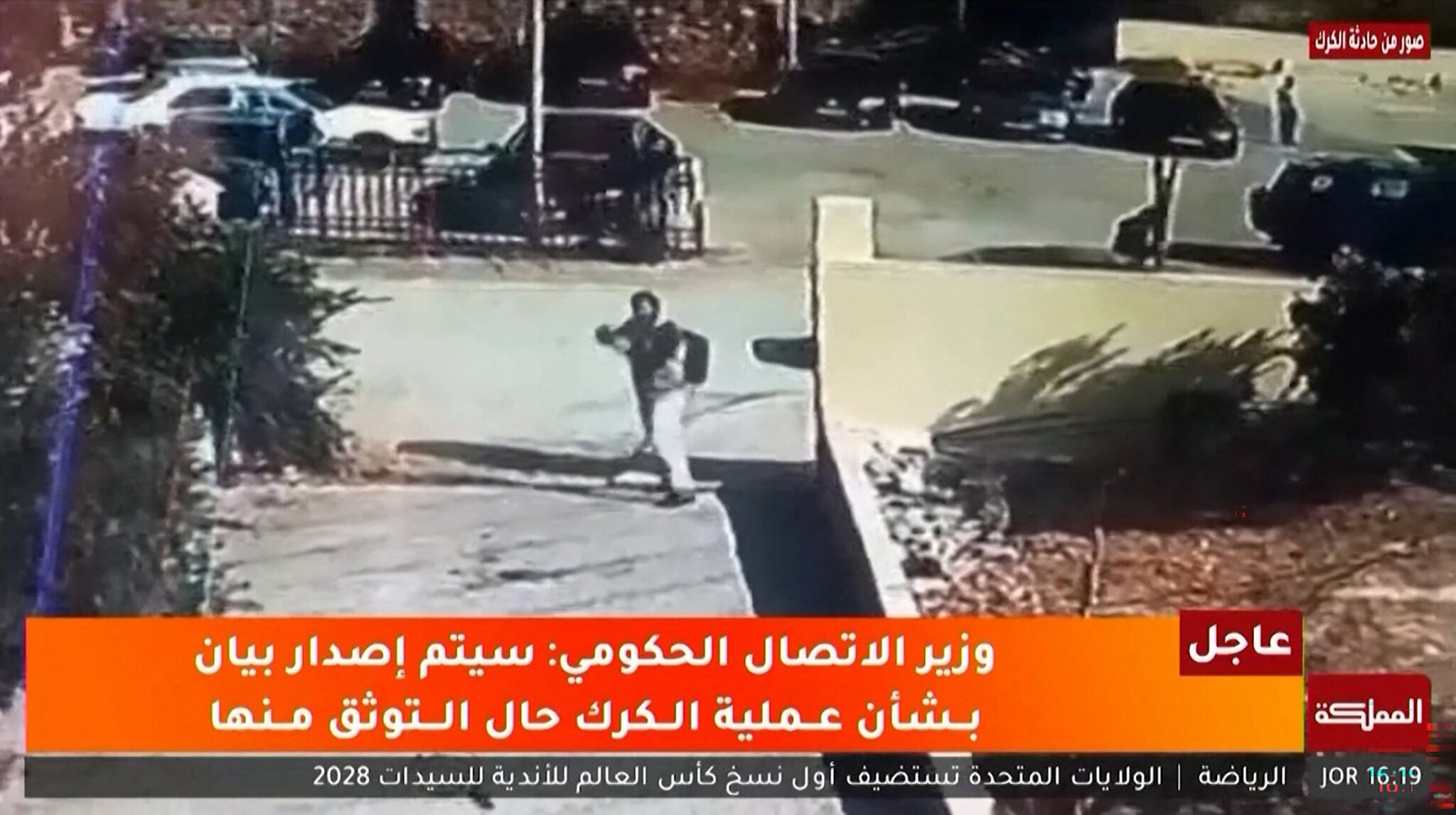
“All of a sudden, three masked men appeared, armed with automatic weapons, and began firing indiscriminately at those of us standing outside,” witness Saed al-Halaseh recalled.
And “they weren’t satisfied with just the initial casualties. They went back and fired on everyone again. They returned to finish off those who had already been hit,” he said.
“Even then, they weren’t finished; they came and stood right here, firing at the facade of the church, this part right here,” he added.
Al-Halaseh described how people he knew were shot in the head or the back as others tried to flee. He dropped to the ground and crawled behind a nearby car, which he said saved him.
Jordan, and especially Karak, has been seen as a symbol of religious coexistence, al-Halaseh claimed, despite Israeli Jewish visitors to the kingdom routinely recounting Jordanian authorities banning the entry of religious Jewish items such as phylacteries (tefillin) or a tallit.
“The sense of security we once had, the very foundation we grew up with, has, sadly, vanished,” he added. “They were simply mourners at a funeral. I cannot fathom what the perpetrators could have possibly wanted from them. I don’t believe any religion in the world could condone what happened. It was truly a massacre.”
Times of Israel staff contributed to this report.
Help us report truthfully on social media

As a multimedia journalist, my job is to take the quality, fact-based journalism produced by The Times of Israel newsroom and make it accessible across every platform — from Instagram posts to podcasts to short-form videos.
This is how many, especially young people, consume news these days. But misinformation is rampant on social media. Our team at ToI produces accurate, responsible short-form reporting on Israel and the Jewish world.
If you believe in the importance of factual social media journalism, please consider joining our reader support group, The Times of Israel Community. Your financial support is essential to sustain responsible multimedia reporting.
— Gabriella Jacobs, multimedia journalist
Support our work Support our work Already a member? Sign in to stop seeing this
If you’d like to comment, join
The Times of Israel Community.
KioskNews shows a cleaned-up reading view extracted from the publisher’s page — the original always lives on their site, not ours.