5 Hong Kong universities in Asia’s top 10, with 3 in top 5 after more than a decade

Five Hong Kong universities have been ranked among Asia’s top 10, with three of them in the top five for the first time after more than a decade and the University of Hong Kong (HKU) retaining its No 1 spot, according to an annual UK survey.
Meanwhile, three universities in mainland China were ranked in the top 10. Peking University held on to second place, Tsinghua University leapt from ninth to third and Fudan University dropped from fifth to sixth, giving the mainland two universities in the top three for the first time since 2023.
Announcing its Asia University Rankings on Tuesday, British-based education information firm Quacquarelli Symonds (QS) said all 11 of Hong Kong’s ranked institutions were in Asia’s top 500 for the first time, attributing the city’s success to increasing international engagement and growing recognition among academics and employers.
“Having five Hong Kong institutions in the top 10, more than any other higher education system, is an exceptional achievement. What is particularly encouraging is that the progress extends across the wider sector, with eight of the 11 ranked universities rising this year,” said QS senior vice-president Ben Sowter.
According to Sowter, Hong Kong continues to set the benchmark for university performance in Asia and the results underlined the city’s standing as an international education hub.
“Increasing international engagement and growing recognition among academics and employers reinforce Hong Kong’s regional strength, at a time when competition for students, researchers and academic talent is intensifying across Asia,” he added.
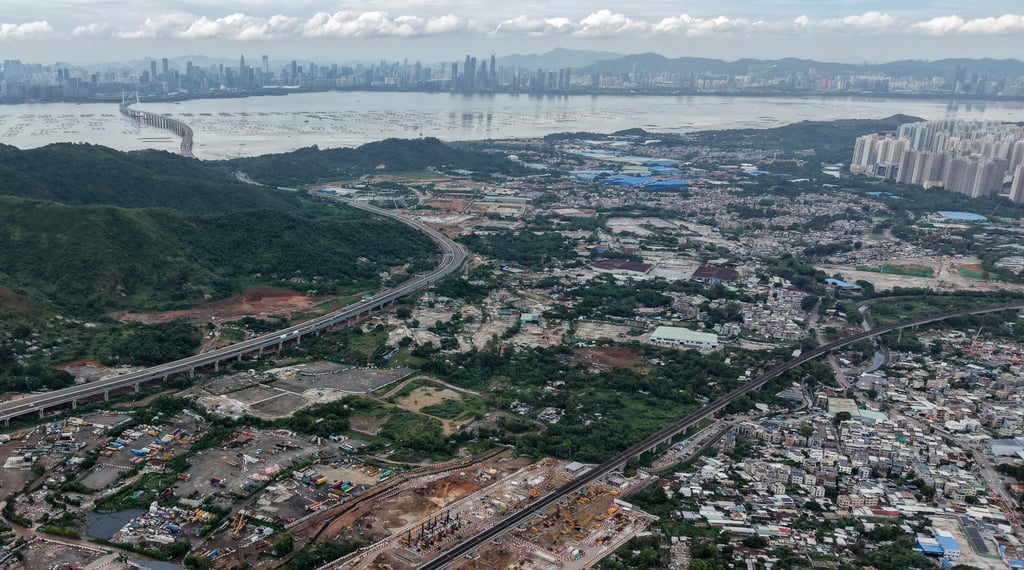
Sowter noted that the city’s investment in infrastructure, including the Northern Metropolis development, offered further opportunities to expand capacity, strengthen collaborations and support future growth.
The latest edition of the QS Asia Rankings is the largest ever, covering 1,722 universities across 26 higher education systems, with 195 new entrants joining the rankings this year.
The ranking table is determined by 11 indicators, including academic reputation, proportion of faculty members with PhDs, graduate employability, research quality and productivity and campus internationalisation.
Hong Kong continues to lead Asia on average in academic reputation and papers per faculty, which measures the volume of research being undertaken by the departments within an institution.
HKU retained its top spot, City University (CityU) climbed three places to fourth and the Chinese University of Hong Kong (CUHK) rose two places to fifth, giving Hong Kong three of Asia’s top five universities for the first time in more than a decade.
QS said that CityU stood out across several indicators and was the top institution for international faculty, which takes into account the ratio of international faculty staff to overall staff, outbound exchange students, the relative size of outgoing student exchange programmes and faculty staff with PhDs.
Polytechnic University (PolyU) moved up to share ninth place, alongside the Hong Kong University of Science and Technology (HKUST), which dropped three places from sixth.
Baptist University rose from 53rd to 50th, Education University (EdU) advanced 30 places to 122nd, Lingnan University rose 36 places to 145th, Hong Kong Metropolitan University (HKMU) rose 56 places to 337th, the Hang Seng University of Hong Kong (HSUHK) climbed 50 places to 464th and Shue Yan University slid from 360th to 366th.
Five institutions achieved record highs, namely CityU, PolyU, EdU, HKMU and HSUHK.
Despite Hong Kong’s achievements, a spokesman for QS told the South China Morning Post that an ongoing challenge for the city’s institutions was ensuring the international mix in classrooms remained diverse so domestic students could benefit fully from internationalised campuses.
Official data showed that 72 per cent of about 20,000 non-local undergraduates were from mainland China in the last school year.
Separately, QS said a record 28 mainland universities now ranked among Asia’s top 100, up from 25 last year.
Tsinghua University returned to third place while Peking University held on to second place, giving the mainland two institutions in the top three in Asia for the first time since 2023.
“[Mainland] China continues to dominate the upper reaches of the rankings, with 14 universities in the top 50 and 28 in the top 100, more than any other Asian higher education system,” QS said in its press release.
Sowter said the results showed the continued excellence in research output, research collaboration and reputation among mainland universities.
Outside the mainland and Hong Kong, two institutions in Singapore – the National University of Singapore and Nanyang Technological University – dropped to sixth and eighth place, respectively. They were jointly ranked third last year.
KioskNews shows a cleaned-up reading view extracted from the publisher’s page — the original always lives on their site, not ours.