Between 'frustration' and 'good news', RTS Link delay triggers contrasting reactions across Causeway
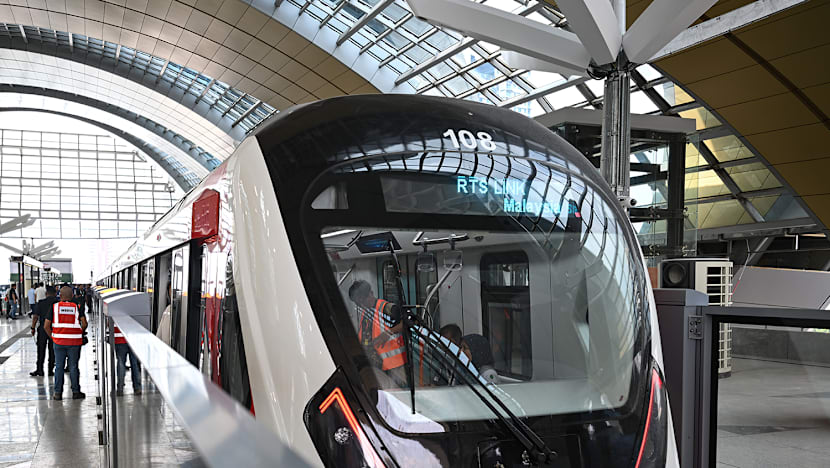
SINGAPORE/JOHOR BAHRU: For years, Malaysian Razali Tompang has made the near-daily journey from his Johor Bahru home to his workplace in Geylang by motorcycle.
The 48-year-old had hoped that come end 2026, he could leave his bike behind and cross the border on the Johor Bahru-Singapore Rapid Transit System (RTS) Link instead.
Now, he will have to wait for several weeks more before he can do this.
“I wanted a more environmentally friendly and potentially cheaper way to travel,” said the senior manager at a non-profit organisation.
“The construction for this project has dragged on, and now that it’s so near to the start date, it’s delayed.The delay affects us and it’s frustrating.”
Mr Razali’s planned switch to rail has taken on added urgency after Singapore’s Land Transport Authority announced higher Vehicle Entry Permit (VEP) fees from Jan 1, 2027, making his motorcycle commute more expensive
From Jan 1, 2027, the VEP fee will be raised to S$50 per day for cars and S$7 per day for motorcycles, up from the current S$35 and S$4 daily fees respectively.

He is among thousands of cross-border commuters who had been looking forward to the RTS Link opening by the end of 2026.
Its launch is now expected only in February 2027 – meaning the service could miss not only the year-end holiday rush, but also the busy travel and shopping period leading up to Chinese New Year on Feb 6.
In a joint statement issued on Friday (Oct 2), Singapore and Malaysia authorities said that more time is needed to complete testing, obtain independent safety certification and secure regulatory approvals before the cross-border rail service can open.
Singapore Transport Minister Jeffrey Siow later said that both countries are aiming for the RTS Link to commence services before Hari Raya Puasa, which is slated for Mar 10, 2027.
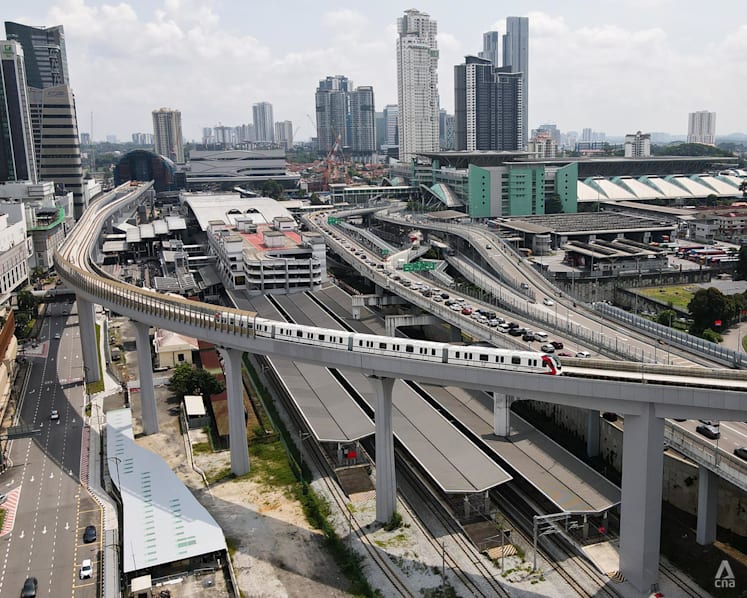
Some commuters CNA spoke to said the delay was disappointing, particularly for Malaysian motorists facing higher costs to travel into Singapore from January.
Others were unfazed by the latest setback, saying they would rather the RTS Link open later if more time is needed to ensure the system is safe and that transport connections around its stations are ready to cope with passenger volumes.
Businesses on both sides of the Causeway were similarly divided.
Johor Bahru businesses said missing the Chinese New Year period was a lost opportunity, as the RTS Link could have brought more visitors across the border during one of the busiest shopping periods of the year.
Some retailers in northern Singapore, however, saw a silver lining. They said easier access to Johor Bahru could eventually draw more Singapore shoppers across the Causeway – meaning a later RTS Link opening could offer them a brief reprieve.
‘MISSED OPPORTUNITY’ FOR RTS LINK TO EASE CNY CONGESTION
The weeks leading up to Chinese New Year are typically among the busiest periods at the land crossings between Singapore and Malaysia.
During the festive period in 2025 and 2026, more than 3 million travellers crossed the Woodlands and Tuas checkpoints each year, according to Singapore’s Immigration and Checkpoints Authority (ICA).
At the peak for both years, more than 500,000 crossings were recorded in a day just prior to Chinese New Year.

Singaporean finance manager Nicholas Lee had been looking forward to taking the RTS Link to Johor Bahru ahead of Chinese New Year next year, when he makes his annual trip across the Causeway to shop for festive goodies and get a haircut.
The 36-year-old said some of the festive treats he buys in Johor Bahru can cost less than half of what he would pay in Singapore.
“This year, my family took the bus to JB for CNY shopping and the experience was unpleasant. We were stuck in a jam for more than an hour,” he said.
“Taking the RTS Link next year before CNY was something we were hoping to do.”
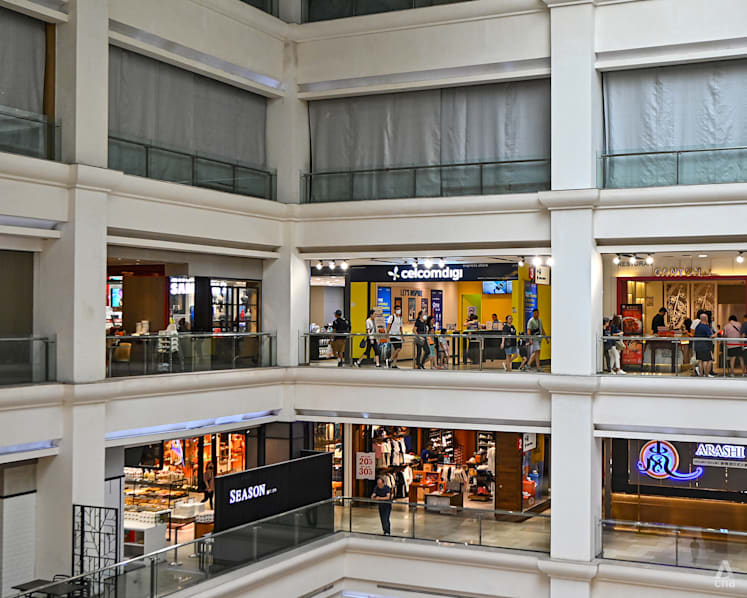
Johor-based Mama Bakery, which specialises in Chinese New Year cookies, had also been banking on the RTS Link for an uptick in business, given that it would make cross-border trips more convenient for Singapore shoppers.
“I was eagerly hoping the RTS Link would bring in more customers, so we did prepare to bake more this year,” said its owner, Ling Zijian.
Teh Kee Sin, adviser and founding president of the SME Association of South Johor, described the delay as a “missed opportunity” for Johor retailers to draw more customers during the festive period in early 2027.
“By not commencing (RTS Link) operations at the end of 2026, some businesses may have lost out on an opportunity,” he said.
“But hopefully, Singaporeans will still come in via other modes of transport like cars and buses.”
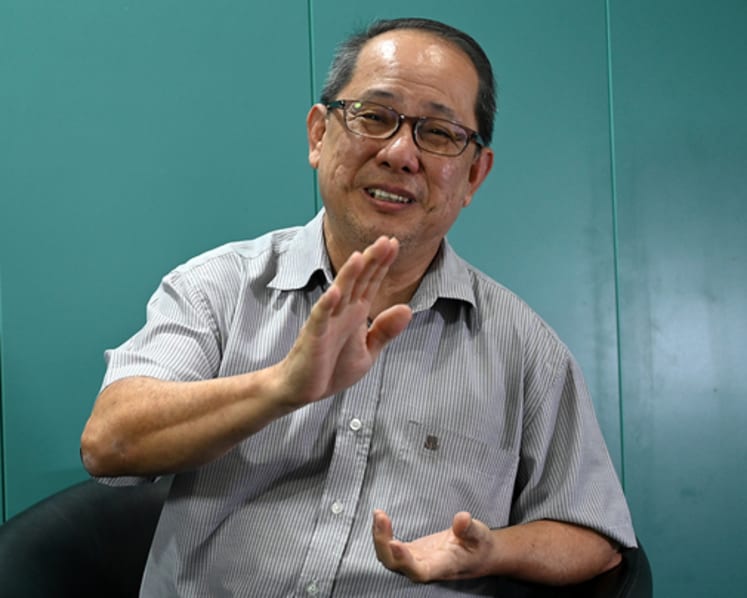
For some Singapore businesses, however, the delay to the RTS Link’s opening offers a brief “reprieve”, especially for those in the north that expect to face greater competition from businesses across the border.
A recent joint study by the Singapore Business Federation, Restaurant Association of Singapore and Singapore Retailers Association projects a 51 per cent increase in outbound trips by Singapore consumers once the RTS Link opens.
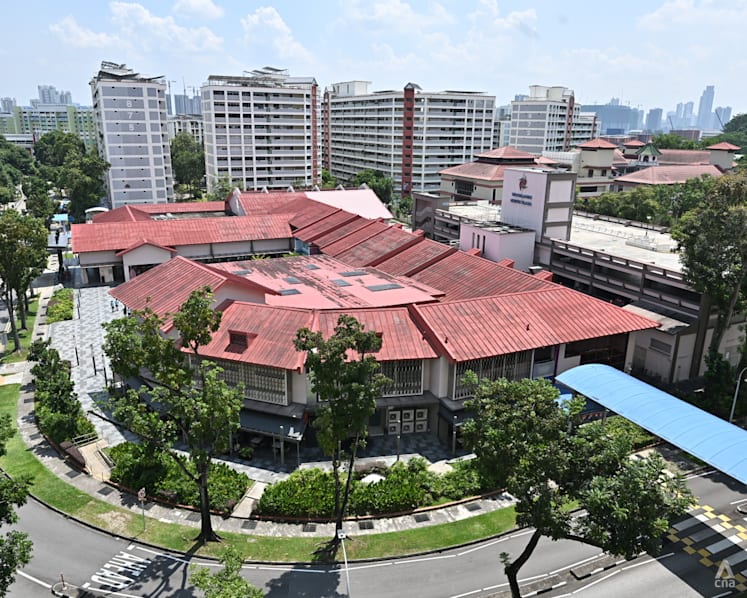
Ang Yuit, president of Singapore’s Association of Small and Medium Enterprises, noted that Singaporeans tend to travel to Johor Bahru during the Chinese New Year period to stock up on items such as mandarin oranges and baked goods.
If the RTS Link had been ready by January, there could have been more Singaporeans crossing the border to make festive purchases, he said.
“But if it is delayed until February, especially after Chinese New Year, this means that there won’t be much change in consumer purchasing trends for (some businesses in Singapore) during the festive period,” he told CNA.
Ang added that the delay could make business planning easier for those that had been preparing for the impact of the RTS Link.
“The businesses can expect the same footfall and traffic as (during the CNY period) last year, so it could be a positive thing for businesses that were prepared to be impacted.”

For Kacey Lin, who owns beauty salon Dawn Beauty with outlets at 888 Plaza and Woodlands North Plaza, the delay gives her more time to rethink her business plans as she expects more customers to patronise salons in JB once the RTS Link opens.
“This will give me more time to plan ahead, to find ways to retain my customers here by offering unique services,” she told CNA.
Lin estimated that she has already lost around 10 to 15 per cent of her customers to businesses in JB over the past two to three years and expects that figure to rise when RTS Link services begin.
Freddy Tan, who owns an optical shop at Woodlands North Plaza, similarly welcomed the delay, noting that he had been expecting sales to fall as easier cross-border travel encourages more customers to shop in Johor.
“The delay is good news,” said the owner of O Optics, adding that he hopes that Singapore businesses located near the RTS Link station would receive more government support to help them cope with the extended impact once services begin.
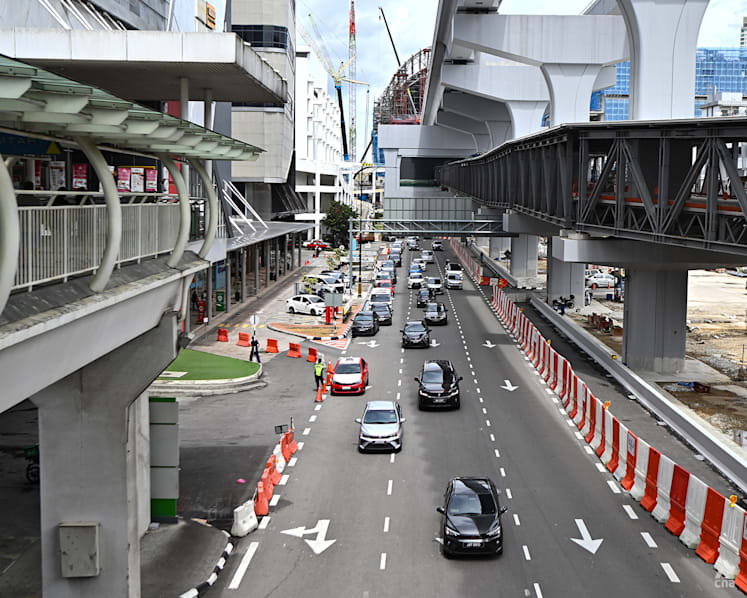
DELAYS ACCEPTABLE TO ENSURE SAFETY, BETTER DISPERSAL: COMMUTERS
While some commuters did not hide their frustration with the postponement, some were glad that the delay is likely to be short. Others added that if authorities needed time to fine tune safety and dispersal issues, they should be afforded this.
Nuraihan Noorbani, 68, said she was not surprised by the delay, despite having looked forward to using the service because of its speed and convenience for her as a Woodlands resident.
“It’s a big project, there must be a reason for the delay, perhaps it is to improve safety. If there is nothing necessary, there wouldn’t be a delay,” she told CNA.
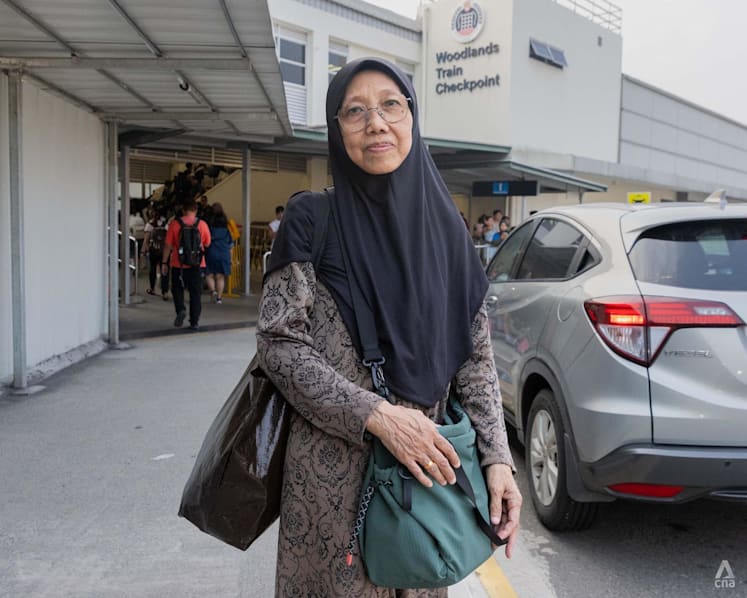
Malaysian traveller Razali told CNA that he was concerned that traffic dispersal modes near the RTS Link Bukit Chagar station in Johor Bahru were still not ready.
“I’m concerned that there are no clear park and ride options open for commuters like me who would like to park my bike at the station,” he said.
Malaysian authorities had previously announced two facilities - a Bukit Chagar Station Park and Ride and another parking lot at the nearby Coronation Square - both offering a combined total of 6,000 car parking lots and more than 1,500 motorcycle bays.
However neither of these are open for use.
Traffic dispersal from the Bukit Chagar RTS Link station has been a widely discussed issue, with Malaysian Transport Minister Anthony Loke saying in August that elevated pedestrian walkways are being constructed to connect passengers to bus, taxi and other rail transport nodes.
Another frequent traveller, Mohamed Kasim, said the delay would not affect his weekly trips to JB for now as he would continue taking the bus service across the border.
Based on his regular trips to JB, the 68-year-old Singaporean said that he felt more time could be useful to prepare the area around the RTS terminus for the expected increase in travellers.
“The roads are congested and there is already not much space in the city area so when the RTS begins, that could be a problem (which needs to be solved first),” he told CNA.
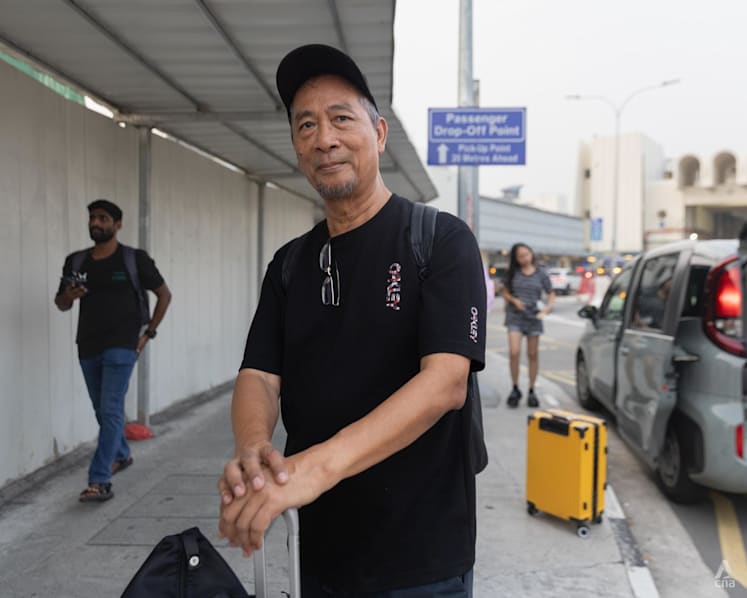
Teh, from the the SME Association of South Johor, said that the launch delay was “not a surprise” given that there have been many instances of rail construction projects in Malaysia being pushed back from the initially target launch date.
These included the East Coast Rail Link and the Gemas–Johor Bahru Electrified Double Track Project, which had initial completion targets of Jun 30, 2024 and Oct 31, 2022 respectively.
The latter was launched in December 2025 and the former is expected to commence operations at the end of this year.
Singapore too had announced delays for the Mass Rapid Transit construction of the Jurong Line and the Thomson East Coast Line.
“Delays are not surprising, in Malaysia especially this has happened for many projects,” said Teh.
“I’m not too bothered by delays. What’s important is that when it’s launched, the service is safe for passengers to use,” he added.
KioskNews shows a cleaned-up reading view extracted from the publisher’s page — the original always lives on their site, not ours.