ISRO timelapse video captures Cyclone Arnab's movement towards Andhra coast
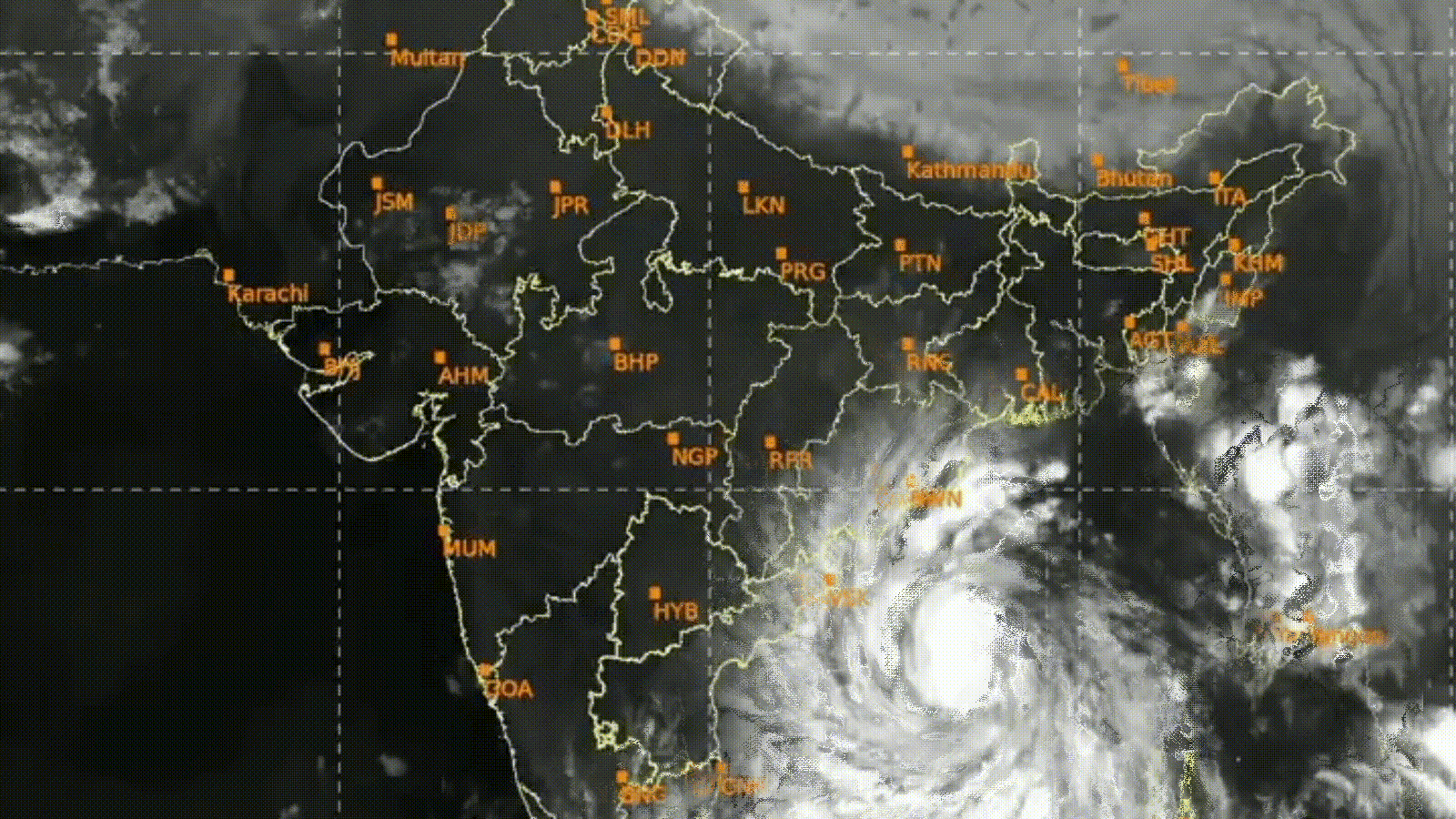
A timelapse video captured by the Indian Space Research Organisation's (ISRO) INSAT-3DS meteorological satellite shows the movement of Cyclone Arnab as it developed over the Bay of Bengal and moved towards the Andhra Pradesh coast.
Cyclone Arnab crossed the Andhra Pradesh coast between 2 am and 8 am on October 28, with its centre moving completely over land by 8 am, the India Meteorological Department (IMD) said in a post on X.
Watch timelapse video here:
In its 8.30 am update on Wednesday, the IMD said the system was centred over coastal Andhra Pradesh, Yanam and the adjoining west-central Bay of Bengal.
It was around 20 km east-northeast of Narsapur, 40 km southwest of Yanam, 60 km southwest of Kakinada, 90 km east-northeast of Machilipatnam, 120 km east of Gannavaram and 120 km southwest of Tuni.
About INSAT-3DS
Launched in February 2024, INSAT-3DS is a third-generation meteorological satellite designed to provide advanced weather observations and improve forecasting capabilities, HT reported earlier.
The satellite is equipped with a six-channel Imager and a 19-channel Sounder, which collect meteorological data to support weather monitoring and forecasting.
Its observations also help authorities track severe weather systems such as cyclones.
Also Read: NASA captures nighttime image of Cyclone Arnab two days before it battered Andhra Pradesh
Arnab wreaks havoc in Andhra and Odisha
Cyclone Arnab caused widespread damage in parts of Odisha and Andhra Pradesh, triggering large-scale evacuations and rescue operations.
In Odisha, more than 59,000 people, including 11,882 from Ganjam district, were evacuated to safety after their homes were inundated by floodwater. The evacuees included 3,001 pregnant women, officials said.
The state government deployed 313 teams for rescue operations across nine districts, including nine teams from the National Disaster Response Force (NDRF), 60 from the Odisha Disaster Rapid Action Force (ODRAF) and 244 from the Fire Services Department.
In Andhra Pradesh, chief minister N Chandrababu Naidu said the cyclone claimed five lives and caused extensive damage to crops and public infrastructure. Three people died in Visakhapatnam district due to falling electric poles and trees, while one death each was reported in Anakapalli and Bhimavaram.
Naidu announced an ex gratia of ₹5 lakh to the families of each of the deceased.
KioskNews shows a cleaned-up reading view extracted from the publisher’s page — the original always lives on their site, not ours.