Can Lula’s re-election unlock Mercosur markets for Southeast Asia?
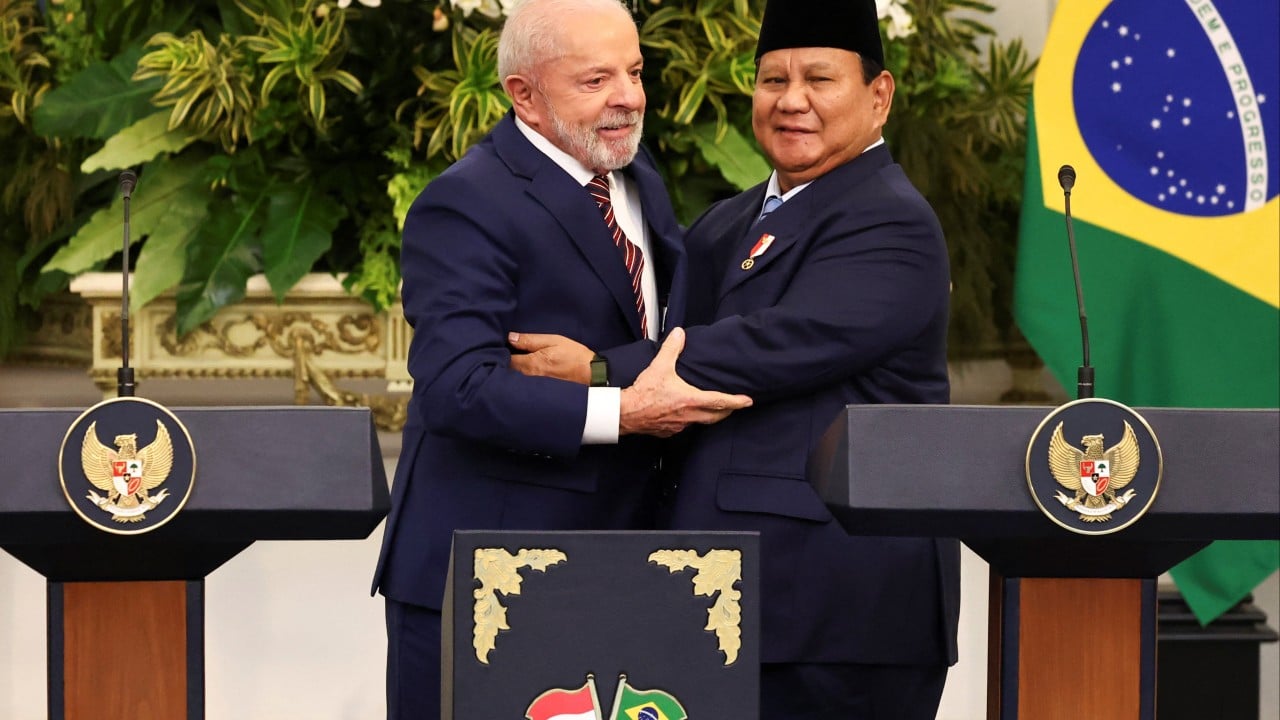
Brazilian President Luiz Inacio Lula da Silva’s re-election should provide continuity for the country’s trade push into Southeast Asia, analysts say, as Vietnam and Indonesia pursue preferential trade agreements with Mercosur, the South American bloc in which Brazil is the largest economy.
But better access to Brazil and other Mercosur markets is far from assured, with trade experts pointing to difficult negotiations over tariffs and agricultural access, as well as political differences within the bloc.
In August, Vietnam completed its first round of talks on a preferential trade agreement with Mercosur.
Meanwhile, Indonesia proposed a narrower, preferential agreement in August this year, which Brazil said it would study. This pivot follows a lack of progress on a broader comprehensive deal that the two sides originally began negotiating in December 2021.
Brazil previously authorised its negotiators to pursue preferential deals with both nations in September last year.
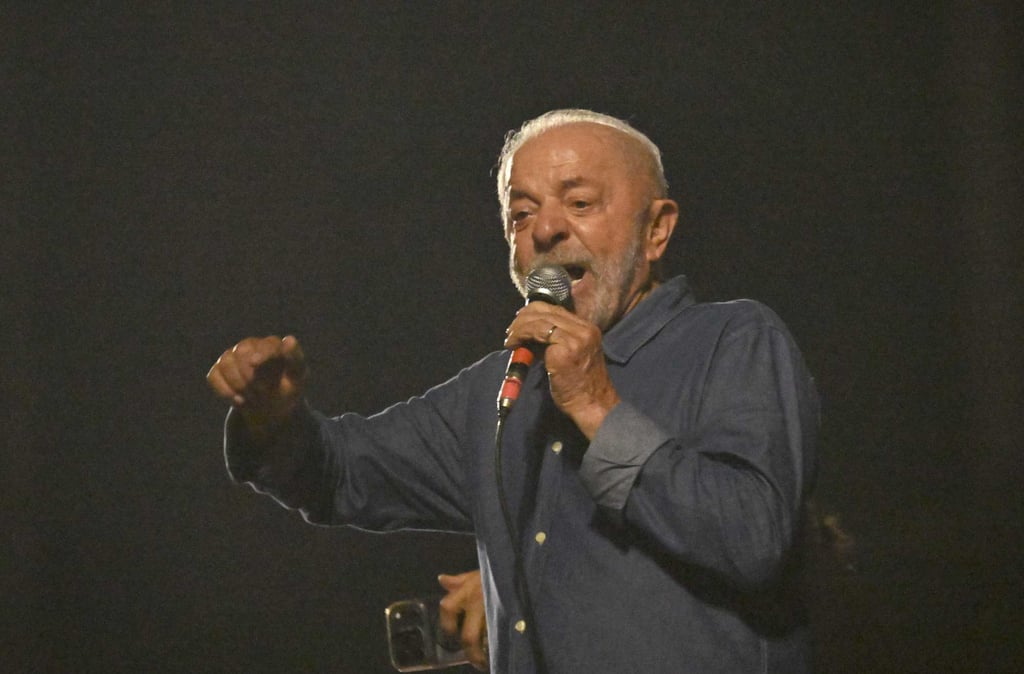
“Lula’s re-election delivers immediate negotiating continuity, but it should not have much of an effect beyond that,” said Jayant Menon, a visiting senior fellow at Singapore’s ISEAS – Yusof Ishak Institute.
Market access would improve only if the negotiations concluded successfully, he said, while also cautioning against overstating Brazil’s potential as an alternative export market.
“While Brazil is a potential diversification market for both Vietnam and Indonesia, the reality is that Brazil currently accounts for less than 1 per cent of each country’s exports,” Menon said, and its ability to offset a major downturn in the United States, China or Europe remained limited.
Individual industries could gain substantially, however, and Menon identified electronics as a particular opportunity for Vietnam, with vegetable oils, rubber products and selected industrial goods for Indonesia.
In the first half of 2026, Brazil imported about US$2.11 billion in goods from Vietnam, a 17 per cent increase year on year, according to figures cited by Vietnam’s ambassador to Brazil Bui Van Nghi. He listed phones, computers, electronic products, machinery, garments and footwear among Vietnam’s exports to Brazil.
For Vietnam’s pangasius exports, Brazil is already a significant customer. Exports of the fish to Brazil reached US$144 million in the first nine months of this year, up 15 per cent from a year earlier, according to the Vietnam Association of Seafood Exporters and Producers (VASEP).
Brazil was the industry’s third-largest market, behind China and the US.
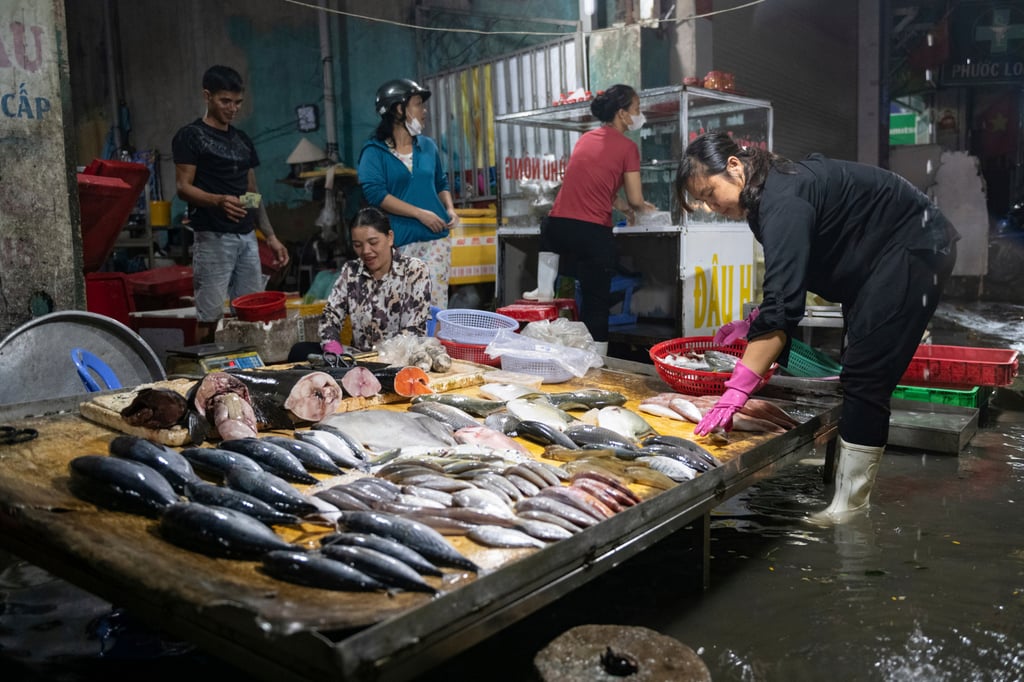
Meanwhile, 14 Vietnamese seafood businesses, including nine VASEP members, attended the Seafood Show Latin America in Sao Paulo from October 20 to 22, according to Vietnamese media. Discussions with Brazilian businesses covered topics such as tariffs, product testing and customs-clearance times.
This Week in Asia has reached out to Vietnamese seafood exporters Vinh Hoan and Navico for comment.
While Vietnamese exporters are currently testing the waters, Indonesia already has a foothold in Brazil.
Yose Rizal Damuri, executive director of the Centre for Strategic and International Studies in Jakarta, noted that Indonesia’s palm oil-based and natural rubber products made up over a quarter of Brazil’s imports.
Better access could deepen those sales and help diversify Indonesian exporters’ expansion into footwear, textiles and processed foods.
Brazil should be viewed as the principal market within Mercosur for Indonesian exporters, he said.
“Calling it a ‘gateway’ to Latin America’ is useful for buying support, but Indonesia should still assess each destination’s tariffs, regulations and distribution costs separately,” he said.
A narrower agreement could simplify negotiations by concentrating on selected goods, Damuri said, but the two sides would still have to agree on sensitive products and what concessions each would make in return.
According to Welber Barral, a former Brazilian foreign-trade secretary, agricultural access would be important to Mercosur, as other members like Argentina, Paraguay and Uruguay are also interested in Asian markets for their agricultural commodities.
“Mercosur is not going to advance if the agricultural offer is not good,” Barral said, noting that the bloc would not sign an agreement covering only industrial goods if that left out its main agricultural interests.
The start of negotiations could itself encourage exporters to promote their products and seek distributors in a new market, but progress would also require technical agreements covering safety, health requirements and product classification, Barral said.
02:12
Brazil plans to retaliate against US tariffs that partly aim to free former leader Bolsonaro
Alberto Maresca, a researcher at the University of Sao Paulo and fellow at UNU-CRIS, said Brazil’s recent interest in Southeast Asia was driven partly by US tariffs on Brazilian goods and concern about Brazil’s reliance on China.
Maresca identified Malaysia, Indonesia and Singapore as Brazil’s main partners in Southeast Asia, citing a combination of political and commercial interests.
“In the case of Malaysia, it has to do with Lula’s personal ties with its prime minister, Anwar Ibrahim, and also a multilateral convergence of Brazil with Malaysia and Brics,” Maresca said.
He notes that Brazil has strong defence ties with Indonesia, whose armed forces operate a number of Brazilian-made equipment such as light military aircraft and rocket launcher systems. Singapore, meanwhile, has important stakes in Brazil’s domestic market, where online shopping platform Shopee is one of the most used platforms.
At the trade bloc level, Maresca expressed doubt that Lula’s election victory would quickly advance an agreement with Mercosur, even though the bloc was on a “very good trend” of finalising deals.
Mercosur recently cemented major trade deals with Singapore and the European Free Trade Association, alongside efforts to finalise a long-stalled pact with the European Union.
However, Maresca doubted the momentum would carry into the new year, pointing to political differences between the socialist-leaning Lula and Argentina’s President Javier Milei, a right-wing free-market advocate.
Maresca said Milei had been “banking on [Flavio] Bolsonaro” to win. And because of that tension, “I see it really difficult for Mercosur to unlock itself, at least in the coming year.”
Vietnam and Indonesia should continue developing commercial relations with Brazil even if a Mercosur-wide agreement proved difficult, Maresca said. But he did not expect Brazil to open sectors where domestic manufacturers faced competition from Southeast Asian imports.
For Indonesia, Damuri said a jointly agreed negotiating framework or preliminary exchanges of tariff offers would be more meaningful signs of progress over the coming year. Those steps would give exporters a clearer view of the products and trade procedures a prospective agreement might cover.
KioskNews shows a cleaned-up reading view extracted from the publisher’s page — the original always lives on their site, not ours.