Second-hand smartphone traders eye Hong Kong as springboard for global exports
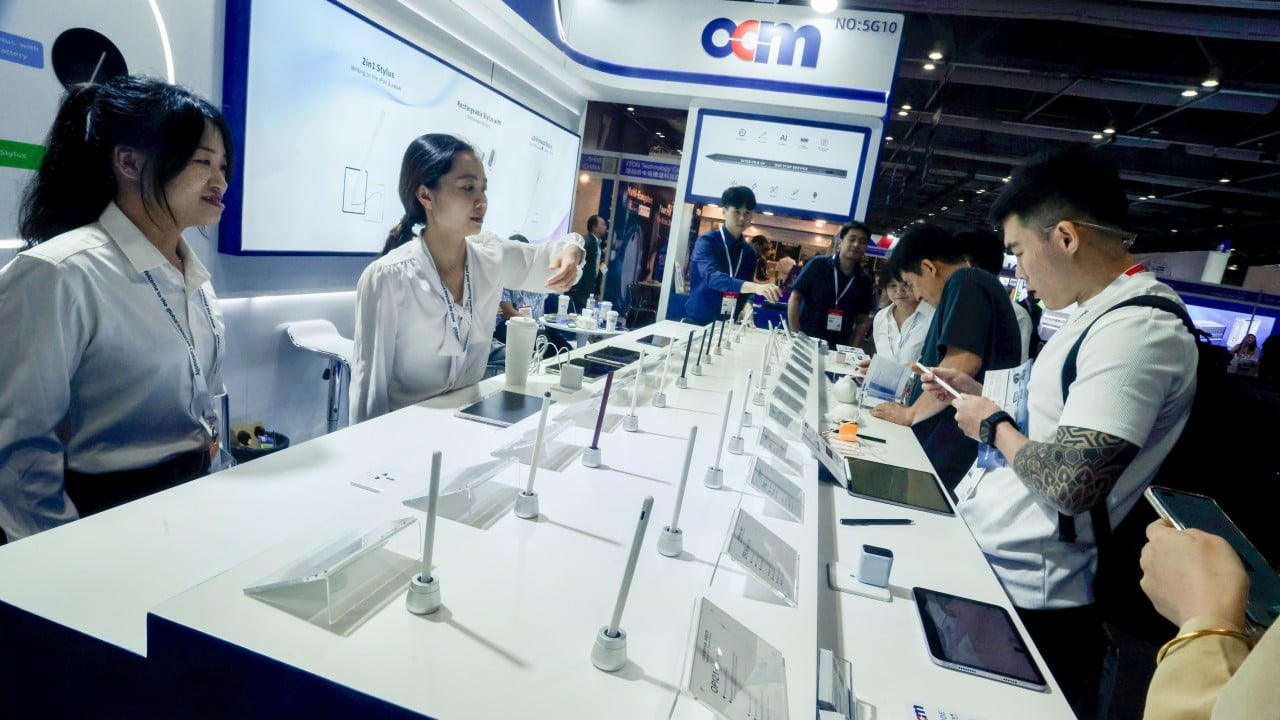
A pavilion dedicated to second-hand smartphones has made its debut at a Hong Kong trade show now under way, drawing international recycling platforms, refurbishers and automated kiosk operators hoping to use the city as a springboard to export used devices to other markets.
The inaugural Global Mobile Exchange Pavilion, co-hosted by the Hong Kong International Communications Electronic Chamber (HKICEC) and Global Sources, opened on Sunday at AsiaWorld-Expo as part of phase two of the Global Sources Hong Kong Shows.
The pavilion brought together more than 60 companies from mainland China, the United States, the United Kingdom, the United Arab Emirates, Japan and India.
Exhibitors included mainland second-hand e-commerce platforms Zhuan Zhuan and ATRenew, as well as US self-service kiosk network ecoATM.
The show floor was busy, with vendors showing their latest trade-in kiosks and inviting visitors to try them, while staff handed out fliers.
Industry leaders said that Hong Kong’s duty-free port status, streamlined customs clearance and proximity to the mainland and Southeast Asia made the city a natural conduit for the global trade in second-hand devices.
HKICEC chief secretary Jacky Chan Man-lung said the city’s main export markets for used devices were Dubai and Southeast Asia, with trade extending to Latin America.
“Chinese mobile phone brands are gaining popularity globally, and Hong Kong can serve as an export hub for the second-hand market, while mainland companies in the trade can also use the city to go overseas and launch business locally,” Chan said.
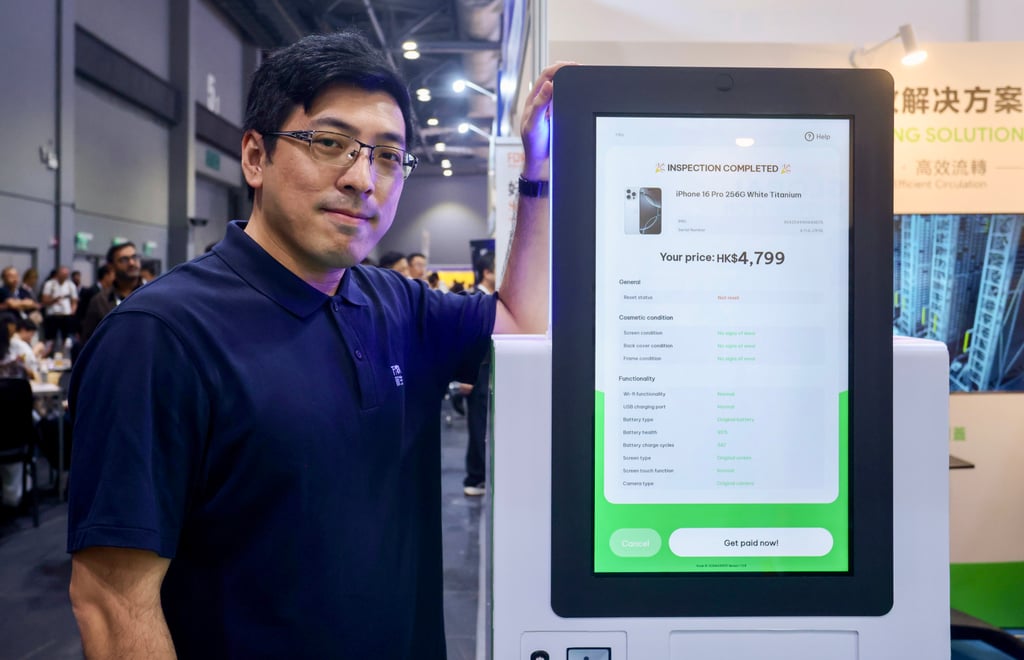
Rock Lau, assistant manager of AHS Device Hong Kong – a subsidiary of ATRenew, one of the mainland’s largest pre-owned electronics trading platforms – said Hong Kong served as both an inspection centre and a transit hub for exports to Dubai as the company scales its automated hardware internationally.
“We have more than 30 self-service kiosks across Hong Kong that can price devices automatically and complete trades electronically, and we are rolling out kiosks in overseas markets in partnership with local retailers and platforms, including in Japan, Sweden and the UK,” he said.

Brian Tepfer, senior vice-president of ecoATM, said his company, which operates around 8,000 kiosks across the US and Canada, was exploring expansion through public-private partnerships rather than purely quick commercial deals.
He said ecoATM was looking at entering the mainland market, and that Hong Kong was one of its most valued strategic partners.
“With the right government sponsorship and the right strategic partnership, it would be very easy to deploy this at scale,” he said.
“The mainland already has half the ecosystem built. We would bring the kiosks and the technology, and local partners would handle the rest. In other countries, we have to build [the ecosystem] 100 per cent [from scratch].”
Phase two of the Global Sources Hong Kong Shows, which runs until October 21, spans four product tracks from mobile electronics to smart home appliances.
It features more than 2,100 suppliers across over 4,000 booths showcasing some 160,000 new products, with artificial intelligence a major focus through a dedicated AI zone and Tencent’s exhibition debut, alongside Vietnam sourcing and security technology sections.
KioskNews shows a cleaned-up reading view extracted from the publisher’s page — the original always lives on their site, not ours.