7 Sci-Fi Shows From the 2010s That Are Perfect From Start to Finish

Dyah (pronounced Dee-yah) is a Senior Author at Collider, responsible for both writing and transcription duties. She joined the website in 2022 as a Resource Writer before stepping into her current role in April 2023. As a Senior Author, she writes Features and Lists covering TV, music, and movies, making her a true Jill of all trades. In addition to her writing, Dyah also serves as an interview transcriber, primarily for events such as San Diego Comic-Con, the Toronto International Film Festival, and the Sundance Film Festival.
Dyah graduated from Satya Wacana Christian University in October 2019 with a Bachelor's degree in English Literature, concentrating on Creative Writing. On March 2026, Dyah graduated with Master's degree in English Literature Studies, with a thesis on intersectionality in postcolonial-feminist studies in Asian literary works.
Born and raised between Indonesia and Singapore, Dyah is no stranger to different cultures. She now resides in the small town of Kendal with her husband and four cats, where she spends her free time cooking or cycling.
Sign in to your Collider account
The 2010s were a turning point for the sci-fi genre. What was once considered an otherworldly genre, far removed from reality, transformed into something more grounded in human experiences. Sci-fi shows of this decade still embraced elaborate concepts, from time travel to parallel universes, but they also reflected the state of the world, giving even non-sci-fi fans a reason to care. Rather than focusing solely on futuristic technology or fantastical settings, these shows used sci-fi to explore issues that felt closer to home.
From lingering anxieties about technology's ability to judge people fairly despite its supposed objectivity to the idea that humanity hasn't changed much even after expanding across the Solar System, 2010s sci-fi found ways to make the unfamiliar feel remarkably relatable. These shows proved that the genre could be just as much about understanding the present as imagining the future. In tribute to the decade's best offerings, here are 2010s sci-fi shows that are perfect from start to finish.
'The Man in the High Castle' (2015–2019)
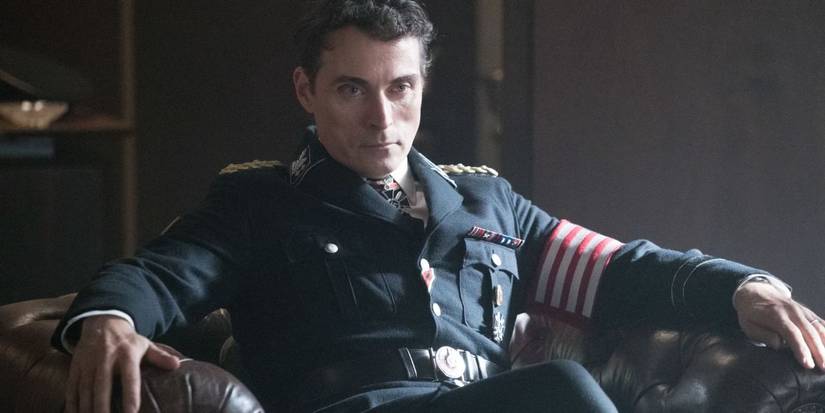
The Man in the High Castle presents a world where the Allies lose World War II and America falls under foreign rule. Set in 1962, the alternate-history drama divides the country between Nazi Germany and Imperial Japan, with each empire controlling one coast. The territories separating them become a haven for criminals, fugitives, and underground movements determined to challenge their rulers. However, overthrowing two powerful regimes is no easy task, especially when their citizens have spent years adapting to a world where resistance could cost them everything.
The Axis-controlled world is eerie enough to keep audiences intrigued, but The Man in the High Castle takes an ambitious sci-fi approach by pushing the boundaries with its parallel universe concept. Things take an unexpected turn when secret films begin circulating among resistance members, showing footage of a world where history unfolded differently. These mysterious recordings introduce the concept of parallel realities in the show itself. As the characters investigate their meaning, their personal struggles become tangled in a much larger fight over who gets to shape reality.
'Person of Interest' (2011–2016)

More than a decade before AI became the talk of the town, there was Person of Interest. Harold Finch (Michael Emerson) creates a surveillance system that predicts terrorist attacks, but the government has little interest in crimes that don't threaten national security. Unable to accept that some victims deserve help while others don't, Finch teams up with John Reese (Jim Caviezel), a former CIA agent, to investigate the people the system labels irrelevant.
The Machine in Person of Interest is capable of learning, evolving, and predicting violence by analyzing digital records and surveillance footage. This means AI gets to decide who gets arrested and who gets off the hook, which doesn't always lead to the right outcome. Building on post-9/11 fears about government surveillance and the War on Terror, Person of Interest questions whether AI can truly understand morality, even with access to massive amounts of data. This concern feels especially relevant today, as humans are increasingly being replaced by machines in the name of efficiency.
'Continuum' (2012–2015)

In Continuum, the future isn't necessarily a better place to live. Kiera Cameron (Rachel Nichols) is a police officer from 2077 who gets stranded in present-day Vancouver after a group of political extremists called Liber8 escapes into the past with her. With no clear way back home, she teams up with Alec Sadler (Erik Knudsen), a teenage tech genius, to track down the fugitives using technology decades ahead of its time.
Continuum digs into the uncomfortable relationship between power, corporations, and law enforcement, with an overarching time-travel concept that makes things all the more complicated. Liber8 uses violence to fight a system where powerful corporations control society through surveillance, making it difficult to dismiss their grievances entirely. Kiera, meanwhile, has spent her life trusting the very institutions that Liber8 wants to destroy. As she discovers how corporate interests influence the justice system, she must reconsider whether maintaining order is still the right thing to do when the system itself is corrupt.
'Sense8' (2015–2018)
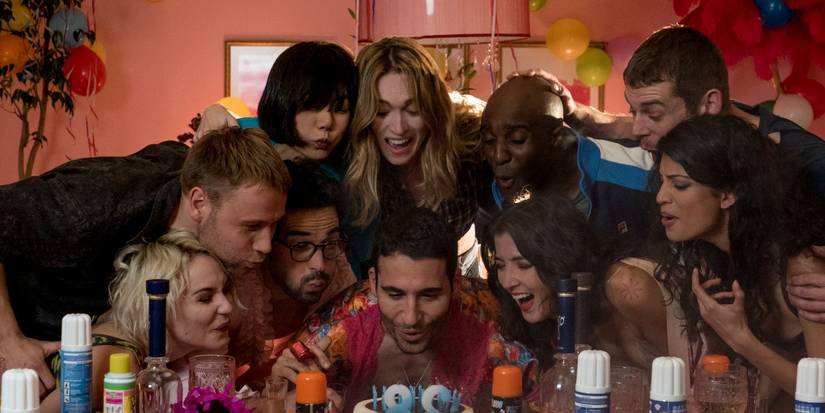
Eight strangers from different corners of the world discover they share a mysterious psychic connection in Sense8. From a Nairobi matatu driver and a Seoul martial artist to a San Francisco hacktivist and a closeted actor in Mexico City, the group can access one another's memories, emotions, and skills. As they learn to navigate their extraordinary abilities, they become targets of a dangerous organization determined to hunt them down. To survive, the eight sensates must rely on each other and embrace the power of human connection.
With sci-fi, it's easy to get caught up in how and why extraordinary abilities exist in the first place. Although that's part of Sense8's story, the series is first and foremost about people. Each of its eight protagonists has a rich background, and their different geographical locations further shape their personalities and personal struggles. Yet, the show masterfully connects these individuals without making their stories feel disjointed. After all, being psychically connected doesn’t mean they're automatically friends.
Collider Exclusive · 8 Questions · 2 Minutes Which Star Wars Faction Do You Belong To? Rebels · Empire · Mandalorians · Crimson Dawn
Eight honest questions about how you actually are: how you feel about rules, where your loyalty goes first, what you do when somebody criticises you in front of other people. Answer them and we will tell you whose side you would really have ended up on. Four factions are recruiting: the believers, the organisation, the ones with a code, and the ones with a price.
✊Rebel Alliance(Andor)
🛰️The Empire(Original Trilogy)
🪖Mandalorians(The Mandalorian)
🌅Crimson Dawn(Solo)
01
How do you feel about rules at work? This one sorts people faster than anything else.
02
What is your relationship with money? Nobody answers this the way they think they will.
03
What makes you respect somebody? Whatever you pick, you apply it to yourself too.
04
How do you behave under real pressure? Your friends would probably answer this for you.
05
Where does your loyalty go first? Everybody has an order, even if they never say it out loud.
06
Somebody criticises you in front of other people. What happens? Be honest about the first thing you feel.
07
What does a good life look like in ten years? Pick the one you would actually be happy with.
08
What do you want more than anything else? Eight questions in, this is the one that picks your side.
The Transmission Is Decoded Your Faction Is…
Four sides, four completely different answers to the same question about how a galaxy should work. Here is where you would have signed up, what it would ask of you, and what it would give you back.
Rebel Alliance
You belong with the side that has almost nothing and keeps going anyway. The Rebellion is not a glamorous posting, and anybody who tells you otherwise has not seen what it actually costs the people inside it.
- You are wired to notice when something is wrong and to say so, which makes you useful here and awkward almost everywhere else.
- Andor is the best thing Star Wars has made in years precisely because it shows the unglamorous half, which is the meetings, the paperwork and the people who never get a medal.
- Your kind of courage is the ordinary kind, done repeatedly, by somebody who is fully aware of the odds.
- The Alliance wins because enough people decided separately that they were finished being quiet about it.
The Galactic Empire
You belong to the machine, and the uncomfortable truth is that the machine mostly runs on people who are competent, orderly and convinced they are doing their job properly. Very few of them think of themselves as villains.
- You want structure, clear expectations and a way to measure whether you are doing well, none of which the other three factions can offer you.
- The Empire is frightening because of how ordinary it is on the inside, which is the single smartest thing Star Wars has ever done with it.
- Your risk is the quiet one, which is looking at something wrong and deciding it is somebody else's department.
- You would be genuinely good at this, and that is exactly the part worth thinking about.
The Mandalorians
You belong to the people who lost their planet and kept their code anyway. Mandalorian culture is not a nationality so much as a promise, and anybody who makes that promise and keeps it is one of them.
- You are loyal to people rather than to institutions, which is why an organisation chart has never once told you who you actually owe.
- A code only counts when it costs you something, and you are the sort of person who would pay rather than bend it.
- Mandalorians spend the whole saga arguing about what being one even means, and that argument is far more interesting than the armour.
- The Mandalorian and Grogu took the creed to cinemas over Memorial Day 2026, the first Star Wars film in seven years.
Crimson Dawn
You belong to the syndicate, where nobody wastes your time pretending the galaxy runs on ideals. Crimson Dawn deals in leverage, and it is the only faction on this list that would tell you so to your face.
- You read a room for who owes what, and you are usually right, which is a talent that makes people slightly wary of you.
- Qi'ra is the most interesting thing to come out of Solo, because she is the one character who learned the actual lesson about power.
- You would rather be the person setting the terms than the person being told what the terms are.
- The catch is simple enough. In a syndicate, everybody is leverage, including you, and the smart ones never forget that part.
'Counterpart' (2017–2019)
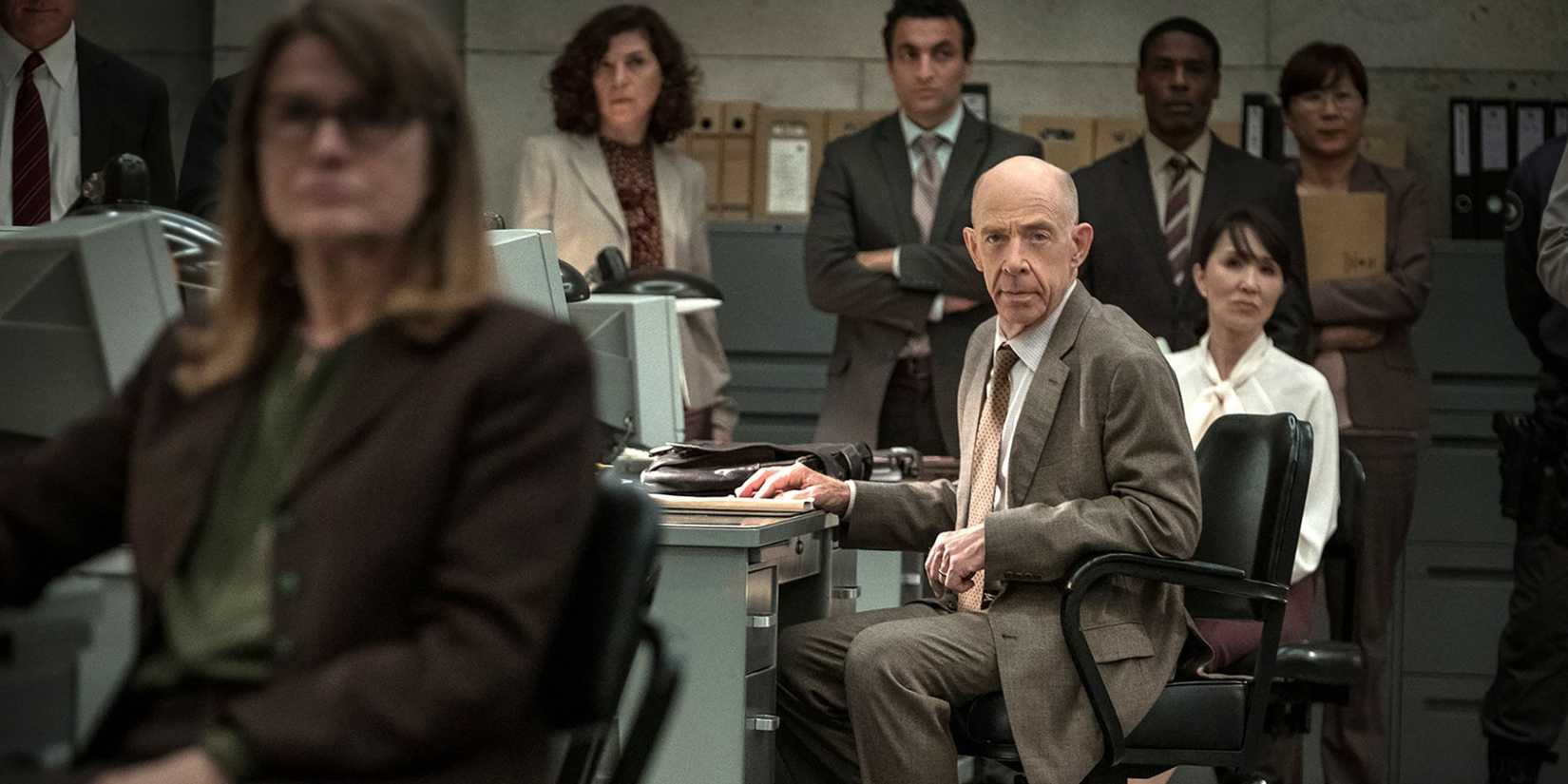
What if the biggest threat to national security came from another version of your own world? Counterpart takes that idea and mixes it with the paranoia of the Cold War. The sci-fi spy thriller begins with a mysterious experiment in East Germany in 1987 that accidentally creates a second Earth. Reality splits into two nearly identical worlds, Alpha and Prime, which initially cooperate before years of growing distrust turn them into enemies.
Rather than sticking to the familiar Cold War conflicts, Counterpart imagines what happens when the battle extends across parallel worlds. At the center of it all is Howard Silk (J. K. Simmons), an ordinary office worker on Alpha whose counterpart on Prime is a highly trained spy. Their lives collide as both worlds become caught up in secret intelligence operations. The parallel-Earth concept adds another layer to the espionage, forcing Howard to confront how different his life could have been. Every move carries consequences on both sides, leaving him caught in a dangerous game where one wrong decision could trigger a catastrophe across both worlds.
'Travelers' (2016–2018)

Humanity is running out of time in Travelers. In the distant future, civilization has completely fallen apart. There's one way to save it, but the technology comes with risks. Using an advanced form of time travel, humans can send their consciousness back to the 21st century, allowing them to take over the bodies of people who are already alive. Instead of physically traveling through time, these individuals inherit someone else's life and use it to prevent the future from becoming a complete disaster.
Time travel can be an oversaturated concept in sci-fi, but Travelers pushes the boundaries by exploring a world where humans are no longer seen as people, but merely as data in a calculation. The travelers follow orders from a powerful quantum AI known as the Director, which decides whose bodies they can inhabit and which missions deserve priority. To save millions in the future, it may sacrifice innocent people in the present, raising questions about who gets to decide whose life matters.
'The Expanse' (2015–2022)
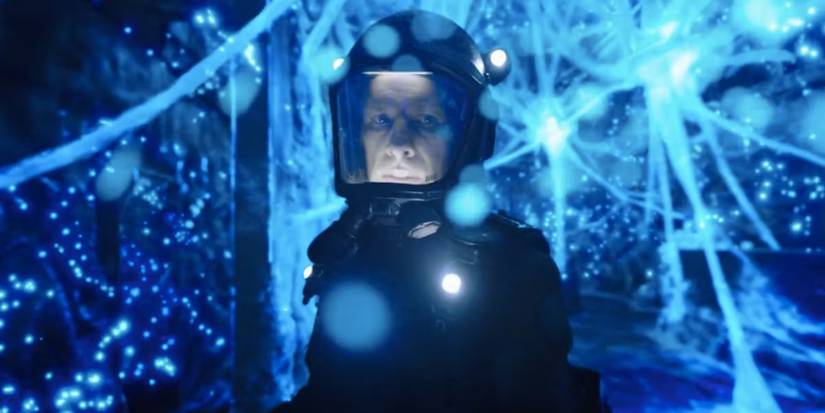
Humanity may have conquered the Solar System in The Expanse, but it hasn't exactly figured out how to get along. Adapted from James S. A. Corey's novels, the sci-fi epic takes place in the 23rd century, when Earth, Mars, and the Belt have developed into three very different societies. Earth holds political power, Mars has built a powerful military, and Belters are left doing the dangerous work of gathering the resources everyone else needs. Years of resentment have pushed the three sides dangerously close to war.
That idea sits at the heart of The Expanse, where advanced technology exists alongside some very familiar human behavior. Joe Miller (Thomas Jane), James Holden (Steven Strait), and Chrisjen Avasarala (Shohreh Aghdashoo) begin on completely separate paths, but their lives eventually become connected by the growing conflict. Miller works within a system that exploits the people he comes from, Holden's sense of right and wrong gets tested by political reality, and Avasarala is forced to make morally questionable decisions to protect Earth. None of them are completely heroic or villainous, because The Expanse understands that survival can get messy.

The Expanse
- Release Date
- 2015 - 2022-00-00
- Network
- SyFy, Prime Video
- Showrunner
- Naren Shankar, Mark Fergus, Hawk Ostby
- Directors
- Breck Eisner, Jeff Woolnough, David Grossman, Kenneth Fink, Rob Lieberman, Terry McDonough, Thor Freudenthal, Bill Johnson, David Petrarca, Jennifer Phang, Mikael Salomon, Sarah Harding, Marisol Adler, Anya Adams, Nick Gomez, Simon Cellan Jones
-

Jim Holden
-

Naomi Nagata
- Writers
- Georgia Lee, Robin Veith, Hallie Lambert, Matthew Rasmussen, Ty Franck, Naren Shankar, Mark Fergus, Hawk Ostby, Daniel Abraham, Dan Nowak
- Franchise(s)
- The Expanse
- Main Genre
- Sci-Fi
- Seasons
- 6
- Producers
- Daniel Abraham, Ty Franck, Dan Nowak
- Story By
- James S.A. Corey
- Streaming Service(s)
- Prime Video
- Executive Producer(s)
- Robin Veith, Andrew A. Kosove, Broderick Johnson, Hawk Ostby, Jason F. Brown, Mark Fergus, Naren Shankar
KioskNews shows a cleaned-up reading view extracted from the publisher’s page — the original always lives on their site, not ours.