Who is Our Lady of the Rosary de la Naval de Manila?
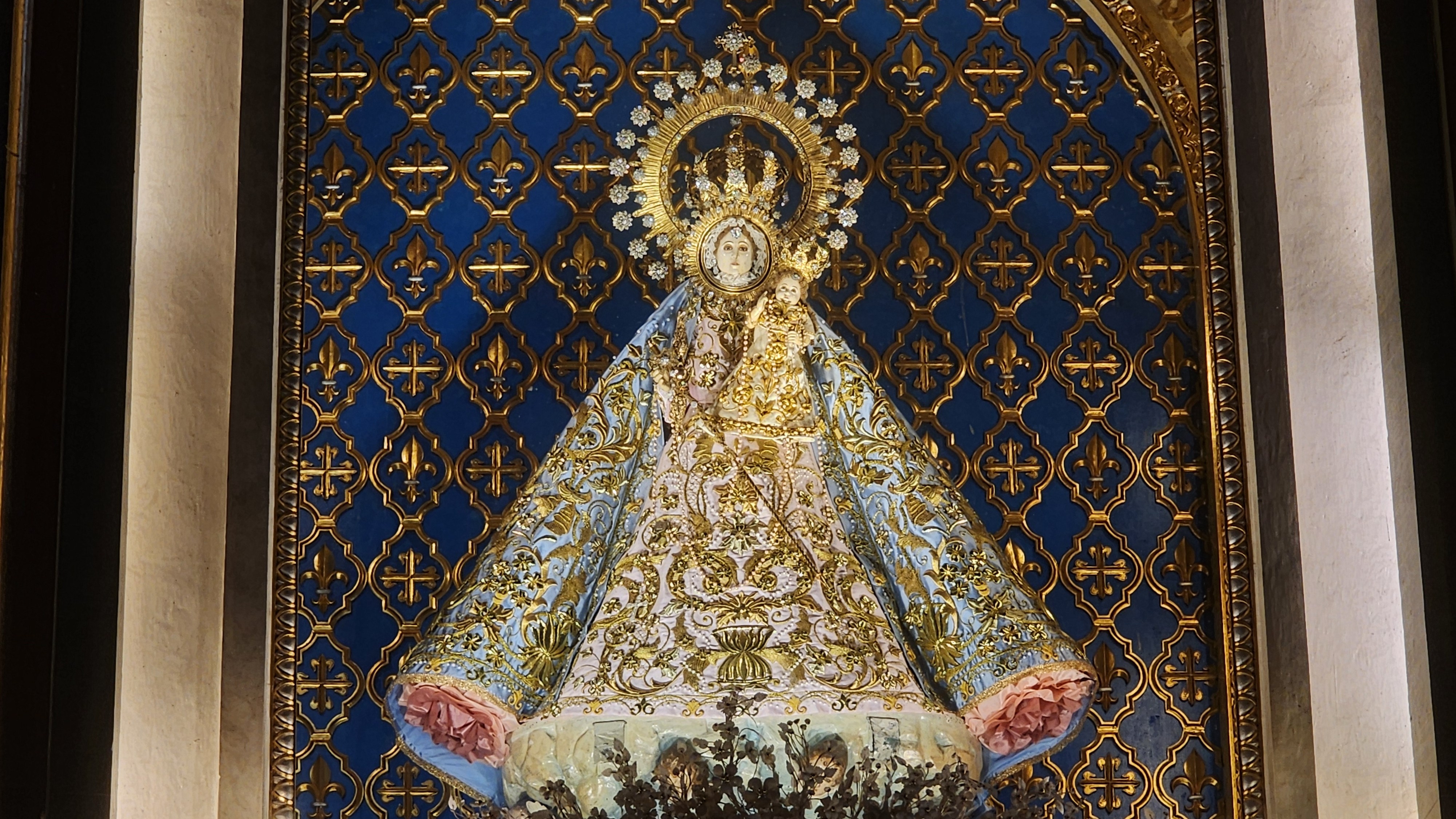
The Catholic Church has dedicated October as the Month of the Rosary to honor the Blessed Virgin Mary and encourage the faithful to seek her intercession while reflecting on the life of Jesus Christ through the mysteries.
READ: Why is Rosary Month celebrated in October?
As the practice of praying the Rosary took root in the Philippines, the image of Our Lady of the Rosary also took on a local context in the country.
Our Lady of the Rosary of La Naval de Manila, one of these local Marian images, is enshrined at the Sto. Domingo Church, located along the busy thoroughfare of Quezon Avenue in the heart of Quezon City.
Who is she, and how did Filipinos come to venerate her?
Oldest existing ivory Marian image
In an interview with GMA News Online, historian Br. Dennis Amarante, O.P. shared that the image of La Naval de Manila was carved in the 1590s by a pagan Chinese artisan.
It was commissioned by Governor-General Luis Pérez de Dasmariñas and donated to the Dominican Order of Manila.
“They say La Naval is the oldest existing ivory image (in the Philippines). Because the oldest existing Marian image would be Nuestra Señora de Guia in Ermita, Manila,” Amarante said.
Garbed in the likeness of a 16th-century Spanish lady of the royal court, La Naval de Manila wears an elaborate crown symbolizing her status as the Queen of Heaven and Earth and the Mother of the King of Kings.
The image also wears an aureola studded with stars, symbolizing the woman described in the Book of Revelation, who is adorned with the sun, the moon, and the stars.
The jewels adorning La Naval de Manila are ex-voto offerings from devotees throughout the centuries.
Amarante shared that when the Dominicans arrived in the Philippines, they brought a statue of Our Lady of the Rosary and housed it in the Santo Domingo Church in Intramuros, the walled city in Manila.
“When Santo Domingo Church was still standing in Intramuros, it was there in the façade. Unfortunately, (it became) one of the casualties of the Second World War,” Amarante said.
Fortunately, the image of La Naval de Manila and other artifacts and documents were kept safe inside a vault.
“Fortunately, the friars were able to keep the image of La Naval de Manila, along with other artifacts and documents, in a vault. So they were able to keep them there,” said Amarante, who published articles and conference papers on Philippine Church history, Philippine Dominican history, and historical methodology.
“Nakalagay pa nga si Mama Mary doon sa drum. Binalot nila ng cloth, tapos nilagay sa drum,” he added.
(They covered the Marian image with a cloth and placed it inside a drum.)
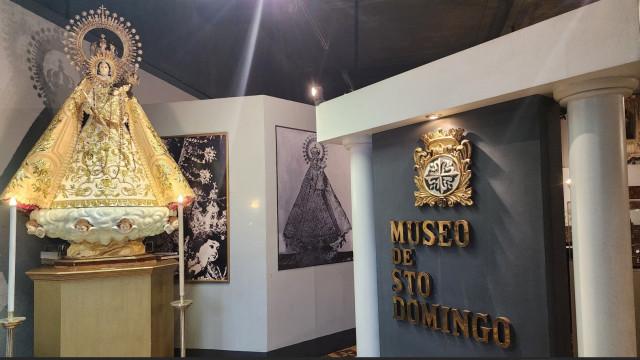
(Photo: Mariel Celine Serquiña/GMA News)
1st canonical coronation in Asia
La Naval de Manila was canonically crowned on October 5, 1907, becoming the first Marian image in the Philippines and Asia to receive such recognition from the Vatican.
A Marian image is canonically crowned when the Pope, through a papal bull, authorizes the placement of a crown, tiara, or halo on the image in recognition of its deep historical roots and profound spiritual significance to the faithful.
La Naval de Manila was originally housed at Sto. Domingo Church in Intramuros, Manila, built in 1588.
Following the church’s destruction during World War II, the image was transferred to Santísimo Rosario Parish within the University of Santo Tomas campus in España, Manila, where it remained until the 1950s.
The current Sto. Domingo Church was rebuilt in Barangay Sto. Domingo, formerly Barangay Matalahib, in Quezon City.
The new church was blessed and inaugurated as a national shrine in 1954, becoming the image’s current home.
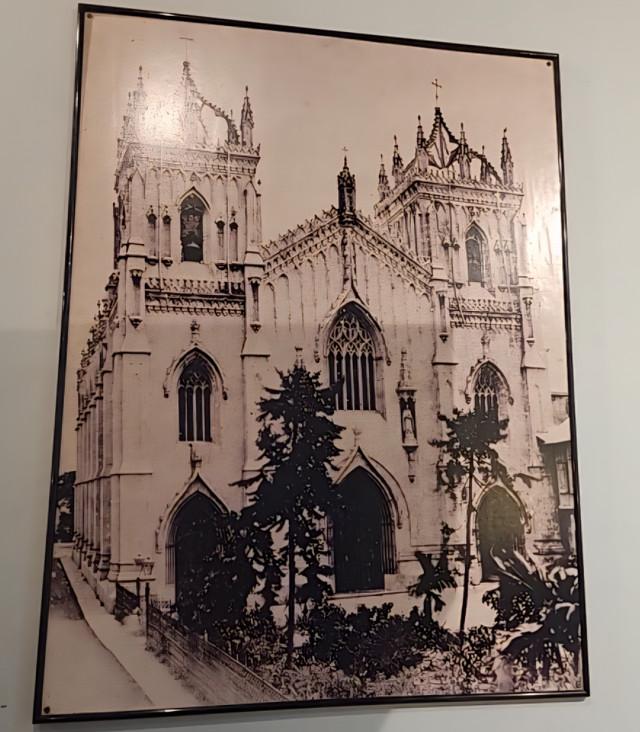
(Photo: Mariel Celine Serquiña/GMA News)
Blessings amid battles
The devotion to La Naval de Manila grew as reports of miracles were attributed to her.
The most famous miracles were during the battles of La Naval de Manila in 1646 between Filipino-Spanish forces and the Dutch East India Company.
“They (Filipinos and Spaniards) knew that they were left behind, that they are poorly armed. In fact, what they used were two repurposed galleons, and galleons are trading ships; they are not meant for warfare. So, they only repurposed those, while the Dutch had somewhere between 16 to 18 warships,” Amarante said.
“Despite that, the Filipinos and the Spanish were able to win. And they attributed it to Our Lady of the Rosary. How? They were praying the Rosary while at war,” Amarante said.
The Battles of La Naval de Manila were a series of five naval battles fought between March and October 1646.
"It's a miracle. And there were accounts that would say that it was a miracle. Kasi may isang crew na nakapag-fire ng kanyon ng walang pagod at derederetsyo (one crew member was able to fire the cannon continuously nonstop)," Amarante said.
“And then there was one specific incident wherein the wind stopped. Hindi nakagalaw yung Dutch ships (the Dutch ships were unable to move). As a result, the Filipino-Spanish troops were able to attack the Dutch ships,” he added.
The Feast Day of La Naval de Manila
While the feast of Our Lady of the Rosary is celebrated every October 7, the feast of La Naval de Manila is celebrated every second Sunday of October.
For 2026, La Naval de Manila's feast fell on October 11, with the grand procession at 4 p.m.
Meanwhile, the Eucharistic celebrations are scheduled at 6 a.m., 7:30 a.m., 9 a.m., 11:30 a.m., 12 p.m., 2:30 p.m., 5:30 p.m., and 7 p.m.
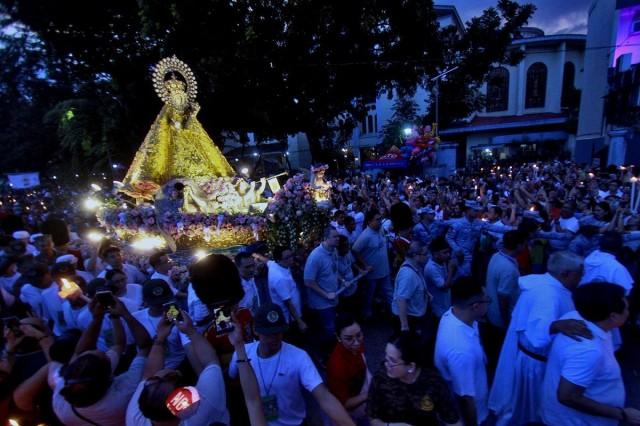
(Photo: La Naval de Manila Facebook page)
Patroness of Quezon City, Philippine Navy
In 1973, the Quezon City government declared La Naval de Manila as patroness of the city.
Meanwhile, Pope Paul VI confirmed the title through a decree issued by the Sacred Congregation for the Divine Worship on August 26, 1974.
Through the apostolic lette Priscis aim inde, La Naval de Manila was officially also declared as patroness of the Philippines Navy in May 1978.
Named a National Cultural Treasure in 2012, La Naval de Manila has been an image of enduring faith, maritime protection, and the country’s colonial history. —RF, GMA News
KioskNews shows a cleaned-up reading view extracted from the publisher’s page — the original always lives on their site, not ours.