3 ex-SC justices tell impeachment court: Conviction threshold not fixed at 16
Already have Rappler+?
to listen to groundbreaking journalism.
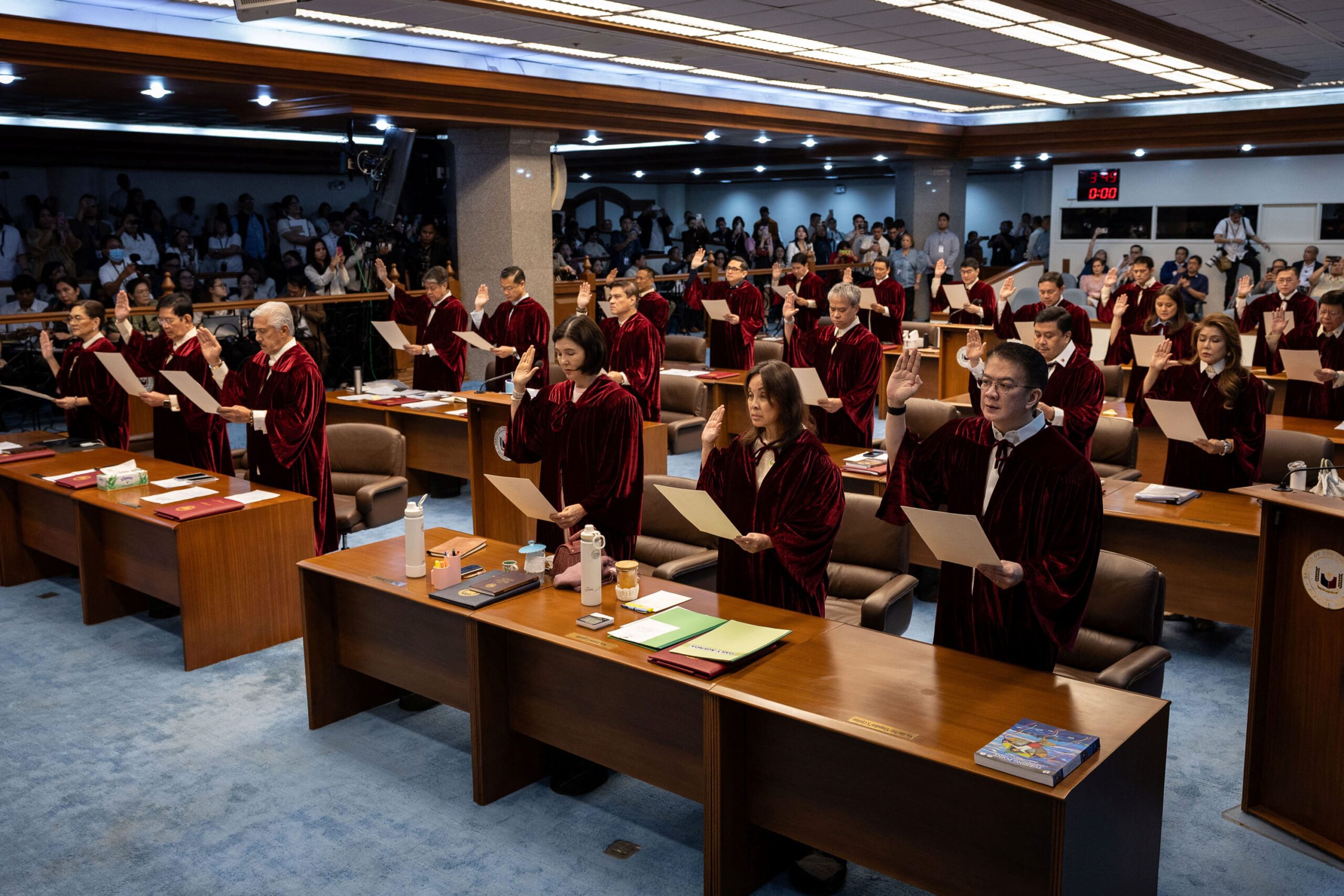
IMPEACHMENT COURT. Senators take their oath as they convene as an impeachment court for the trial of Vice President Sara Duterte, on May 18, 2026.
REUTERS
A lower threshold for the number of senators the prosecution must persuade would increase the chances of Sara Duterte being removed from office
AT A GLANCE
- Three retired Supreme Court justices argue that the conviction threshold for impeachment is not fixed at 16 votes, suggesting that not all senators should be counted if they cannot participate.
- They emphasize that senators who are absent due to legal issues, health problems, or other impediments should be excluded from the vote count.
- Only one retired justice supports maintaining the 16-vote threshold, while the Senate impeachment court's presiding officer's ruling on this matter is still pending.
This is AI-generated. Read the article for full context. Report any errors.
MANILA, Philippines – Out of the four retired Supreme Court justices invited by the impeachment court to advise it on the conviction threshold debate, three of them took the position that the number of votes needed to remove the impeached official is not fixed at 16.
Former chief justices Reynato Puno, Hilario Davide Jr., and Artemio Panganiban said on Wednesday, September 16, the constitutional provision stating that no person shall be convicted without a two-thirds vote of all members of the Senate does not automatically put the denominator at 24.
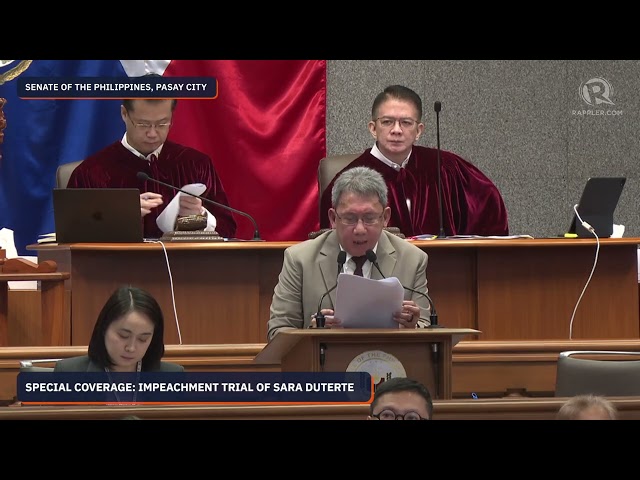
“The framers of the Constitution of 1935, 1973, and 1986 would never have intended to include in ‘all members’… those who cannot participate in the hearings and deliberations on the impeachment, such as those outside the jurisdiction of the Philippines, or whose whereabouts are unknown or are in hiding to avoid arrest,” Davide said in a written position read by the Senate secretary.
He added that those who cannot exercise their rights and privileges as a senator due to “some legal impediment or restraints” such as plunder charge should be excluded from the count.
Currently, Senator Jinggoy Estrada is suspended from the Senate after his arrest on plunder charges; Senator Rodante Marcoleta is in detention in a separate plunder case; and Senator Ronald “Bato” dela Rosa is evading arrest in connection with a crimes-against-humanity case before the International Criminal Court.
In addition, Senator Loren Legarda has been on medical leave for a number of weeks now, preventing her from attending the trial.
Panganiban said the interpretation of charter framers should not necessarily prevail, and must reflect the “common sense of the people,” guided by truth and fairness.
“Is it fair and truthful should the senators be allowed to vote if they were in hiding, abroad, legally detained, sick, hospitalized, or otherwise absent, and have not been able to access the documents, have not heard the testimonies and have not observed the demeanor of the witnesses?” Panganiban asked.
“Is it fair to the parties, to the country, to allow those abroad, looking at the pyramis along the Nile, and shopping at the fashion houses in Paris?” he added.
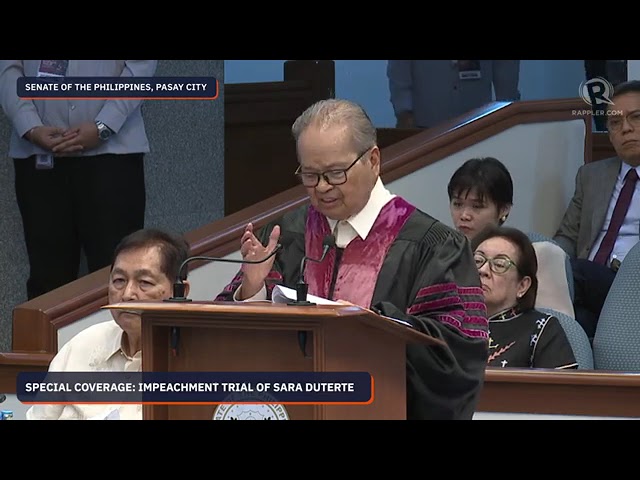
Puno argued that if the conviction threshold is fixed at 16, the Constitution should have explicitly said so.
“By using two-thirds, the number of votes to convict will have to move depending on certain factors,” Puno said.
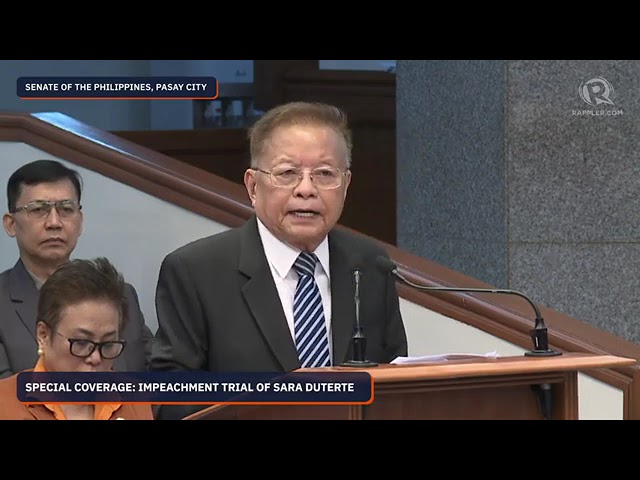
Only retired Supreme Court justice Adolfo Azcuna took the stand to retain the 16-vote conviction threshold.
“Supermajority threshold is sound constitutional design and should be sustained rather than lowered to a lesser threshold,” Azcuna said.
It remains to be seen whether Senate impeachment court presiding officer Chiz Escudero’s initial ruling to keep the threshold at 16 will be sustained, but the legal luminaries’ position are expected to give a boost of confidence for the prosecution, which had been vocal before the start of the trial about lowering the minimum number of senators needed to convict Vice President Sara Duterte.
Oral arguments on the subject are scheduled on September 23. – with reports from Sundy Locus/Rappler.com
KioskNews shows a cleaned-up reading view extracted from the publisher’s page — the original always lives on their site, not ours.