Some 2,000 rally in Tel Aviv to demand Jewish-Arab government; counterprotest held against ‘stolen’ election
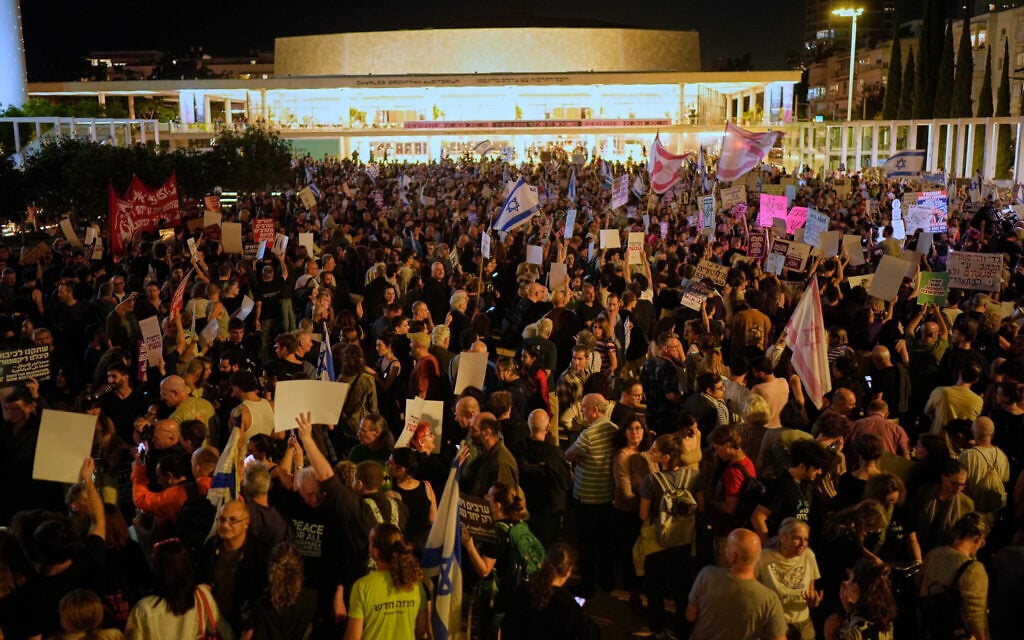
Around 2,000 people on Saturday evening demonstrated in support of a Jewish-Arab government in Tel Aviv after Prime Minister Benjamin Netanyahu’s opponents received a combined 67-seat majority in Tuesday’s Knesset election.
A smaller, right-wing counterprotest attended by some 200 people demanded an investigation into claims of electoral fraud, after Netanyahu’s Likud party accused Arab parties of “stealing the election” with support from hostile foreign governments.
While anti-Netanyahu parties on Tuesday received 67 of the Knesset’s 120 seats, most of the Jewish-led parties opposed to the premier refuse to form a governing coalition with Arab parties, which won an unprecedented 19 seats.
0:00 / 0:00
Promoted: Z3 2026

On their own, the Jewish-led anti-Netanyahu parties got just 48 seats — five fewer than the seats won by Netanyahu’s bloc.
Without Arab support or defections from the “Change bloc,” neither Netanyahu nor his Zionist opponents will be able to secure a governing majority in the new Knesset — to be sworn in on November 10.
Get The Times of Israel's Daily Edition by email and never miss our top stories
By signing up, you agree to the terms
Demonstrators, led by left-wing grassroots activist group Standing Together, met in Habima Square for an initial rally to call for all the opposition parties to cooperate, before marching to Rabin Square via the Ibn Gabirol thoroughfare.
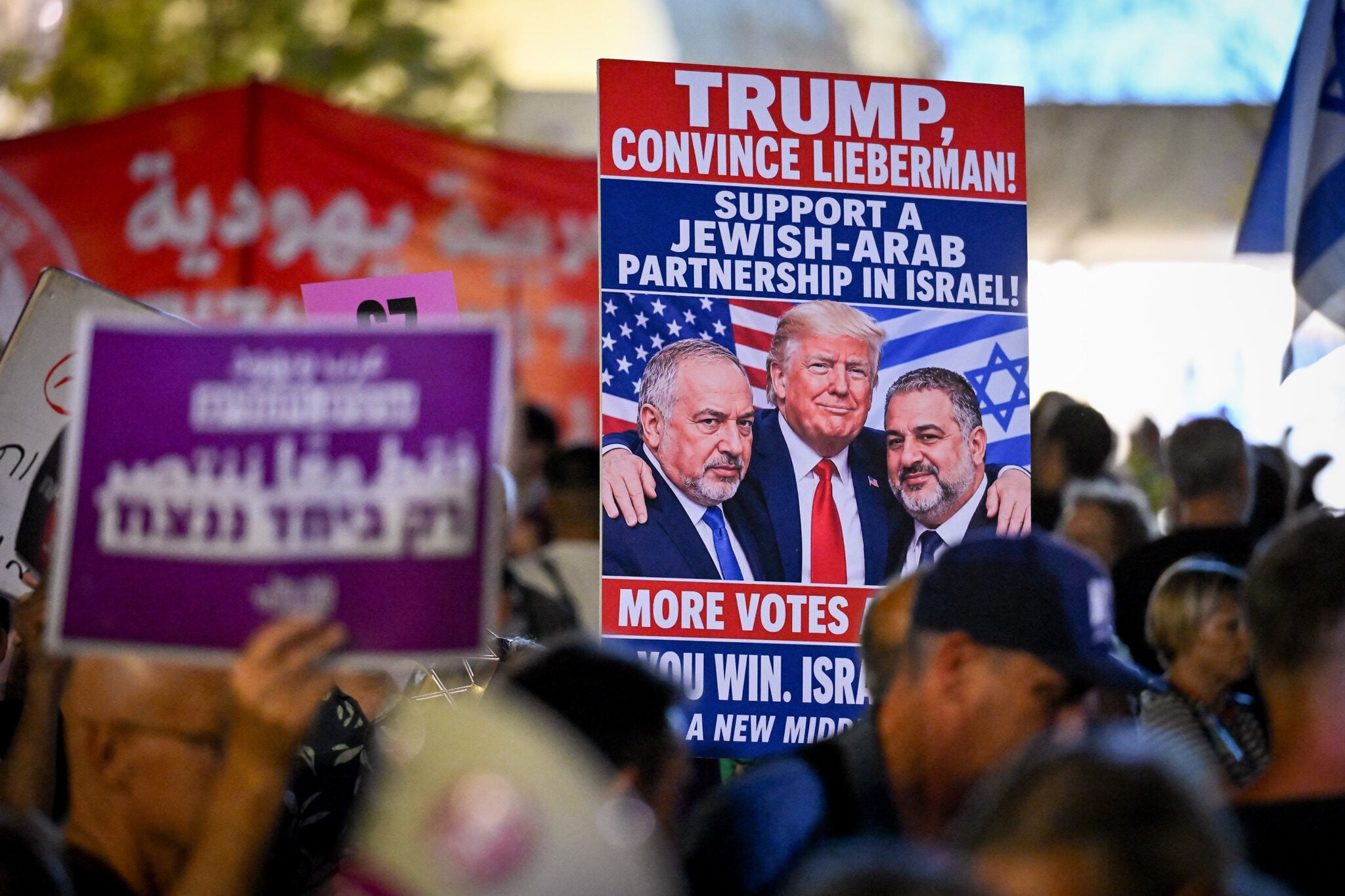
Protesters at the anti-Netanyahu rally chanted slogans including “Jews and Arabs refuse to be enemies” and “no to racism, yes to partnership.”
Upon setting off on the march, the activists beat drums and hoisted signs reading “there’s a majority for change” and “equality for all,” and chanted, in Hebrew: “With partnership and equality, we’re replacing the government.”
Elsewhere in the marching column, protesters chanted in Arabic: “Peace, liberty, social justice.”
Earlier, in Jerusalem, a smaller demonstration was held in Paris Square, while in Haifa, a rally was held at UNESCO Square calling for a Jewish-Arab government.
Some pro-Netanyahu protesters gathered in a separate area at Habima Square before the anti-Netanyahu activists departed, leading to some arguments between the rival groups.

In footage uploaded by artist Yigal Shtayim, one of the right-wing protesters came up to participants of the opposing rally and accused them of being enemies, threatening to “send you back to the chimneys of Auschwitz before you think about establishing a Palestinian state.”
“You are the first enemies we will send far away, to Birkenau, to Auschwitz; we will build Sobibor for you again,” the man said.
Shtayim told the Walla news site that his footage only showed part of the tirade, and that the remarks were a lot longer.
Protesters at the pro-Netanyahu rally chanted “Jewish state” and “terrorists to Gaza, not the government.”
Some youths on the sidelines of the rally chanted the racist slogans “may your village burn” and “a Jew is a soul, an Arab is a whore’s son.”
Speakers accused Arab-majority Ra’am and Joint List of support for terrorism and said the rally is the first act of a protest movement against a potential government that relies on Arab parties.
“Sometimes a massive flame erupts from the smallest spark, and this here is the smallest spark,” said Deputy Minister Almog Cohen, who was elected to the outgoing Knesset with National Security Minister Itamar Ben Gvir’s ultranationalist Otzma Yehudit party but ran this time with Netanyahu’s Likud.
“We won’t let anyone steal the elections,” he said. “If you think we’ll let you sell the Jewish people’s only nation to the highest bidder, you are sorely mistaken.”
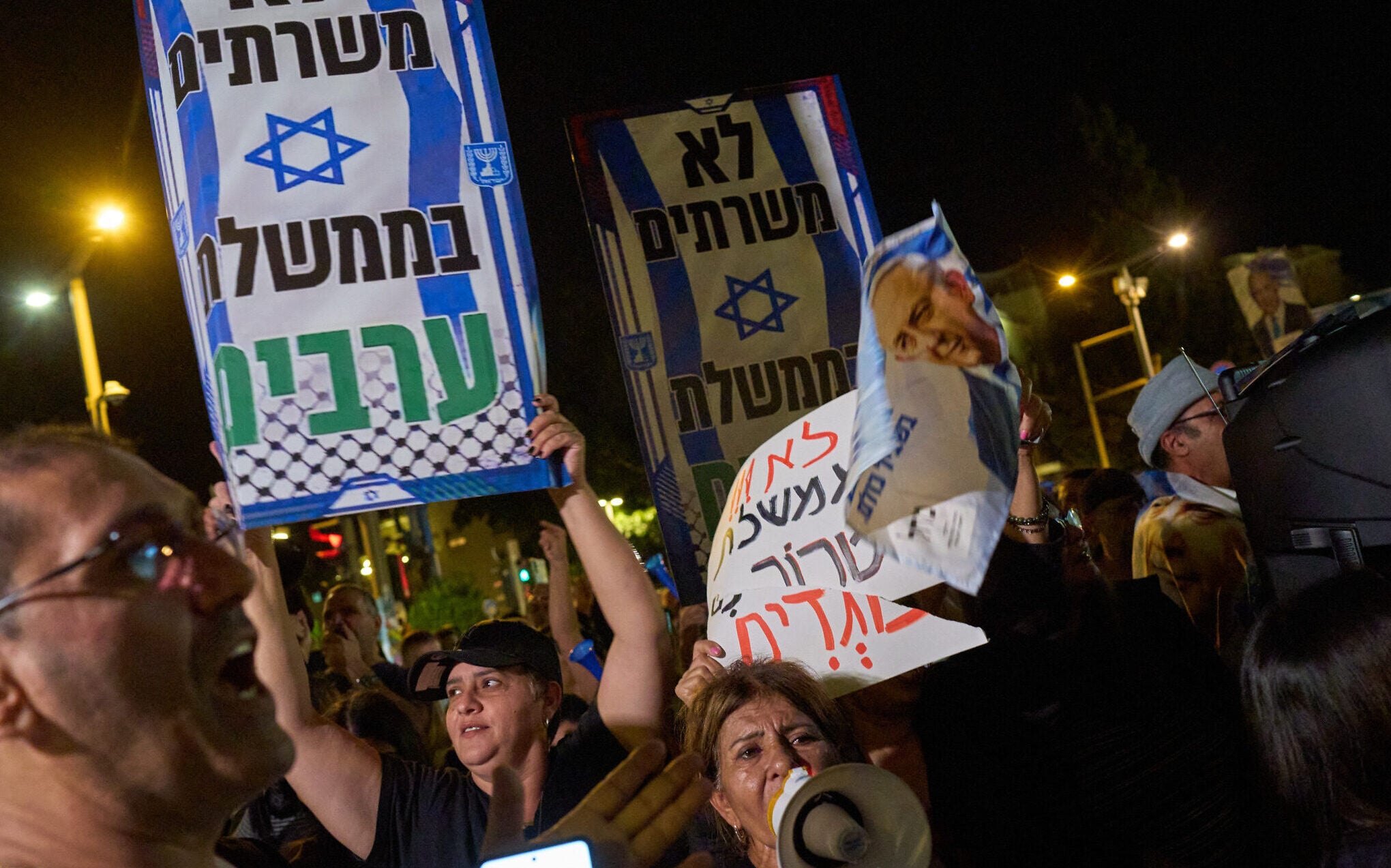
A sign hoisted next to him read: “Arabs won’t dictate the Jewish character of the Jewish state.”
Eli Shtivi, whose son Idan was abducted and murdered at the Nova music festival in the Hamas onslaught on October 7, 2023, called for a government that relies on a 101-seat majority — all parties other than Ra’am and Joint List.
Shtivi, who ran in the Likud primary but will not enter the Knesset, called on protesters to join “hostage families from the right” and “fight with blood for our country, our identity” and “the integrity of the election.”
“Only a Jewish majority will determine the future of the State of Israel,” he said.

A historic surge in Arab voter turnout in Tuesday’s election has placed Israel’s Arab-majority parties in a position to determine the next government, putting the Zionist opposition’s disinclination to rely on their support to a potentially decisive test.
The Central Elections Committee has repeatedly said that the scope of an investigation into allegations of a purported foreign effort to pay Arab voters to boost their turnout is limited in nature and that the results of Tuesday’s election are not in question.
Despite leading the largest party with 27 seats, Netanyahu has no obvious path to expanding his bloc beyond his existing far-right and ultra-Orthodox allies to get the 61-seat majority he needs to form a government.
The four opposition Zionist parties are Gadi Eisenkot’s Yashar, Naftali Bennett’s B’Yachad, Yair Golan’s The Democrats and Avigdor Liberman’s Yisrael Beytenu. Only The Democrats have expressed open support for a coalition with the Arab-led parties, while the others have previously said they would not cooperate with them.
For years, Netanyahu has campaigned to portray Arab lawmakers as illegitimate political partners — effectively excluding representatives of roughly one-fifth of Israel’s population from governing.
Despite that, there have been multiple accounts in recent years that Netanyahu has sought alliances with the Islamist Ra’am party.
Since his Islamist party became the first Arab-majority faction to join an Israeli government in 2021, chairman Mansour Abbas has sought to make his party more palatable to Jewish voters and potential coalition partners, most notably by recruiting former Yesh Atid lawmaker and deputy public security minister Yoav Segalovitz, a Jewish Zionist, as his party’s No. 2 candidate.
Meanwhile, the Joint List has offered to support an alternative government from outside the coalition, with chair Yousef Jabareen vowing to use his faction’s newfound parliamentary strength to oust Netanyahu.
KioskNews shows a cleaned-up reading view extracted from the publisher’s page — the original always lives on their site, not ours.