Indonesia’s military deploys thousands of troops to Jakarta after generals’ arrest
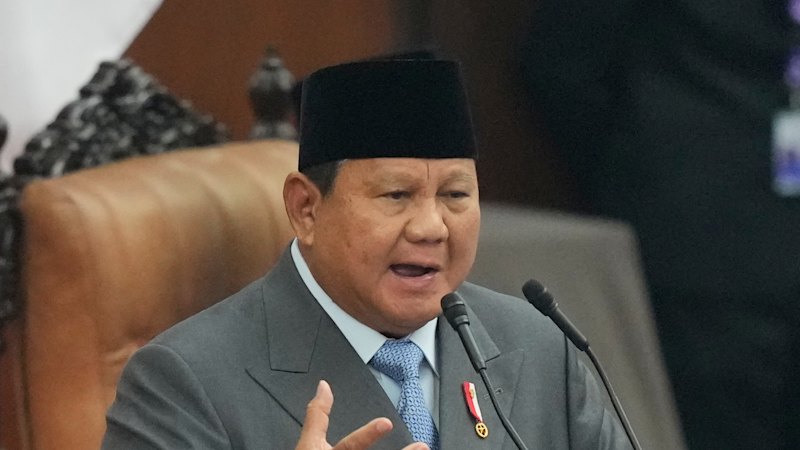
Jakarta: Indonesia’s military was deploying more than 20,000 troops and personnel to the capital, Jakarta, officials said, as authorities investigate an alleged illegal wiretapping operation targeting the country’s president which has led to the detention of three senior police generals.
The scandal took on added significance after the presidential palace said the alleged wiretapping targeting President Prabowo Subianto could be regarded as conduct “leading towards treason”. Sensitive information accessible through a head of state’s communications could endanger the state and national leadership, it said.
Among those implicated in the scandal is the presidential chief of staff, General Listyo Sigit Prabowo.
There are allegations that cabinet officials, politicians, journalists, civil society leaders and business executives were also subjected to unauthorised surveillance.
Thousands of troops deployed
Authorities have not confirmed that the deployment is connected to the wiretapping probe. The first phase began on Monday, with 2100 personnel from units already stationed in Jakarta.
Troops from outside the capital were to start arriving on Wednesday (Jakarta time), bringing the total number of personnel involved to 20,980, according to the navy operations assistant, Vice Admiral Yayan Sofiyan.
The new deployments include troops from marine and navy units as well as training centres and naval bases from Java and Lampung province. An additional 13,140 personnel were on standby and ready for deployment if needed, Sofiyan said.
Sofiyan did not elaborate on the purpose of the deployment or respond to questions about whether there were concerns about security or political tensions in Jakarta.
Indonesian armed forces spokesperson Major General Muhammad Nas said the troop movement was standard procedure for maintaining national security and territorial integrity.
“Troop deployments are a normal occurrence,” Nas said, adding that the military “must always be prepared to protect the entire nation and safeguard the integrity of the Republic of Indonesia”.
Presidential office raises concerns about national security
The minister of state secretariat, Prasetyo Hadi, told a news conference at the presidential palace in Jakarta on Wednesday, that the alleged surveillance of the president raised concerns about national security.
“If we are talking about a head of state, there is a great deal of highly sensitive information that could potentially be used for purposes that endanger the interests of the nation,” Hadi told a news conference. “What they did could be considered as leading towards an act of treason because it endangers state interests, including the country’s leadership.”
‘There is a great deal of highly sensitive information that could potentially be used for purposes that endanger the interests of the nation.’
Prasetyo Hadi, minister of state secretariat
Hadi said the government was still awaiting the outcome of the police investigation before determining the suspects’ motives.
Who could have ordered any wiretapping remains unclear
Indonesian police announced late on Tuesday in a televised news conference that they had detained three senior police generals as suspects in the investigation into the alleged illegal wiretapping.
Police named Listyo and two other police generals, Ahrie Sonta Nasution and Eko Hadi Santoso, as suspects in a case involving illegal interception of communications, unlawful access to electronic systems and the deletion of electronic data, and said they were detained on Sunday.
Police allege the unauthorised wiretapping took place between 2025 and 2026 – when Listyo was Indonesia’s police chief – and that the suspects ordered the wiretaps without following proper procedure.
The suspects are also accused of ordering in late October the deletion of files containing intercepted communications, allegedly in an attempt to conceal evidence and erase traces of the operation.
Bambang Rukminto, a police analyst at the Institute for Security and Strategic Studies, said the alleged wiretapping of a sitting president raised far more serious questions than the surveillance of business executives, political party leaders or other public figures.
While wiretapping lower-profile targets could potentially be used for intimidation or to gain political leverage, the same explanation would be difficult to apply in this case, Rukminto said.
“But if the target is the president, what would the motive be? Intimidating the president is clearly not a plausible explanation,” said Rukminto, adding that investigators should not only focus on who allegedly carried out the surveillance, but also on the purpose of the operation and who ultimately stood to benefit.
“The investigation should establish not only the perpetrators, but also the intended use of the information and the parties that may have had an interest in obtaining it.”
The three suspects could face charges related to unlawful interception, recording, diversion, alteration, obstruction or monitoring of nonpublic electronic communications, which carry up to 10 years in prison.
The suspects have not responded publicly to the wiretapping allegations.
Adrianus Meliala, a criminologist at the University of Indonesia and a former commissioner of the National Police Commission, said the allegations raised questions about whether the surveillance was conducted on behalf of interests outside the police force or the state.
“There is a strong suspicion that the wiretapping was carried out not in the interests of the state or the national police, but for the interests of other parties,” Meliala said.
He said the allegations, if proven, could be viewed in the context of political activity involving members of the police force.
“No one expected Listyo Sigit Prabowo to be named a suspect,” said Meliala, “but if the allegations are proven, the case could be understood in the context of political manoeuvring. Anyone who engages in politics must also be prepared to face the political consequences.”
KioskNews shows a cleaned-up reading view extracted from the publisher’s page — the original always lives on their site, not ours.