6 Most Universally Loved Books Released Since 2010, Ranked

Sign in to your Collider account
There is a very specific kind of reader who finishes a book and immediately starts recruiting. Not recommending. Recruiting. They text three people. They bring it up at dinner. They start saying things like, “Just get to chapter four,” as if they are personally responsible for the author’s sales numbers. I trust that behavior more than bestseller stickers.
These are the books that create that person. Not because they are perfect, and definitely not because everybody agrees on every page, but because each contains something readers get fiercely attached to — a relationship, a voice, a family, a life they suddenly care about much more than is reasonable. These are 6 most universally loved books post-2010.
6 'The Song of Achilles' (2011)

Patroclus is already a disappointment when The Song of Achilles begins. Awkward, exiled, unimpressive by the standards of the heroic world around him, he is sent to the court of King Peleus and becomes close to Achilles, the beautiful, almost superhuman son of a goddess. Madeline Miller wrote the novel around the relationship that grows between them and follows both men toward Troy, where everybody except them seems perfectly comfortable treating Achilles like a future legend instead of a person.
That distinction is where the novel gets me. Patroclus remembers the version of Achilles who plays music, laughs, gets annoyed, and lies beside him before war starts turning him into public property. Thetis sees destiny. The Greeks see a weapon. Patroclus sees the boy. So when Achilles begins making decisions out of pride, the frustration feels weirdly personal because Miller has already allowed us into the private room behind the myth. You know where the story is going. Most readers know before page one. It somehow does nothing to protect you.
5 'All the Light We Cannot See' (2014)
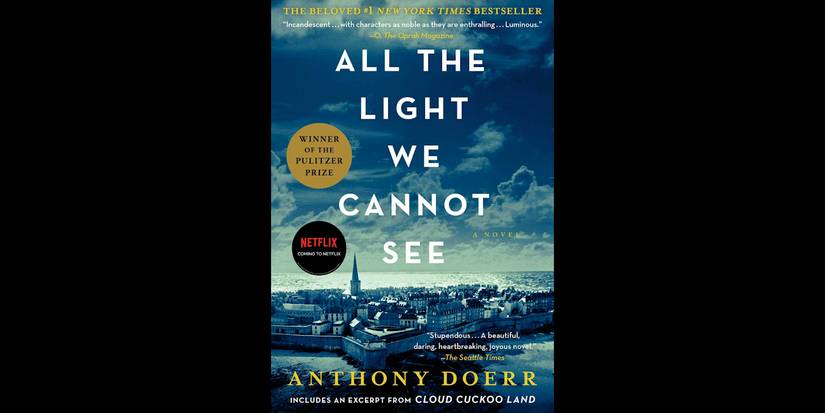
All the Light We Cannot See moves through World War II alongside Marie-Laure, a blind French girl forced to flee Paris, and Werner Pfennig, a German orphan whose brilliance with radios earns him opportunities that slowly become obligations to the Nazi state. Anthony Doerr wrote their stories apart for most of the novel, letting coincidence, war, radio signals, and geography slowly pull them toward the same place.
Marie-Laure’s father builds miniature versions of streets so she can memorize the city with her fingers. Werner grows up listening to scientific broadcasts that make the world feel enormous, then discovers that the same technical gift can be used to find people who are going to die. That symmetry is more affecting than any speech about war could be. Knowledge is beautiful until somebody decides what it should be used for. The Netflix adaptation later made the story more visible, but the book’s real power is quieter. Doerr keeps taking something historically enormous and reducing it to whatever one frightened person can hear through a wall.
4 'A Man Called Ove' (2012)
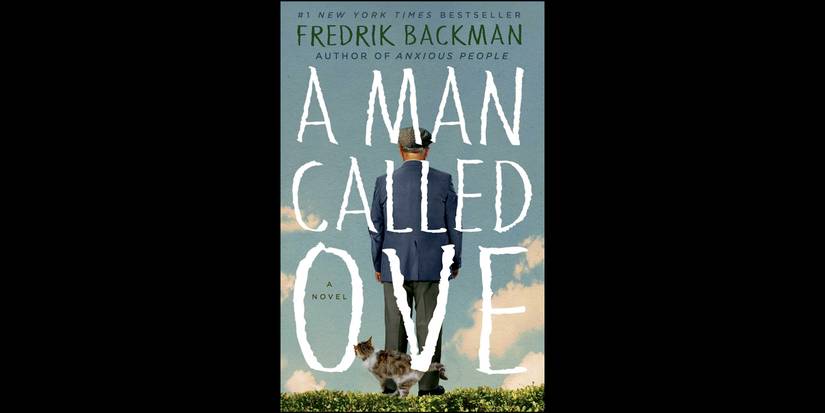
The first thing you should know about Ove is that he has opinions about where you are allowed to park. The second is that A Man Called Ove starts after the death of his wife, with Ove deciding that he has very little interest in continuing without her. Fredrik Backman wrote him as the kind of man who would rather repair something himself than explain why somebody else repaired it incorrectly, and then keeps sending people into his life who need exactly the kind of help he cannot stop himself from giving.
Parvaneh is the real menace here, because she refuses to leave him alone. She needs driving lessons. Her family needs practical help. Neighbors keep having problems. Even a half-frozen cat somehow gets added to his responsibilities. The beautiful thing is that Ove never undergoes some glossy personality transplant. He remains grouchy. He remains obsessive. He simply starts accumulating reasons to wake up tomorrow. By the time his routines stop looking ridiculous and start looking like grief with a schedule, Backman has you exactly where he wants you.
3 'Pachinko' (2017)

Sunja gets pregnant by a man who cannot marry her. That could have been the whole scandal. Instead, it becomes the first stone in Pachinko, Min Jin Lee’s multigenerational story about a Korean family building a life in Japan across decades of poverty, discrimination, ambition, shame, love, and reinvention. A minister offers Sunja marriage and a way forward, she leaves Korea, and from there the consequences of one young woman’s decision keep reaching people who were not even born when she made it.
I love that the book never treats survival like a grand cinematic pose. Sunja survives by working. By selling food. By enduring things she cannot fix. By choosing which humiliations are worth swallowing because somebody else depends on her. Her descendants eventually inherit lives she could barely imagine, and some of them resent or misunderstand the very compromises that made those lives possible. Even the pachinko business itself becomes loaded with contradiction: money, stigma, opportunity, exclusion. The Apple TV+ adaptation is gorgeous, but the novel gives you the ache of watching sacrifice become invisible once it succeeds.
2 'The Seven Husbands of Evelyn Hugo' (2017)

By the time journalist Monique Grant meets Evelyn Hugo in The Seven Husbands of Evelyn Hugo, the world already thinks it knows Evelyn. It knows the movies, the marriages, the dresses, the scandals, and most importantly those seven husbands. Evelyn knows how useless that version of her life is.
Taylor Jenkins Reid wrote the novel as Evelyn’s private history of becoming one of Hollywood’s biggest stars while protecting the relationship that mattered more than the public ones. That relationship with Celia St. James is where the book stops being glamorous gossip and starts drawing blood. Evelyn understands very early that beauty gives her leverage, fame gives her protection, and neither gives her freedom. She and Celia keep hurting one another because love is being negotiated inside a business and era that punish them for loving honestly. And then there is Monique. Evelyn did not choose a random journalist. Once you understand why she chose her, the entire interview changes shape.
1 'Project Hail Mary' (2021)
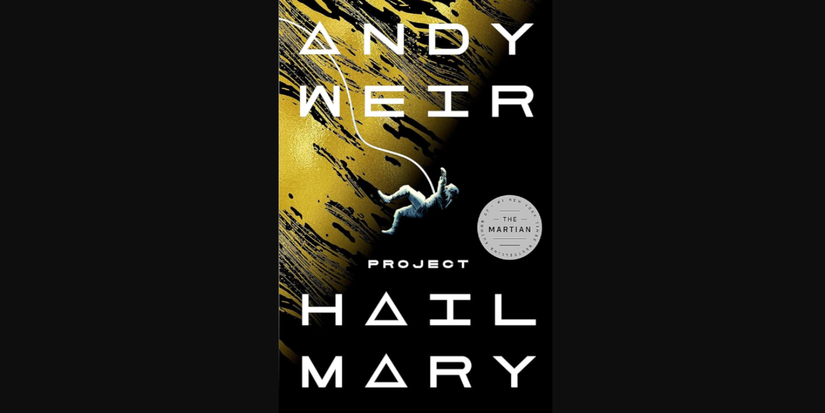
Ryland Grace wakes up in space next to two dead bodies and has no idea who he is. That is how Andy Weir begins Project Hail Mary, which gradually reveals that Grace has been sent to another star system because a microorganism called Astrophage is draining energy from the Sun and threatening Earth with catastrophe. His memory returns in pieces. The science gets increasingly complicated. The mission looks catastrophically lonely. And then Rocky shows up.
I am stopping there on purpose, because this is one of the rare books where knowing less genuinely improves the experience. What happens next turns a survival puzzle into one of the warmest friendships in modern science fiction. Grace and Rocky share no language, atmosphere, biology, or cultural assumptions, so they have to build communication from scratch using math, sound, objects, and patience. It is absurdly fun watching two scientists nerd their way into trust. Then somewhere along the line, without announcing itself, that trust becomes love in the broadest and best sense of the word. By the time “Fist my bump” means something to you, the book has already won.
Collider Exclusive · Sci-Fi Survival Quiz Which Sci-Fi World Would You Survive? The Matrix · Mad Max · Blade Runner · Dune · Star Wars
Five universes. Five completely different ways the future went wrong — or sideways, or up in flames. Only one of them is the world your instincts were built for. Eight questions will figure out which dystopia, galaxy, or desert wasteland you'd actually make it out of alive.
💊The Matrix
🔥Mad Max
🌧️Blade Runner
🏜️Dune
🚀Star Wars
01
You sense something is deeply wrong with the world around you. What do you do? The first instinct is often the truest one.
02
In a world of scarcity, what resource do you guard most fiercely? What we protect reveals what we believe survival actually requires.
03
What kind of threat keeps you up at night? Fear is useful data — if you're honest about what you're actually afraid of.
04
How do you deal with authority you don't trust? Every dystopia has a power structure. Your approach to it determines everything.
05
Which environment could you actually endure long-term? Survival isn't just tactical — it's physical, psychological, and very much about where you are.
06
Who do you want in your corner when things fall apart? The company you keep is the clearest signal of who you actually are.
07
Where do you draw the line — if you draw one at all? Every survivor eventually faces a moment that tests what they're actually made of.
08
What would actually make survival worth it? Staying alive is one thing. Having a reason to is another.
Your Fate Has Been Calculated You'd Survive In…
Your answers point to the world your instincts were built for. This is the universe your temperament, your survival instincts, and your particular brand of stubbornness were made for.
The Matrix
You took the red pill a long time ago — probably before anyone offered it to you. You're a systems thinker who can't help but notice the seams in things.
- You're drawn to understanding how the system works before figuring out how to break it.
- You'd find the Resistance, or it would find you — your instinct for spotting constructed realities is the machines' worst nightmare.
- You function best when you have access to information and the freedom to act on it.
- The Matrix built an airtight prison. You'd be the one probing the walls for the door.
Mad Max
The wasteland doesn't reward the clever or the well-connected — it rewards those who are hard to kill and harder to break. That's you.
- You don't need comfort, community, or a cause larger than the next horizon.
- You need a vehicle, a clear threat, and enough fuel to outrun it — and you're good at all three.
- You are unsentimental enough to survive that world, and decent enough — just barely — to be something more than another raider.
- In the wasteland, that distinction is everything.
Blade Runner
You'd survive here because you know how to exist in moral grey areas without losing yourself completely.
- You read people accurately, keep your circle small, and ask the questions others prefer not to answer.
- In a city where humanity is a legal designation rather than a feeling, you hold onto something that keeps you functional.
- You're not a hero. But you're not lost, either.
- In Blade Runner's world, that distinction is everything.
Dune
Arrakis is the most hostile environment in the known universe — and you are precisely the kind of person it rewards.
- Patience, discipline, and political awareness are your core strengths — and on Arrakis, they're survival tools.
- You understand that the long game matters more than any single victory.
- Others come to Dune and are consumed by it. You'd learn its logic and earn its respect.
- In time, you wouldn't just survive Arrakis — you'd begin to reshape it.
Star Wars
The galaxy far, far away is vast, loud, and in a constant state of violent political upheaval — and you wouldn't have it any other way.
- You find meaning in being part of something larger than yourself — a cause, a crew, a rebellion.
- You'd gravitate toward the Rebellion, or the fringes, or whatever pocket of the galaxy still believes the Empire's grip can be broken.
- You fight — not because you have to, but because standing aside isn't something you're capable of.
- In Star Wars, that willingness is what makes all the difference.
KioskNews shows a cleaned-up reading view extracted from the publisher’s page — the original always lives on their site, not ours.