Where are the Philippines’ regular cultural shows?
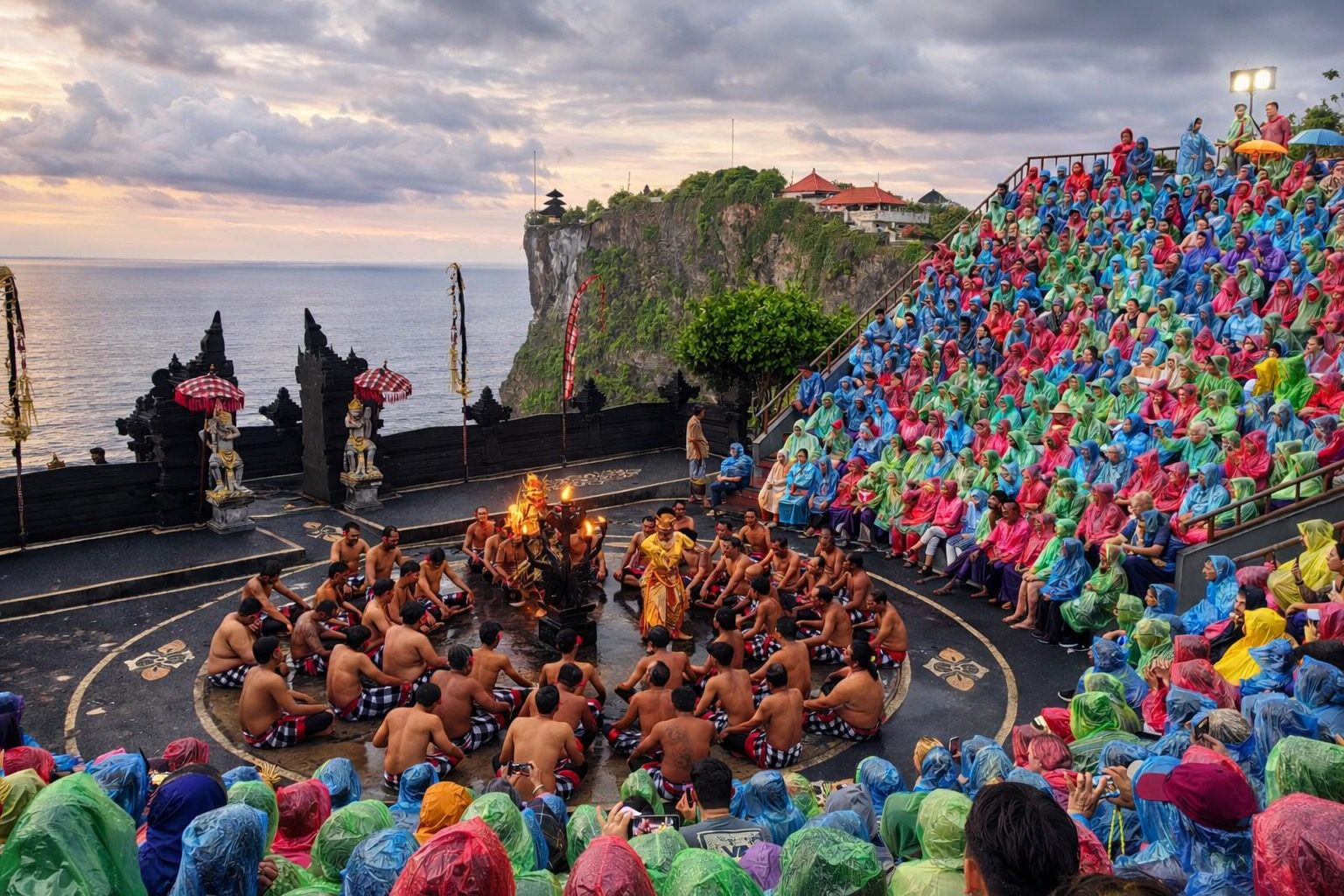
In Bali, take away the beach parties, temple visits, yoga classes, surfing and gastronomic adventures, and Uluwatu remains a major draw for tourists.
Beyond its mischievous monkeys and ancient temple, an outdoor amphitheater hosts two performances of the Kecak Dance each evening. Dozens of bare-chested men chant a hypnotic “chak-achak-achak,” bringing scenes from the ancient Hindu epic Ramayana to life.
Hundreds of spectators fill the cliffside amphitheater, drawn to a cultural performance set against Uluwatu’s dramatic coastal landscape.
In Hanoi, the smell of pho simmering at roadside stalls, freshly brewed coffee and the dizzying chorus of motorcycle horns are part of the city’s everyday soundtrack. But tourists also crowd the Thang Long Water Puppet Theatre, where handmade wooden puppets dance, act out everyday scenes and even battle one another on a shallow pool of water that serves as their stage.
Dating back to the 11th century, this traditional art form brings Vietnamese folklore and village life to the water through the skill of puppeteers who manipulate the figures from behind a screen.
In many Asian cities, cultural performances are part of the regular tourist offering.
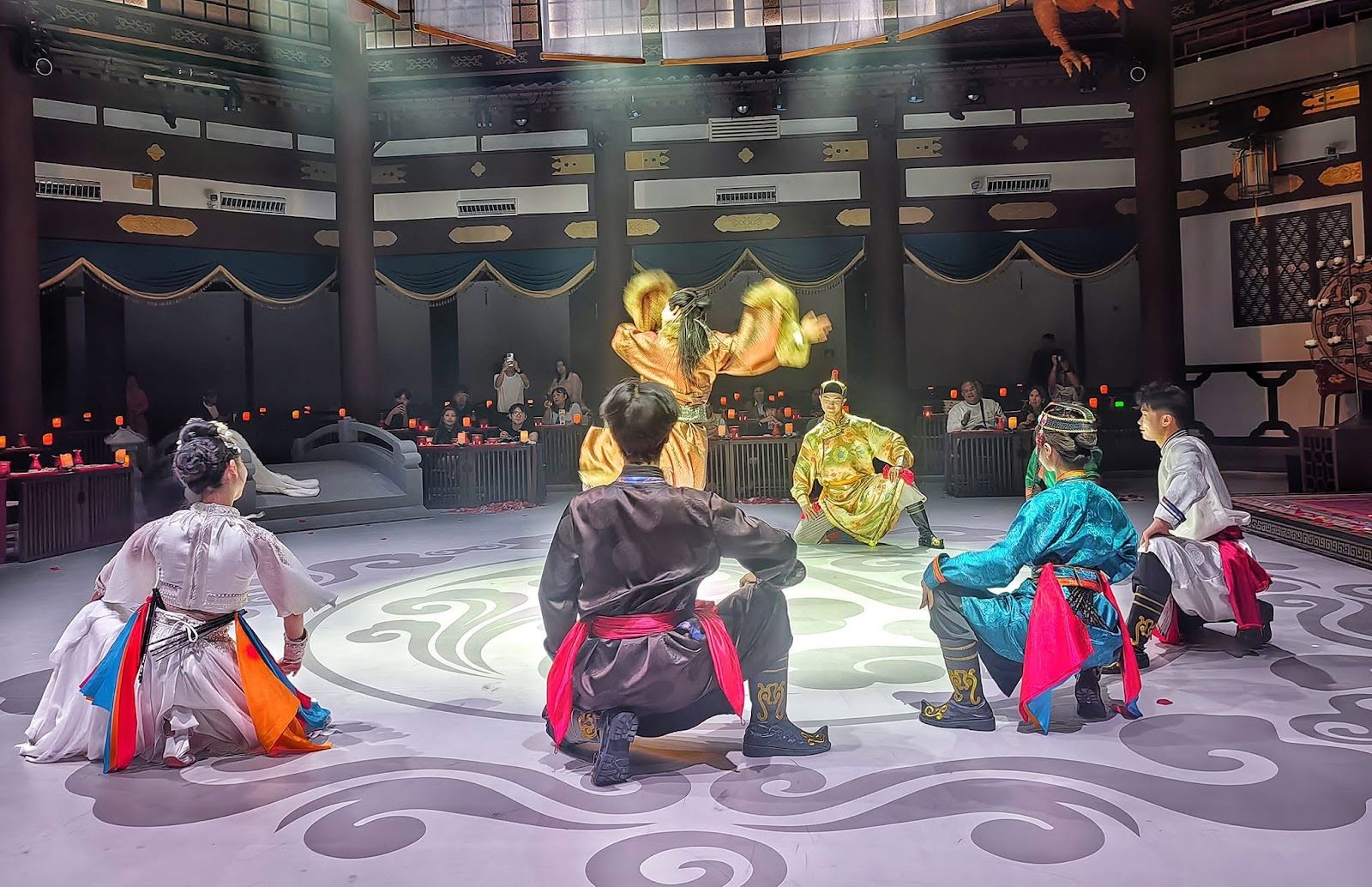
Wuhan, China, stages the Three Kingdoms Banquet and the Han Show, while Pattaya, Thailand, draws audiences to the Nong Nooch show and the Tiffany’s Show.
In Rajasthan, India, Bhavai folk dance performances offer a glimpse of local traditions, while Taipei has its opera shows. Bangkok, meanwhile, offers a range of nightly cultural performances, with plenty more to be found across Asia.
Beyond festivals
The Philippines has no shortage of cultural performances. Across the country, many artists bring local traditions to life through music, dance and theater.
One performance features members of the Sama-Bangingi indigenous community performing the Pangalay on the pinkish sands of Santa Cruz Island in Zamboanga City.
Accompanied by the kulintang, the dancers move their wrists, shoulders and elbows with remarkable flexibility, their fingers tracing intricate gestures highlighted by long fingernail extensions.
Originally associated with the Tausug people of Sulu, Pangalay is also performed by other ethnolinguistic communities in the Sulu Archipelago and parts of the Zamboanga Peninsula.
Yet most visitors to Zamboanga may never see the dance unless a tour operator arranges a performance.
Zamboanga-based tour guide and operator Errold Lim Bayona admits that he arranges Pangalay performances only for larger tour groups.
“In a year, I’m only able to arrange the Pangalay dance performance three to four times when a big convention is held in Zamboanga,” he says.
The problem is that these performances are often tied to festivals, special events or arrangements made for particular groups. Unlike Bali’s Kecak dance or Hanoi’s water puppet theater, they are not always easy for tourists to find, schedule, and book on an ordinary day.

Hotel executive Heidi Manabat recalls instances when guests would inquire about cultural activities or performances they could watch and plan their day around.
“I realized tinikling dances or anything cultural are mostly done in schools on special occasions,” she says.
Visitors can catch regional dances at Manila’s annual Aliwan Fiesta or witness performances at the Cultural Center of the Philippines’ (CCP) Pasinaya arts festival. But both happen only once a year, leaving tourists with few options to watch similar cultural performances on an ordinary weekend.
CCP comeback
The planned reopening of the Cultural Center of the Philippines Main Building (Tanghalang Pambansa) in 2027 will restore its performance calendar.
The bigger question is whether visitors will be able to find a show, check its schedule, and book a ticket while planning a trip to Manila.
According to Dennis Marasigan, CCP vice president and artistic director, the institution plans to restore year-round performances in its Main Theater, Little Theater, and Experimental Theater.
These will include productions by National Performing Arts Companies, such as Tanghalang Pilipino, Philippine Ballet Theater, and the Philippine Madrigal Singers, alongside performances by the Manila Symphony Orchestra, a National Performing Arts grantee.
The CCP also expects the rehabilitated building to host flagship programs and festivals, including the Virgin Labfest and the Cinemalaya Independent Film Festival.
The Philippine Philharmonic Orchestra’s 42nd concert season is already underway, running from September 2026 to April 2027, with its season finale scheduled for April 16, 2027, at the CCP Main Theater.
Other events Marasigan cited for 2027 include the 6th Asia Choral Grand Prix, the Andrea O. Veneracion International Choral Festival and Katy! The Musical, about Filipino vaudeville and jazz performer Catalina “Katy” de la Cruz.
These plans promise a return to regular programming, but they do not necessarily amount to a dedicated cultural show designed around tourists’ itineraries.
Marasigan said the CCP had explored that approach before. The Main Building, however, must also accommodate the institution’s own productions and those of its resident performing arts companies.
The challenge, he explained, extends beyond producing a show. “The entire culture and tourism ecosystem has to work harmoniously,” he said.
Tourist associations and tour operators need to bring in audiences regularly, while venues must be sized appropriately for the expected demand.
Manila already has examples of cultural performances incorporated into the visitor experience.
Marasigan cited Barbara’s Heritage Restaurant in Intramuros, where folk dancers perform dances from different parts of the Philippines as part of the dining experience. The performances are included in the restaurant’s lunch or dinner buffet package.
The Manila Hotel, he added, previously hosted a regular cultural performance.

For Marasigan, the broader issue is how the country positions its cultural offerings.
“When tourists go to Bali, Indonesia, they do so because of the beach and the culture. We have to ask ourselves, ‘What are we selling in Manila to begin with?'”
His answer is to make culture a deliberate part of tourism planning rather than an afterthought. Performing arts already feature in the Creative Industry Plan under theater tourism, he noted, but the tourism sector — including government agencies and private operators — must help turn that ambition into actual visitor experiences.
One approach would be to package existing productions as part of a Manila itinerary.
Marasigan cited The Notebook and the planned staging of Katy! The Musical at the CCP Main Building in 2027 as examples of performances that could be incorporated into tourism packages.
The idea is straightforward: give visitors another reason to come to Manila and something worthwhile to schedule into their stay.
But Marasigan also noted that a regular cultural program needs reliable funding, affordable tickets, audience development, and marketing that reaches visitors before they arrive in Manila.
“Everyone in the culture and tourism ecosystem should be involved,” he said.
The Philippines already has the artists and traditions. What tourists need are performances they can plan around: a published schedule, affordable tickets and a simpler way to book. Making that possible will require tourism agencies, hotels, and tour operators to help bring audiences through the doors. – Rappler.com
KioskNews shows a cleaned-up reading view extracted from the publisher’s page — the original always lives on their site, not ours.