American teenager finds 3,300-year-old scarab amulet during school trip to ancient Canaanite city
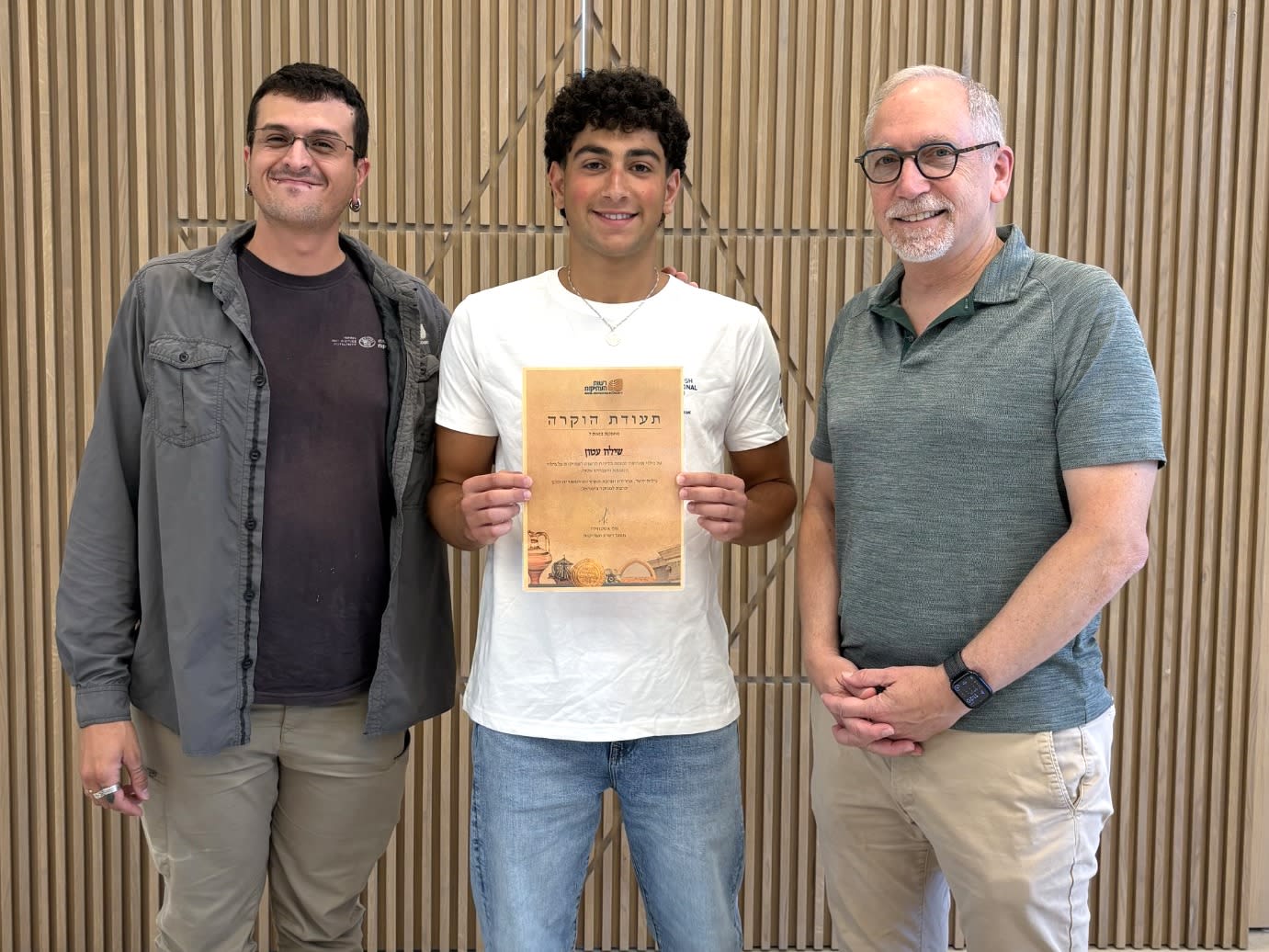
A 3,300-year-old scarab amulet decorated with cobra motifs was discovered by an American high school student at Tel Gezer National Park, the Israel Antiquities Authority (IAA) announced on Tuesday.
Shiloh Attoun, 17, chanced upon the artifact during a study tour at the park with Jewish National Fund-USA's Alexander Muss High School in Israel (Muss).
“This was our class's first trip to see the country,” Attoun said, adding that his group had arrived in Israel two days prior to the Tel Gezer visit.
“As we were learning about Tel Gezer’s history and archaeology, I noticed a small, interesting object on the ground,” he said. “It looked ancient. I picked it up and consulted my guide.”
“I couldn't believe it was happening to me; a moment ago we were talking about the slim chances of ever discovering such a find, and here was one right in my hand!”
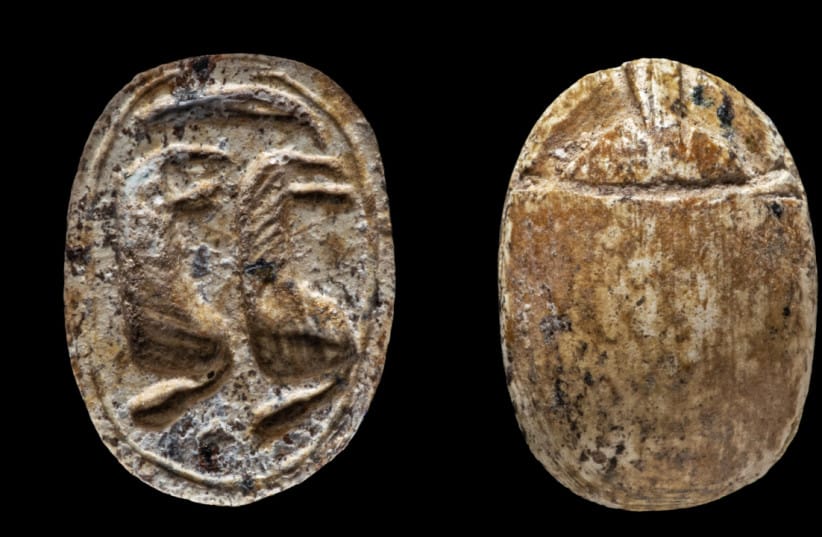
The scarab amulet, shaped like a dung beetle, attests to ancient Egypt’s cultural influence on the region. Several such amulets have been found across Israel, including one discovered at the Tell Qana archaeological site in Hod Hasharon in August.
Considered sacred by the ancient Egyptians, the beetle became a symbol of new life, laying eggs, representing new life, inside a rolled ball of dung, which represented death.
The site of the ancient city of Gezer sits at a strategic crossroads in the Judean Lowlands, serving as one of the most important Canaanite cities during the 2nd millennium BCE.
Today, the site is managed by the Israel Nature and Parks Authority (INPA).
“This discovery sparked great excitement among the students,” Muss’ dean of students, Benji Hain, said. “As soon as we realized that this might be a significant archaeological find, it was important for us to immediately contact the Israel Antiquities Authority, report it, and ensure that we were acting in the right way.”
Scarab seal dates back to Late Bronze Age
After the amulet was reported, the IAA sent archaeologist Adam William Asper to meet the group at the school to collect the artifact for the IAA’s National Treasures of Israel Department.
Asper, a supervisor in the IAA’s Central Region, presented Attoun with a certificate of appreciation for demonstrating good citizenship.
Professor Ido Koch of Tel Aviv University’s Archaeology and Ancient Near Eastern Cultures Department examined the amulet, dating the seal to the Late Bronze Age.
“An interesting scene appears on the scarab: two cobras above a semi-ellipse,” described Koch. “The cobra, identified with the biblical serpent and called in Egyptian and in Greek ‘Uraeus,’ was a very common protective and royal symbol in ancient Egypt and the southern Levant. The semi-ellipse below the cobras represents the Egyptian hieroglyphic sign 'nb', which means 'lord.'”
Koch noted that a scarab depicting a similar scene with three snakes had previously been found during excavations at Tel Megiddo in northern Israel.
“Shiloh's story is a charming example of the connection forged between the young people who come to study in Israel and the country’s history and archaeology, through firsthand experience in the field,” said IAA Central Region Educational Director Amit Melman. “Shiloh and the program instructors deserve praise for showing responsibility and immediately handing over the find to our national repository. Thanks to them, this special find was preserved, and we can all learn from it.”
Interacting with history while touring Israel
Tali Tzour Avner, Jewish National Fund-USA’s Chief Israel Emissary, emphasized the importance of the experience of touring Israel and visiting locations studied about in class.
“Shiloh, born into a Jewish-American family, came to Israel as part of an educational program at Jewish National Fund-USA's Muss High School Israel to deepen his connection with Israel, its people, and its landscapes,” said Avner. “Already on his very first trip, he got to know the country on foot and met a piece of its history up close.”
“There is something exciting about the moment here in Israel when the history studied in class becomes a personal encounter. This is the experience we work hard to give our students: to get to know Israel, to feel they belong to it, and to discover that they too have a place in its story.”
“This discovery underscores the tremendous importance we place on connecting young people from the Diaspora with the heritage of the Land of Israel through direct encounters with the sites and artifacts that tell its story,” stated Heritage Minister Amichai Eliyahu. “I commend Shiloh for his discovery and for acting responsibly by handing over the ancient amulet to the state.”
KioskNews shows a cleaned-up reading view extracted from the publisher’s page — the original always lives on their site, not ours.