As US withdraws from Iraq, Kurdish region is left exposed to Iran's threats - analysis
Iskan Street in Erbil, the capital of the Kurdistan Region of Northern Iraq, is a bustling street around a mile from the city’s famous historic citadel. At night, Iskan Street is lined with small restaurants serving a variety of food. It’s famous for its street food, and one website calls it the “the street food heart of nocturnal Erbil.”
Nine years ago this month, Iskan Street was its usual hive of activity. However, in the last two weeks of September 2025, it was also full of talk about the independence referendum. The Kurdistan Region held a referendum on September 25, 2017. Around 2.8 million people voted. More than 92 percent of the people voted for independence.
I was there the days leading up to and after the referendum. It was a momentous time. Erbil was draped with Kurdish flags. Posters and banners showed the region breaking free from the shackles that had held it to Iraq. It should be recalled that under the Saddam regime, the Kurds had been brutally suppressed. Saddam Hussein’s regime used poison gas against Kurds, massacring people, driving them from their lands, and kidnapping and disappearing people.
Since the early 1990s, the Kurds in Iraq have had significant autonomy. Supported by the US in the 1990s, they carved out a free zone in northern Iraq. After the US invasion of 2003, they received autonomy in the Iraqi constitution. The Kurdistan Region is a result of all this long, hard struggle. It is a bustling region, full of economic development. It is also more peaceful and stable than the rest of Iraq.
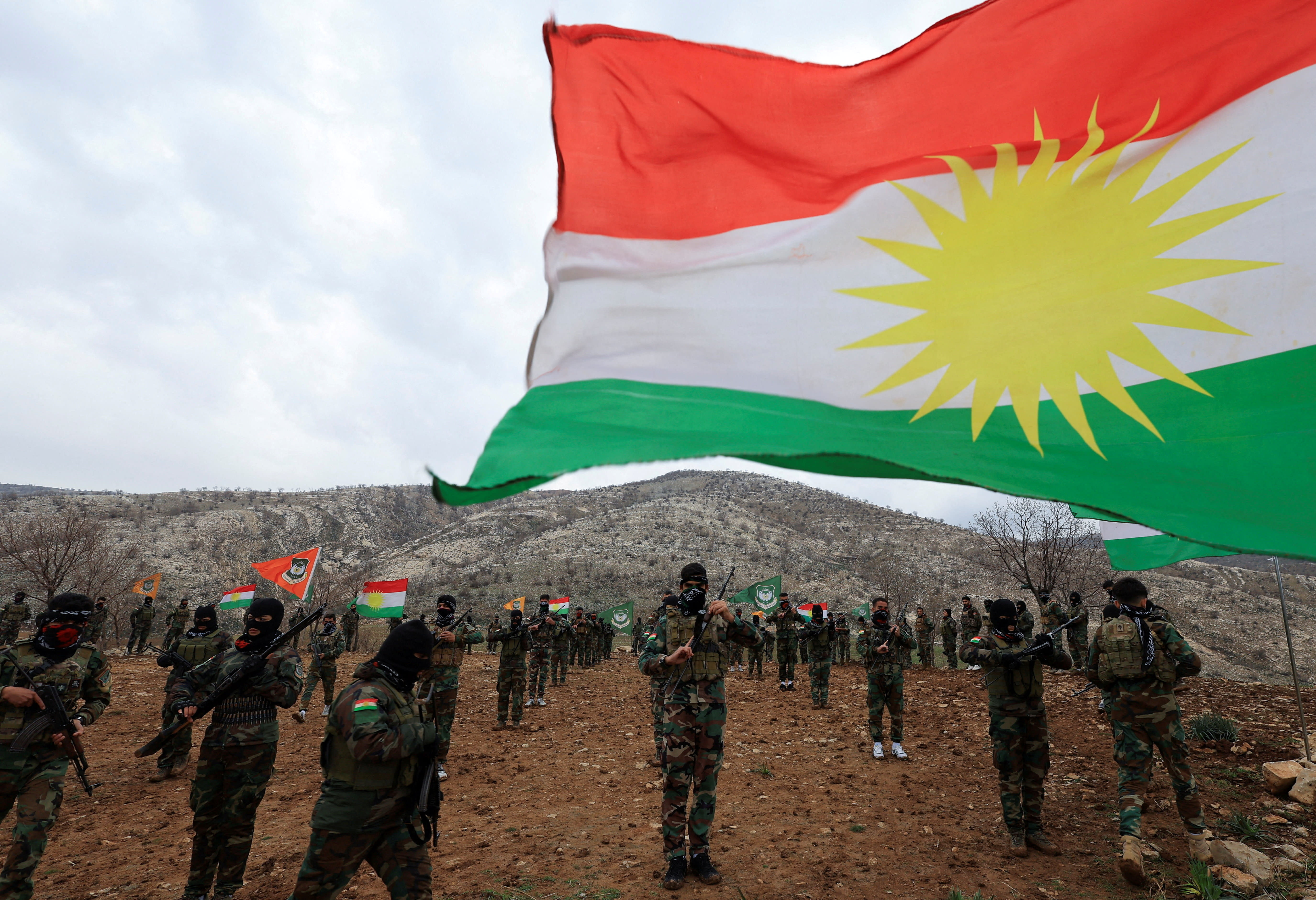
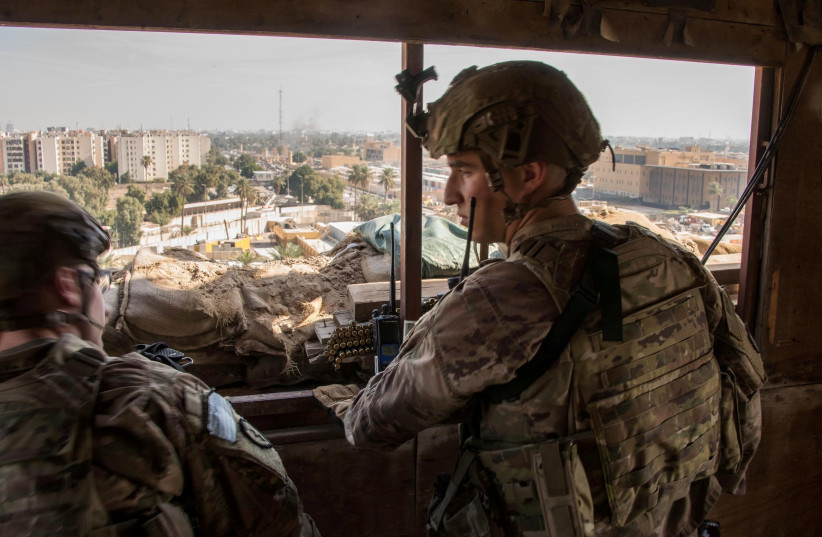
However, that peace and stability are being challenged today. US forces are leaving Iraq at the end of September 2026. They are also withdrawing from the Kurdistan Region, where they were deployed in Erbil and another site. The US has a large consulate in Erbil, so Americans will remain. However, as US forces leave, the Kurdistan Region is wary of what may come next. The region has been under attack by Iran for months. It is also threatened by Iranian-backed militias.
Tehran attacked Kurdistan amid US and Israeli strikes on Iran
In the wake of the US and Israeli strikes on Iran, the Iranian regime began attacks on the Kurdistan Region. Iran has carried out more than 1,000 missile and drone attacks. It has mostly targeted dissident Kurdish groups that are located in the Kurdistan Region. These are made up of Kurds who fled Iran over the last decades. They were members of a half-dozen different groups. These include historic Kurdish groups such as the Democratic Party of Iranian Kurdistan.
They also include the left-wing group Komala and PJAK, as well as a group called Xhabat. In addition, there is the Kurdistan Freedom Party (PAK). PAK played a role fighting ISIS alongside Kurdish Peshmerga in the Kurdistan Region of northern Iraq. Now, PAK members want to help fight the Iranian regime.
Iran has sought to pre-empt any Kurdish uprising by attacking Kurds in northern Iraq. The Kurds were put in the spotlight in early March 2026 when reports indicated that both the US and Israel wanted to help them in Iraq. This is difficult for the KRG in northern Iraq because the KRG doesn’t want to be attacked by Iran. KRG leaders have a complex relationship with Iran.
The Kurdish PUK party in Iraq historically has decent ties with Iran. The KDP, the largest party and the party that runs Erbil and the governorate of Dohuk, is usually more suspicious of Iran but still cultivates ties to prevent conflict. The Iranian attacks in the last six months have targeted the offices of the Kurdistan Region’s president and prime minister, Nechirvan Barzani, and Masrour Barzani. As such, the KRG leaders know that Iran is putting them on notice.
They have seen this before. After the referendum, Baghdad punished the region. Baghdad sought to close airports in Erbil and Sulimaniyeh. It also massed troops near Kirkuk, a city that has a large Kurdish presence. Kurdish political party leaders from the PUK and KDP met to discuss the crisis at Lake Doukan in the Kurdistan Region.
They knew Baghdad was going to try to seize Kirkuk, which Kurds had defended from ISIS since 2014. They also knew the US was pressuring Erbil to retreat. In addition, Turkey and Iran sided with Baghdad. The region was isolated and would be punished for the independence vote.
IRGC commander helped coordinate attacks on Kurdistan
Iran’s IRGC Quds Force commander Qasem Soleimani helped coordinate the attacks alongside the Shi’ite militia commanders Abu Mahdi al-Muhandis and Hadi al-Amiri. They ran the Kataib Hezbollah and Badr militias. Left alone and isolated, the Kurdistan Region faced an Iraqi offensive, backed by Shi’ite militias, into Kirkuk and also a separate push by the Shi’ite militias into Sinjar.
The Kirkuk Peshmerga line of defense collapsed within a day, likely because of a deal between the PUK, Iran, and Baghdad that led the PUK to withdraw. The Iraqi advance was stopped only north of Kirkuk, at a place called Altun Kupri. The Iraqi federal government areas and the KRG-run area are still defined by that line.
Today, the relations between Erbil and Baghdad appear much better. Iraq is solidifying control of other areas. It has an agreement with the Yazidi armed group YBS for YBS to lay down its arms. It has a new agreement with Turkey to take over the Bashiqa Turkish base. That base used to be near the Kurdish frontline against ISIS. Now the base is to become an Iraqi federal site.
As a result, the Kurdish region will see Iraq gain influence in the Nineveh Plains and Sinjar, two areas that border the Kurdistan Region. In the past, the KRG viewed both Sinjar and Kirkuk as disputed areas with Baghdad. Given the current trend, the KRG seems unlikely to have much of a role in either.
The larger concern for the KRG, expressed by its prime minister Masrour Barzani in a recent interview with the Financial Times, is that the region could be threatened. Barzani has disputed some of what the Financial Times published, so we won’t repeat it here; however, the essence of the interview is clear.
The KRG needs defenses. It needs defenses against drone and rocket attacks. Its Peshmerga need continued support. There are concerns that not only are US forces leaving but funding for the Peshmerga from the US will dry up. The Peshmerga have been pressured to reform and unite. The KRG says it has begun this process.
Rudaw media in Erbil noted on September 27 that “a State Department spokesperson said last week that Washington remains committed to withdrawing its military forces from the country by the deadline, reaffirming its adherence to the agreed timeline for ending coalition military operations in Iraq.”
The report says “the United States is proceeding with the mutually determined transition timeline for coalition forces to end military operations in Iraq,” the US State Department spokesperson told Rudaw’s Diyar Kurda in response to an email.
KioskNews shows a cleaned-up reading view extracted from the publisher’s page — the original always lives on their site, not ours.