Getting the word out: The Israeli Institute for Hebrew Literature flies the flag in Frankfurt

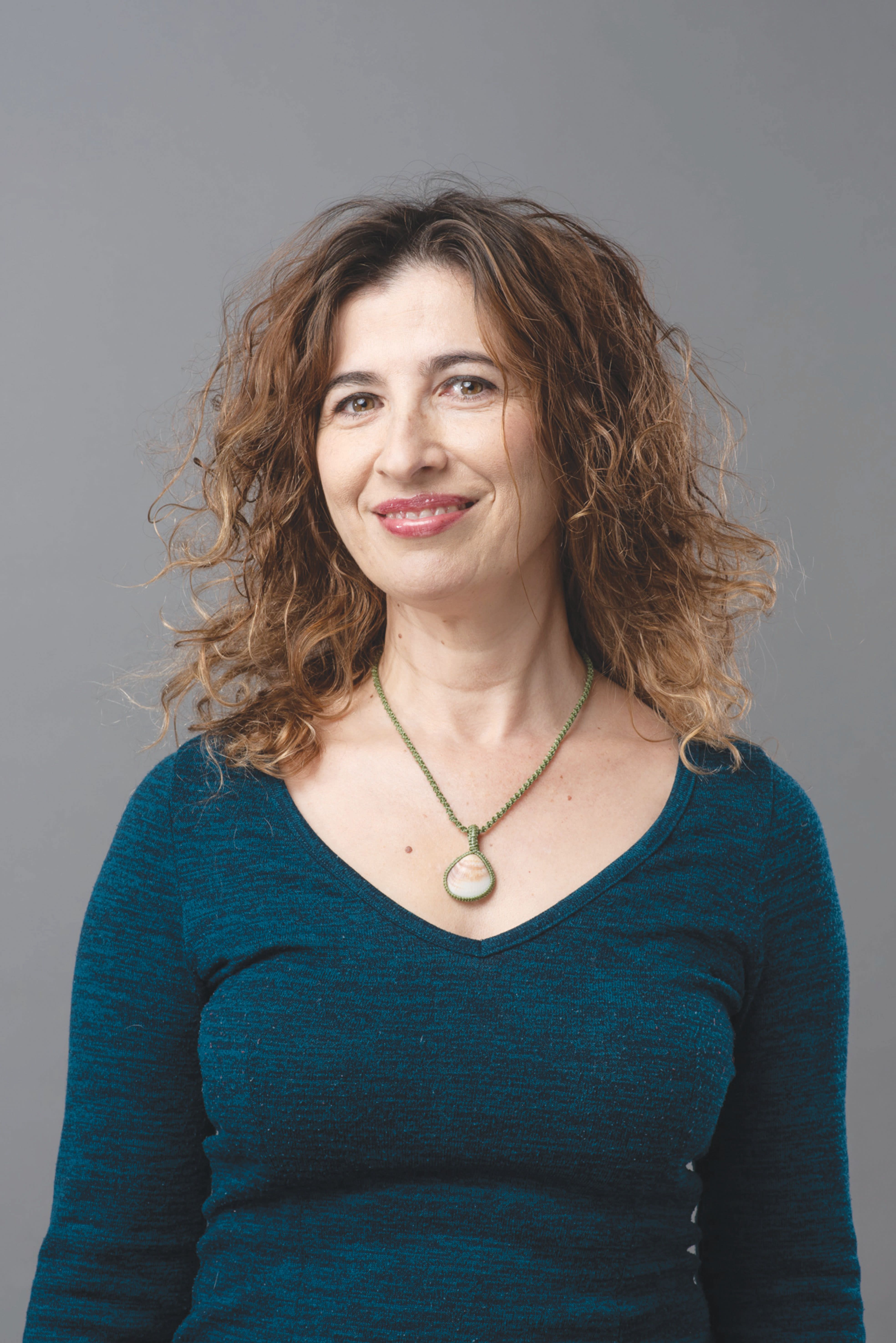
Sigalit Gelfand, and the Israeli Institute for Hebrew Literature, which she serves as CEO, will be well and truly in the thick of things.

A picture may, indeed, be worth a thousand words but, as any book reader knows, there is a special magic to revealing a literary creation, page by page, as the storyline gradually unfolds. If one may be so bold as to riff on a biblical sobriquet, as the People of the Book, we tend to enjoy burying ourselves in some plot of a novel, thriller, or sci-fi tome.
Naturally, in this increasingly digital, AI-assisted/lumbered day and age, more and more of us, particularly those born into the Internet era, opt for means of momentary instant gratification via, for example, social media networks. Even so, it is fair to say we have plenty to offer the world in terms of quality literary output.
But how can that be achieved? The fruits of Israeli writers’ labors, one assumes, are not the natural go-to choice of the average reader in the US, UK, France, or Italy. And there is the small matter of political ebbs and flows, and whether literature consumers are impacted by global media anti-Israeli coverage when they possibly come to consider purchasing a translated copy of a book by any of our better-known scribes, such as Amos Oz, David Grossman, Etgar Keret, or AB Yehoshua.
Those thorny issues feature highly in the list of Sigalit Gelfand’s activities to be addressed at next week’s Frankfurt Book Fair. These days having any sort of Israeli presence at offshore events is an achievement in itself. But Gelfand, and the Israeli Institute for Hebrew Literature, which she serves as CEO, will be well and truly in the thick of things when the world’s largest literary gathering takes place in the German city Oct. 7-11.
German goodwill towards Israel
In fact, the program will be officially opened the day before as an extraordinary gesture of goodwill to the Israeli contingent. “The fair, together with the Municipality of Frankfurt, made a decision to have the first work day of the fair on Oct. 7, so that they can have the festive event of the opening on the sixth,” Gelfand explains. “They did that so that Oct. 7 will be a work day, and not a day for celebrations.” It seems the hosts are going out of their way to accommodate and salute Israel and its literary output. “I happily received a request from the director of the Mayor of Frankfurt’s Office, telling me the mayor would like to come to the Israeli pavilion at the fair on the seventh of October. That is a gesture of support for Israel.”
That is, indeed, impressive and heartwarming but Gelfand is not getting carried away by the positive stuff. “We have hired Israeli undercover security, that’s in addition to the security facilities provided by the fair management,” she notes. “That is for our safety, and the safety of visitors to our pavilion.” Not that she is exactly shivering in her boots. “The atmosphere at our pavilion last year was warm and wonderful,” she recalls. “Of course, having excellent Israeli wine on offer helps,” she laughs, “but it was a positive experience for everyone. We are not politicians. We are people of literature.” Skirting around the political minefield, if possible, is always a good idea. Let’s hope the feel-good vibes abound there this year too.
We return to the crux of the book fair, and Israel’s participation. Gelfand, who will be joined in Frankfurt by the institute’s literary editor Dr. Oded Wolkstein and content manager Dana Simhayof-Shahaf, says the institute is making great efforts to facilitate translations of Israeli works so that folks of all nationalities, cultures, and ethnic origins can gain a handle on Israeli literature, and hopefully enjoy it and come back for more.
Making Israeli literature accessible
To that end, the institute has launched the Hebrew Literature Translation Fund, which is designed to help more Israeli books reach readers worldwide. “Every contribution, at any level, can give a book the wings it needs to cross borders and expand minds. Let the world read diverse Israeli voices!” the website exclaims. There has, it seems, been some assistance available to publishers who have enthused over some Israeli book or other but balked at the cost of having it translated. “There have been funds available for that, in conjunction with the Foreign Ministry, but it hasn’t generally been adequate. Publishers around the world have told us we have great books but they previously met with someone from a different country which has grants for translations.”
That doesn’t help the Israeli global literary cause. “There are [foreign] publishers that want to work with us but that is not always the case, particularly since Oct. 7,” she adds somewhat superfluously. “Publishers also tell us that they may bring out a translation of an Israeli book but the bookstores don’t want to promote it. At the end of the day, publishing houses and stores are businesses.” Politics aside, the monetary shortfall doesn’t help matters either. The hope is the new fund, fueled by private donors, will obviate the financial obstacle to spreading the good Israeli literary word. “We want, at least, to be operating on a level playing field, so we can provide the same support as other countries,” Gelfand says.
The institute, as our national representative in Frankfurt, is pulling out all the stops to show the world there is more to this country than meets the mainstream media news-oriented eye, and that Israel has a broad, diverse sweep of voices that need to be heard. “We are taking 40 books with us to the fair,” Gelfand advises. “They are for adults and also for youth and small children.” The institute’s wares in Germany will include works by Haggai Linik, Michal Zamir, Moroccan-born writer and rabbi Moshe Suissa, and Yonatan Sagiv. The younger reader’s consignment features books written by Ruth Margalit, Nurit Zarchi, Avihai Nizri, and Hava Havushi.
Gelfand says there has been a fair amount of interest in the Israeli rollout already. “Oded and Dana already have meetings set up with publishers and agents. We have not experienced any opposition to meetings. We will show the publishers and agents the actual books, in Hebrew, and the [English-language] catalogues with all information about all the books we are taking with us.”
It is not just about the quality of the writing or the translation. “Publishers look for some added value, something special. They look for a reason why they should translate this literature. They frequently look for a certain Israeli flavor to the story in the book.” That can also provide sorely needed national PR dividends on the global stage. “That presents the world with a different face of Israel. There are so many facets to our country and literature is a means of showing that in a beautiful way.”
With over a quarter of a million visitors expected to throng the Frankfurt Book Fair next week, that sounds like just what the doctor – writer – ordered. It also suggests that, perhaps, our writers can do a better job in the global arena than our politicians.■
KioskNews shows a cleaned-up reading view extracted from the publisher’s page — the original always lives on their site, not ours.