Why Mumbai airport plans to shift flights to Navi Mumbai by destination, not airline
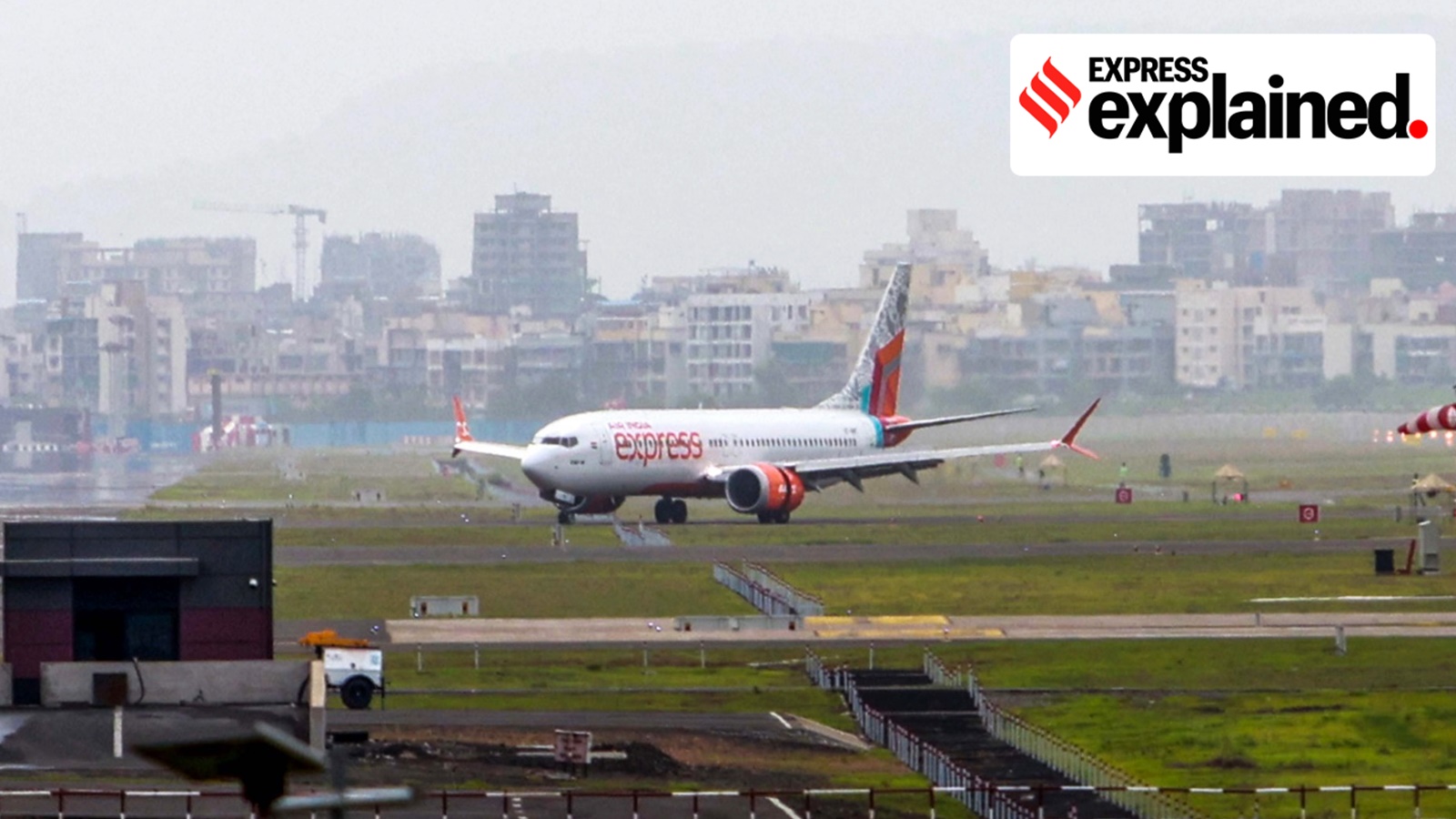
Mumbai International Airport Limited (MIAL), which operates Mumbai’s Chhatrapati Shivaji Maharaj International Airport (CSMIA), announced on Monday (November 9) that it will pursue a destination-based approach to reduce capacity at the airport.
The decision follows resistance to MIAL’s proposal last week to suspend or shift flights serving 14 destinations to Navi Mumbai from the summer 2027 schedule until 2029, when Terminal 1 redevelopment is expected to be completed. The original plan would have required 46 Indian and overseas airlines to split operations between the two airports, which are both operated by Adani Group entities.
MIAL’s original proposal involved suspending or shifting 265 of the 770 weekly international departure slots at CSMIA from the last week of October, representing roughly a third of international departures. The revised arrangement reduces the number of affected foreign carriers from around 40 to 12, but the airlines that will have to relocate their services remain opposed to the move.
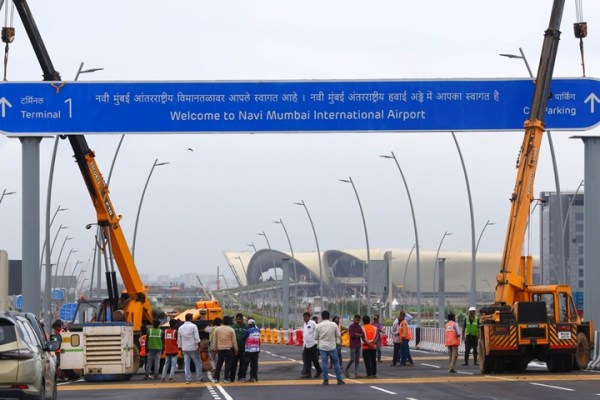 Preparations at Navi Mumbai International Airpot, ahead of its inauguration in 2025. (Express photo by Narendra Vaskar)
The development has reignited the dispute between airport operators and airlines, raising questions about how the transition should be managed, and whether airlines can be forced by airport operators to relocate services to another airport. The airlines which will be affected by MIAL’s latest move have approached the Ministry of Civil Aviation (MoCA) to clarify whether it had approved the airport operator’s move not to allocate slots to them for the next summer schedule.
There is no domestic precedent for moving flights from a major metropolitan airport to a secondary airport or temporarily suspending slots. Most airport shifts in India have been from older airports to greenfield facilities, and involved moving all or most of the commercial traffic to the new airport. Even in the case of Delhi and Mumbai airports, which were brownfield expansions by private sector operators, slots were largely maintained during the redevelopment phase.
What exactly is the Mumbai airport proposing?
MIAL is proposing to reorganise international traffic by destination rather than by airline. Under this arrangement, all flights serving the 14 identified destinations would operate from Navi Mumbai, instead of individual airlines splitting their operations between the two airports. The approach is expected to simplify scheduling and reduce passenger confusion, according to sources.
The 14 destinations identified by MIAL are Bahrain, Dammam, Dhaka, Doha, Fujairah, Jakarta, Jeddah, Kathmandu, Kuwait City, Madinah, Muscat, Ras Al Khaimah, Riyadh, and Sharjah. Citing that Indian airlines IndiGo, the Air India group and Akasa Air have decided to serve these destinations from Navi Mumbai instead of Mumbai, MIAL justified suspending their slots at Mumbai.
Story continues below this ad
However, connecting passengers could face difficulties. Someone arriving at CSMIA on a domestic flight and connecting to an international service from NMIA would have to travel between the two airports.
This proposal was part of a capacity-management exercise at MIAL, which was necessitated by the redevelopment of CSMIA’s ageing Terminal 1. T1 handles domestic traffic, while Terminal 2 handles all international traffic and some domestic traffic as well.
CSMIA is India’s most capacity-constrained large airport, handling approximately 55 million passengers across both terminals. Terminal 1, commissioned in 1964, has an annual passenger-handling capacity of about 15 million, and its redevelopment is expected to increase this to around 20 million passengers annually.
According to the airport operator, the redevelopment is necessary to address structural concerns associated with the ageing terminal. Structural audits conducted by Structwel in 2017 and IIT Bombay in 2024 flagged concerns with the existing infrastructure.
Story continues below this ad
The broader capacity-management exercise is expected to affect five million passengers at CSMIA. The transfer of international services to the 14 identified destinations by Indian carriers alone is expected to account for about three million passengers annually. The remainder is expected from the 12 overseas airlines serving these destinations.
MIAL plans to offset some of this capacity reduction by accommodating the affected domestic passengers from Terminal 1 in Terminal 2, and by shifting international flights away from Terminal 2.
Why did Mumbai airport change its proposal?
The immediate reason for the change was resistance from foreign airlines to splitting their operations between the two airports, which would have involved additional costs and logistical complications. After the MoCA intervened last month and asked MIAL to defer the redevelopment and work out a transition plan with airlines, the Adani-operated airports worked out an arrangement with Indian carriers to shift services to the 14 destinations to Navi Mumbai.
MIAL’s destination-based approach appears to be an attempt to address at least one of these concerns. Relocating entire routes rather than selected flights of individual airlines could make scheduling easier and reduce passenger confusion.
Story continues below this ad
The 12 affected overseas airlines are Qatar Airways, Saudia, Air Arabia, Gulf Air, Kuwait Airways, Oman Air, Riyadh Air, Flyadeal, Flynas, Jazeera Airways, SalamAir, and Nepal Airlines, according to an analysis of flight schedules between Mumbai and the 14 identified destinations. Some large global airlines like Emirates, Air France, and KLM, which had publicly commented against the earlier plan to split operations between CMIA and NMIA, won’t be affected by the new destination-based proposal.
What objections have foreign airlines expressed?
Airport slots are particularly valuable at CSMIA given the limited availability of runway and terminal capacity. The airport has two intersecting runways, meaning only one can be operational at any given time. CSMIA is among the world’s most congested single-runway operations airports.
Under internationally accepted slot-allocation practices, airlines that operate their slots consistently and meet prescribed utilisation requirements are usually allowed to retain historical priority for those slots. MIAL’s proposals to reduce international capacity at Mumbai ran into conflict with the slot allocation convention.
This spurred the objection to the proposed capacity cut by the Airline Operators’ Committee (AOC)-Mumbai, which represents carriers operating from CSMIA. While the committee expressed its support for the redevelopment and capacity augmentation at Terminal 1, it alleged that MIAL had taken an arbitrary, unilateral decision. The AOC questioned the rationale behind the original proposal and asked whether this complied with the applicable guidelines from MoCA and the International Air Transport Association (IATA).
Story continues below this ad
Airlines have argued that shifting operations or suspending services could affect their historical slots at Mumbai as well as interline and codeshare arrangements with Indian carriers. MIAL and its parent Adani group have assured carriers that their historical slots will be respected once the redeveloped Terminal 1 is commissioned in 2029.
Following MIAL’s November 5 slot allocation decision, AOC-Mumbai again wrote to MoCA, seeking clarification on whether the operator had the ministry’s approval to withhold slots from affected foreign airlines for the next summer schedule.
As both CSMIA and NMIA are operated by entities belonging to the Adani group, it is effectively assuming a significant role in determining how traffic is distributed between the two airports. From the operator’s perspective, managing the facilities as a coordinated aviation network could ease congestion and improve efficiencies and capacity utilisation. Airlines, however, would be concerned about the implications of an airport operator effectively exercising control over which destinations should be served from which airport.
KioskNews shows a cleaned-up reading view extracted from the publisher’s page — the original always lives on their site, not ours.